

- by John White
What Drives Desktop UV Printing Operating Cost?
- by John White
Start UV printing without the floor space — compact flatbed printers built for small shops.

Desktop UV printing operating cost is driven less by the advertised ink price than by the cost of producing an accepted job. Ink, labor, setup, cleaning, rejected pieces, maintenance consumption and unused capacity all belong in the calculation. A shop that measures only ink per square meter can underestimate the real cost of short custom runs, especially when artwork changes and fixtures require frequent adjustment.
A defensible model separates costs into fixed, variable and job-level categories. Fixed costs continue even when the printer is idle. Variable costs rise with output. Job-level costs are triggered whenever a new order is prepared, regardless of quantity.
| Cost group | Typical inputs | Recommended unit |
|---|---|---|
| Fixed | Equipment allocation, software, scheduled service, production-space allocation | Per month or productive hour |
| Variable | Ink, primer, cleaning fluid, wipes, electricity, replacement consumables | Per accepted piece or job |
| Job-level | File preparation, fixture setup, color check, first-article approval, packing | Per order |
| Quality loss | Rejected objects, reprints, extra operator time and missed delivery capacity | Per accepted piece |
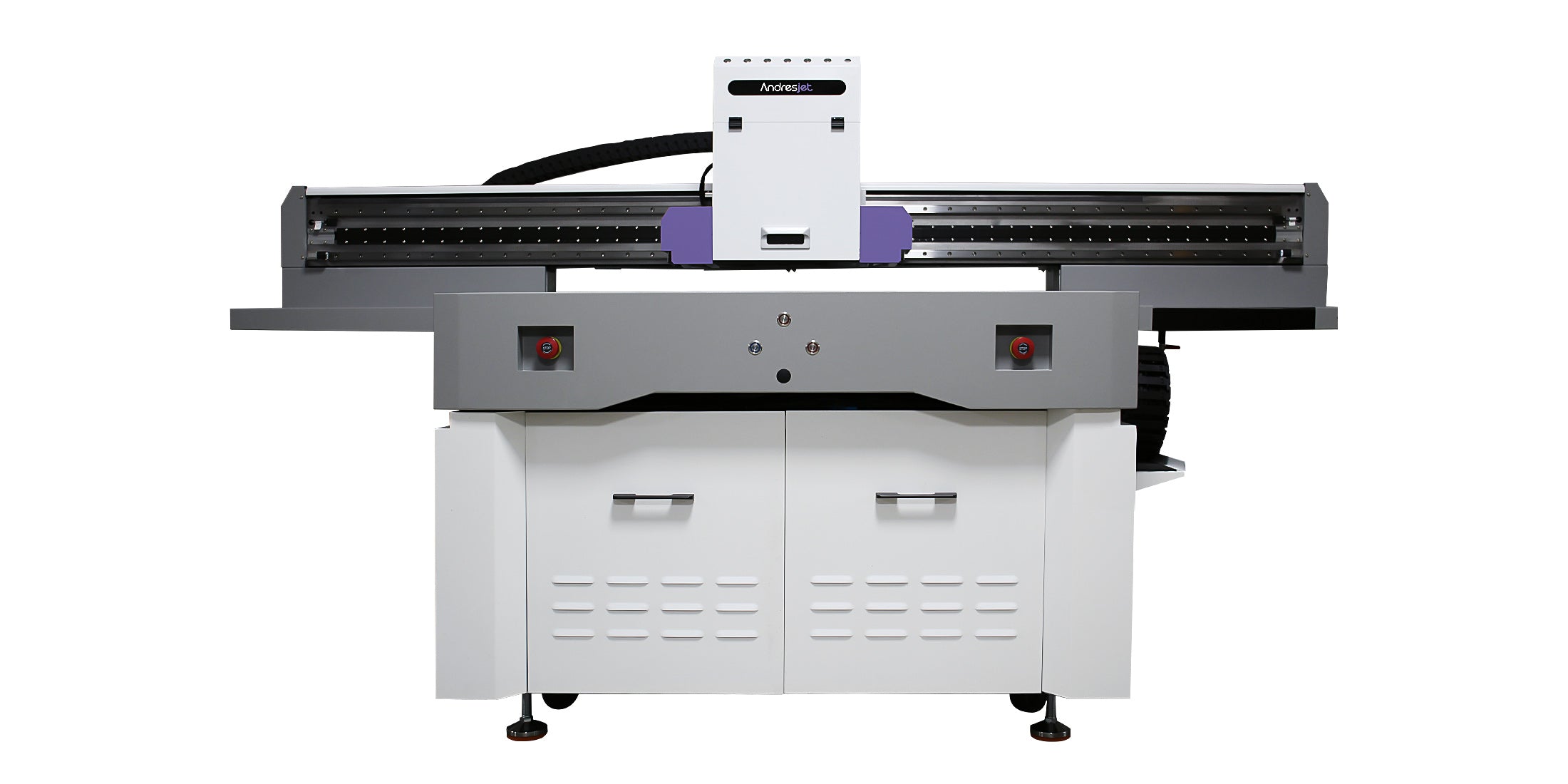
The desktop UV printing application page helps define the relevant equipment category, but the cost model must be built from the shop’s own objects, coverage, pass mode and acceptance rules.
Ink is usually variable, while setup labor is largely independent of run length. Ten identical pieces may require almost the same file check, origin setting and first-article approval as one piece. This is why a minimum job charge can be more important than a small difference in ink consumption.
Operators should record productive labor rather than only print time. The relevant sequence can include job intake, artwork correction, fixture loading, nozzle check, test output, customer approval, unloading, inspection and packing. If a job occupies 25 minutes of printing but requires 35 additional minutes of handling, costing only the printer cycle hides more than half of the labor demand.
Rejected output spreads the same job cost across fewer sellable pieces. The correct denominator is accepted pieces, not pieces loaded. If a batch consumes materials and labor for 100 objects but only 92 pass inspection, the accepted yield is 92% and the eight rejected objects must be absorbed by the sellable output.
Cost per accepted piece = total job cost ÷ accepted pieces
Suppose an illustrative 50-piece order has $18 of object cost, $7 of ink and consumables, $24 of labor, $6 of allocated equipment cost and $5 of packing cost. Total job cost is $60. If all 50 pieces pass, cost is $1.20 each. If only 45 pass, cost becomes $1.33 each. The eleven-percent increase comes entirely from yield loss.
This example is not an AndresJet performance claim. A buyer should replace every input with measured data from the intended artwork, object and production mode.
| Input | Illustrative value | How to measure it |
|---|---|---|
| Objects loaded | 50 | Batch traveler |
| Accepted objects | 45 | Final inspection record |
| Setup labor | 0.40 hour | Start-to-first-approved-piece timing |
| Run and handling labor | 0.60 hour | Approved production-mode timing |
| Ink and consumables | $7 | Measured usage or controlled estimate |
| Total job cost | $60 | Sum of all cost groups |
| Cost per accepted piece | $1.33 | $60 ÷ 45 |
For the next commercial step, the shop can transfer this measured cost into the structure described in the custom UV printing pricing guide. Cost establishes the floor; demand, service level and target margin determine the quotation.
Low utilization raises the allocated cost per productive hour because monthly fixed costs are recovered from fewer jobs. A faster print mode cannot correct a workflow that spends most of the day waiting for artwork, searching for objects, rebuilding fixtures or obtaining approval.
Compare three utilization cases using the same illustrative monthly fixed allocation of $1,200:
| Productive hours per month | Fixed allocation per productive hour | Interpretation |
|---|---|---|
| 40 | $30 | Low utilization makes fixed cost dominant |
| 80 | $15 | Base case |
| 120 | $10 | Higher utilization spreads fixed cost |
Rated speed still matters when printing is the verified bottleneck. Before reaching that conclusion, measure accepted pieces per productive hour and separate printing from setup, approval and handling.
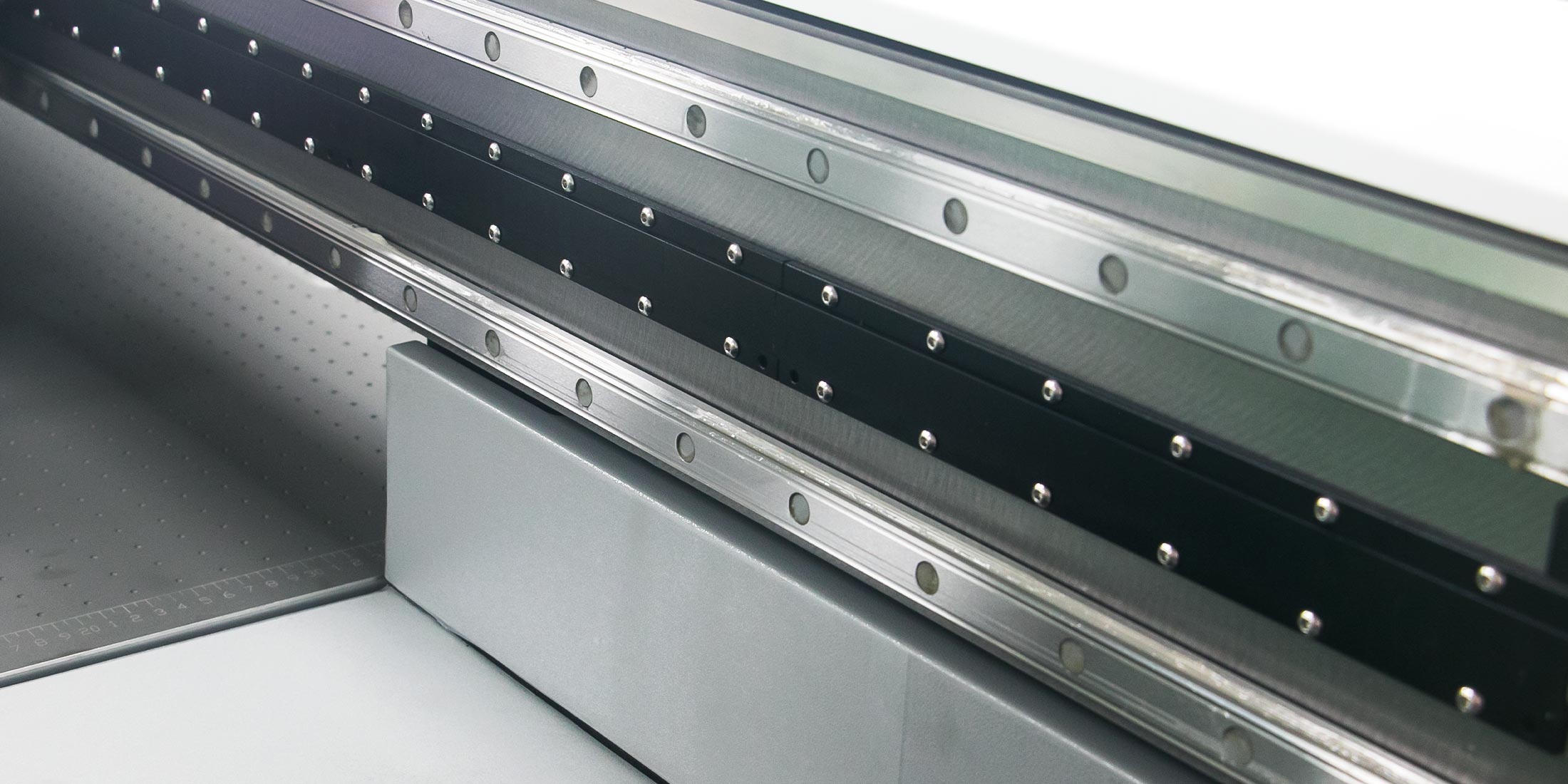
A useful pilot uses the buyer’s real object, artwork coverage, layer structure, quantity and quality criteria. Record loaded pieces, accepted pieces, setup minutes, production minutes, operator minutes, ink or consumable estimate and the reason for every rejection. Repeat the run after the workflow is stable; a first attempt often contains learning time that should not be confused with normal production.
The AJ1206 product page provides published machine information. Final operating cost still depends on the selected configuration and demonstrated job. Ask the supplier to help define a sample test that produces the inputs required by the cost worksheet instead of requesting a universal cost-per-piece promise.
Desktop UV printing operating cost should be measured per accepted job. Ink matters, but setup labor, yield, consumables and utilization often change the answer more sharply. A shop that records one representative pilot batch can replace assumptions with evidence, identify the dominant cost driver and set a defensible pricing floor.
Yes, but as an allocated fixed cost based on a documented accounting method. Do not charge the entire purchase price to early jobs or assume unlimited productive hours.
No. Small objects may have low printed area but high setup, loading, inspection and rejection cost.
Measure setup time, accepted yield and total operator time for a representative job. These inputs frequently expose larger errors than a small change in ink price.
UV Printer Installation, Commissioning and Operator Training: What Buyers Must Plan For
Knowledge
How a Pre-Order UV Printer Sample Test Works: What to Send and What You Get Back
Knowledge
Order to Delivery: How UV Printer Lead Time Is Actually Built
Knowledge
What MOQ Applies to a UV Printer Order, and When Customisation Changes It
Knowledge