

- by John White
How Should a Shop Price Custom UV Printing Jobs?
- by John White
Print bigger, print faster — wide-format UV flatbed printers for signs, decor and industrial work.

A B2B shop should price custom UV printing jobs from the full cost of an accepted order: blanks, ink, labor, setup, spoilage, packaging, selling overhead and the margin required for risk and reinvestment. Unit price alone is not enough. The quote must also explain setup charges, minimum order value, quantity breaks, revision limits and rush work.
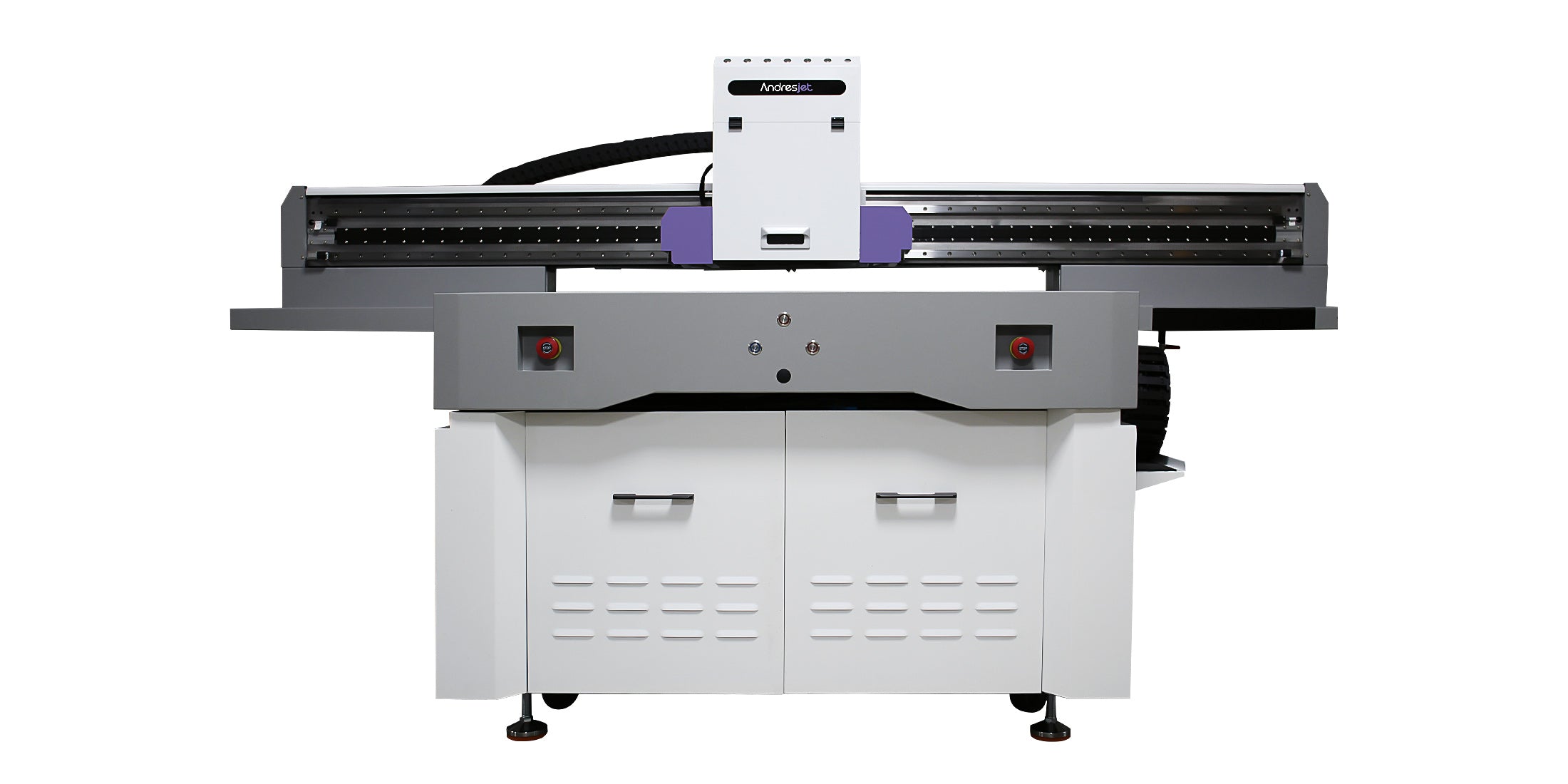
Direct costs follow the job: blank products, ink, primer when required, cleaning materials, packaging and operator time. Setup costs include file repair, white-layer preparation, fixture or datum work, test pieces and first-article approval. Indirect costs include quoting, purchasing, equipment ownership, software, administration and routine maintenance.
Separate fixed, variable and order-specific costs. A repeat order using an approved template should not carry the same engineering burden as a new substrate or a new fixture. If the estimating sheet hides those differences, profitable repeat work may subsidize difficult custom orders.
Use: Quote price = direct job cost + setup charge + allocated indirect cost + risk allowance + target profit. For unit pricing, divide only after the order-level costs are included. Use accepted pieces, not loaded pieces, as the denominator when spoilage is material.
A practical guardrail is contribution per constrained hour. Calculate revenue minus variable job costs, then divide by the production resource that limits output. This helps compare a short premium job with a larger but setup-heavy order.
Assume an illustrative 100-piece order: blanks cost $80, ink and consumables $18, production labor $42, setup labor $30, expected spoilage $10, packaging $15 and allocated indirect cost $25. Total estimated cost is $220. With a 30% margin on selling price, price = $220 ÷ 0.70 = $314.29, or about $3.14 per accepted piece.
This is a teaching example, not an AndresJet price or market recommendation. Replace every input with the shop’s records, include tax and freight where applicable, and verify that the resulting contribution supports the promised lead time.
| Component | Illustrative amount | Pricing treatment |
|---|---|---|
| Blanks | $80 | Variable |
| Ink and consumables | $18 | Variable |
| Labor and setup | $72 | Job-specific |
| Spoilage and packaging | $25 | Risk/variable |
| Allocated indirect cost | $25 | Overhead |
| Total cost | $220 | Divide by 0.70 for 30% margin |
Quantity discounts should follow measured savings in setup per piece, purchasing or packing—not an automatic percentage. Keep the order-level setup charge visible, then reduce unit production cost only where batching creates a real efficiency.
Rush pricing should cover schedule disruption, overtime, expedited purchasing and increased delivery risk. Confirm capacity before accepting the order. A premium cannot create machine time that is not available.
| Quote condition | What changes | Control |
|---|---|---|
| New artwork | Setup and approval time | Defined revision limit |
| Repeat artwork | Lower setup burden | Use approved file |
| Higher quantity | Setup spread across more pieces | Verify batch yield |
| Rush order | Schedule and supply risk | Capacity approval |
| New substrate | Testing and spoilage risk | Paid sample stage |
The AndresJet small-business UV printer collection can help buyers understand the compact equipment category, while the AJ1206 product page provides published configuration boundaries. Neither page replaces a job estimate. Quote only after the object, artwork, loading method and acceptance criteria are known.
Review actual versus estimated cost after production. Record setup variance, accepted quantity, rework and packing time. Use that evidence to update the estimating sheet instead of changing prices from intuition.
Pricing is strongest when sales and production use the same job definition. A quote should identify the approved object, artwork version, quantity band, finish, inspection standard and revision limit. When those inputs change, the shop should re-estimate rather than protect an outdated unit price.
Price custom UV printing from complete job cost, separate setup from unit production, and use accepted output as the commercial denominator. Apply quantity breaks only where measured efficiency exists, and charge for rush or engineering work when it creates real cost and risk.
Before publishing a price list, validate representative jobs on the intended equipment and review the estimate against actual production. AndresJet can support sample testing, while the business remains responsible for its selling price, overhead allocation and margin policy.
For the complete decision path, continue with the uv print business & brand applications guide.
Usually yes when artwork preparation, fixtures, sampling or first-article approval creates an order-level cost. Showing it separately also prevents repeat orders from being priced as though engineering work happens every time.
Use measured loss by job family where possible. A new substrate or difficult fixture may need a larger allowance than a stable repeat order.
No. Markup is profit divided by cost; margin is profit divided by selling price. A 30% margin therefore requires dividing cost by 0.70, not multiplying it by 1.30.


