

Personalized gifts
Awards, photo products, keychains, keepsakes and made-to-order gift items.
Review the AJ1206
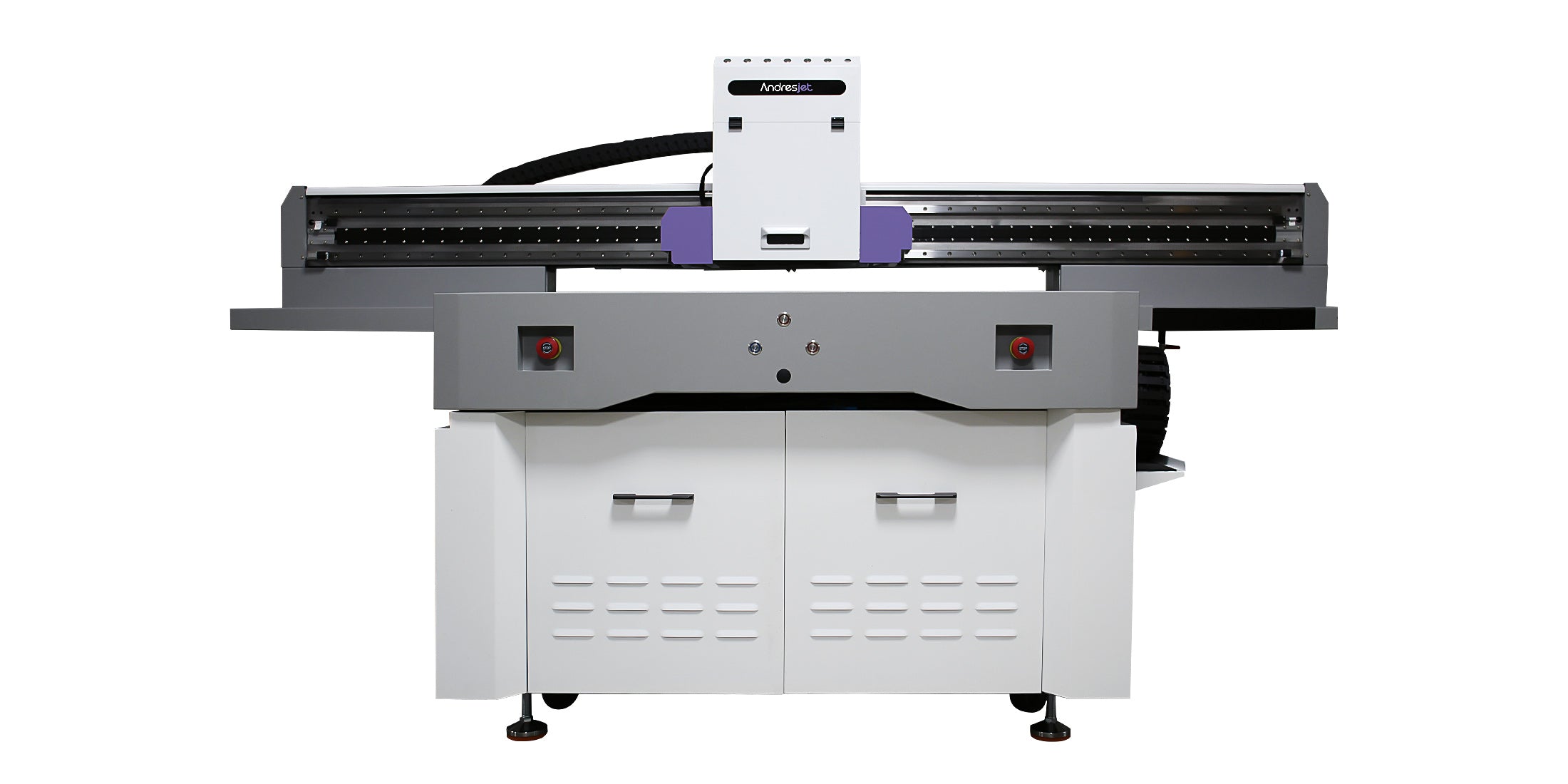
The AndresJet AJ1206 brings industrial-grade printing to small and medium-sized businesses. Get professional performance and exceptional speed in a compact, budget-friendly design perfect for scaling your production.

Produce personalized gifts, promotional items, signage and small-batch components without limiting your business to one product category. The AJ1206’s 1200 × 600 mm flatbed and CMYK, white and varnish configuration support varied materials, artwork and order sizes.
Optional CCD positioning can assist with repeat jobs and pre-cut items, while the compact format suits growing workshops that need broad application coverage without moving to a large-format production system.
Business production overview
Bring personalized products, samples and short production runs in-house without building the workshop around one SKU. The AJ1206 combines a 1200 × 600 mm flatbed, CMYK, white and varnish printing, and optional CCD positioning for a focused but flexible custom-product workflow.
Awards, photo products, keychains, keepsakes and made-to-order gift items.
Review the AJ1206Badges, branded giveaways, desk items, tags and campaign-specific merchandise.
Discuss your product mixSmall panels, nameplates, point-of-sale pieces and compatible acrylic displays.
Explore acrylic printingControl panels, prototypes and direct decoration of compatible flat parts.
Compare compact printersSwitch names, graphics and order variations through a digital workflow for short and mixed runs.
Prepare full or selective white layers for tested clear, colored and dark products.
Use varnish for highlighted areas and layered effects after approving the actual sample.
Optional CCD positioning can support compatible pre-cut items and mixed placements.
Recommended compact production model
The AJ1206 suits businesses whose priority products fit its bed, clearance and media limits, and that need more production capability than a consumer desktop device. It can support varied small products as well as panels up to its published print area, subject to material and application testing.
Confirm products, ink layers, positioning, site requirements and realistic output with AndresJet. A physical sample is more useful than selecting a machine from a headline speed alone.
View AJ1206 DetailsFor a useful recommendation
A compact UV printer is useful only when it matches the products, volume and operating conditions behind the business. Include these four groups of details with an inquiry so the recommendation can be specific.
Representative samples or photos, dimensions, thickness, weight, surface finish and material type.
Typical batch size, number of artwork variations, daily or weekly target and turnaround requirement.
Artwork coverage, resolution, white and varnish layers, viewing conditions and durability expectations.
Installation country, available space and power, operator experience, training and service expectations.
No. It is a compact industrial flatbed model, but its published net weight is 400 kg and it requires AC220V power. Plan a suitable production area, access for installation, environmental control and safe operating procedures rather than treating it as an office appliance.
Test the products that represent the intended revenue mix, especially different materials, coatings, colors and shapes. Evaluate adhesion, color, white opacity, varnish registration, positioning and any required resistance to cleaning or handling.
Use the average number of items per job, artwork changes, print coverage, quality mode, white or varnish layers, loading time and inspection time. The published output of up to 2,000 coins per hour describes a specific coin workflow and should not be applied to every product.
CCD positioning can help identify and align compatible pre-cut or mixed items, but some shapes and production tolerances may still benefit from a fixture or controlled loading method. Confirm the workflow with the actual products and repeatability requirement.
Plan artwork and RIP preparation, color and ink-layer approval, daily printhead and ink-system care, loading procedures, environmental conditions, sample inspection and maintenance responsibilities. Confirm training, installation and service scope as part of the quotation.
For practical production planning
The right decision depends on what will be printed, how often designs change, how products are loaded and inspected, and what support the workshop needs. Use this guide to turn a broad printer search into a testable production plan.
Provides control over short runs, personalization and scheduling. It also adds responsibility for artwork, operation, maintenance, quality control and consumables.
Can avoid equipment ownership and suit irregular demand, but lead time, minimum order quantities and control over urgent revisions may be less flexible.
May fit particular quantities and artwork styles, but each method has separate setup, material, finishing and changeover requirements.
Choose the core products. Start with a focused group that represents expected sales instead of trying to cover every possible substrate.
Confirm physical fit. Record dimensions, thickness, weight, surface condition and how each item will sit on the bed.
Prepare artwork templates. Standardize dimensions, bleed, color data and separate white or varnish layers where required.
Define loading and positioning. Evaluate the vacuum bed, registration marks, CCD option or a suitable fixture for repeat jobs.
Approve a physical sample. Check color, adhesion, detail, finish, placement and resistance under the product's real use conditions.
Measure the complete cycle. Include preparation, printing, loading, unloading, inspection, cleaning and changeover time.
A wide application range does not mean one ink setup is automatically suitable for every plastic, metal, glass, wood or coated product. Surface treatment, geometry, color, handling and durability requirements can change the result. Prioritize the products most important to the business and approve them with the actual artwork, ink layers and production method.
A credible business plan uses tested cycle times, approved samples and complete operating costs. Do not base a purchase on a universal material claim, a single maximum-speed figure or a guaranteed payback period.