

How Should UV Print Durability Be Tested on PVC and ABS Panels?
- by John White
Print bigger, print faster — wide-format UV flatbed printers for signs, decor and industrial work.

UV print durability on PVC and ABS panels should be tested against the panel’s real end use. Adhesion, abrasion, cleaner contact, moisture, handling, cutting, bending and weather exposure are different risks. The buyer should define the expected exposure, select relevant tests, record conditioning and approve pass/fail criteria on production stock.
An indoor display may prioritize handling and cleaner resistance. A fabricated ABS component may experience assembly contact or flexing. Outdoor PVC signage may require weather and temperature exposure. A single tape test cannot represent every service condition.
The PVC and ABS printing collection frames the application category; test design must still follow the actual grade, coating and use.
Adhesion evaluates how the print system remains attached to the surface. Abrasion evaluates damage from rubbing or repeated contact. ASTM D3359 supplies standardized tape-test methods for coatings, but suitability should be agreed for the specific ink and panel. Abrasion needs a defined contact material, load, cycle count and evaluation method.
List the actual cleaners, concentration, contact time and wiping method. Include water or humidity only when relevant. Handling tests should reproduce stacking, protective film removal, cutting, routing, assembly or packing rather than an arbitrary scratch.
| Risk | Controlled variables | Possible pass/fail evidence |
|---|---|---|
| Adhesion | Conditioning, cut method, tape, removal | Rating and failure location |
| Abrasion | Contact, load, cycles | Visible wear or color change limit |
| Cleaner | Chemical, dilution, dwell, wipes | No unacceptable softening or transfer |
| Fabrication | Cut, bend or routing process | No unacceptable edge lift or cracking |
| Weather | Exposure method and duration | Defined appearance and adhesion limits |
Record panel supplier and lot, surface preparation, primer, artwork, ink-layer order, print mode, cure condition, conditioning time, test method, result, photographs and approver. A pass applies only to the documented construction and process window.

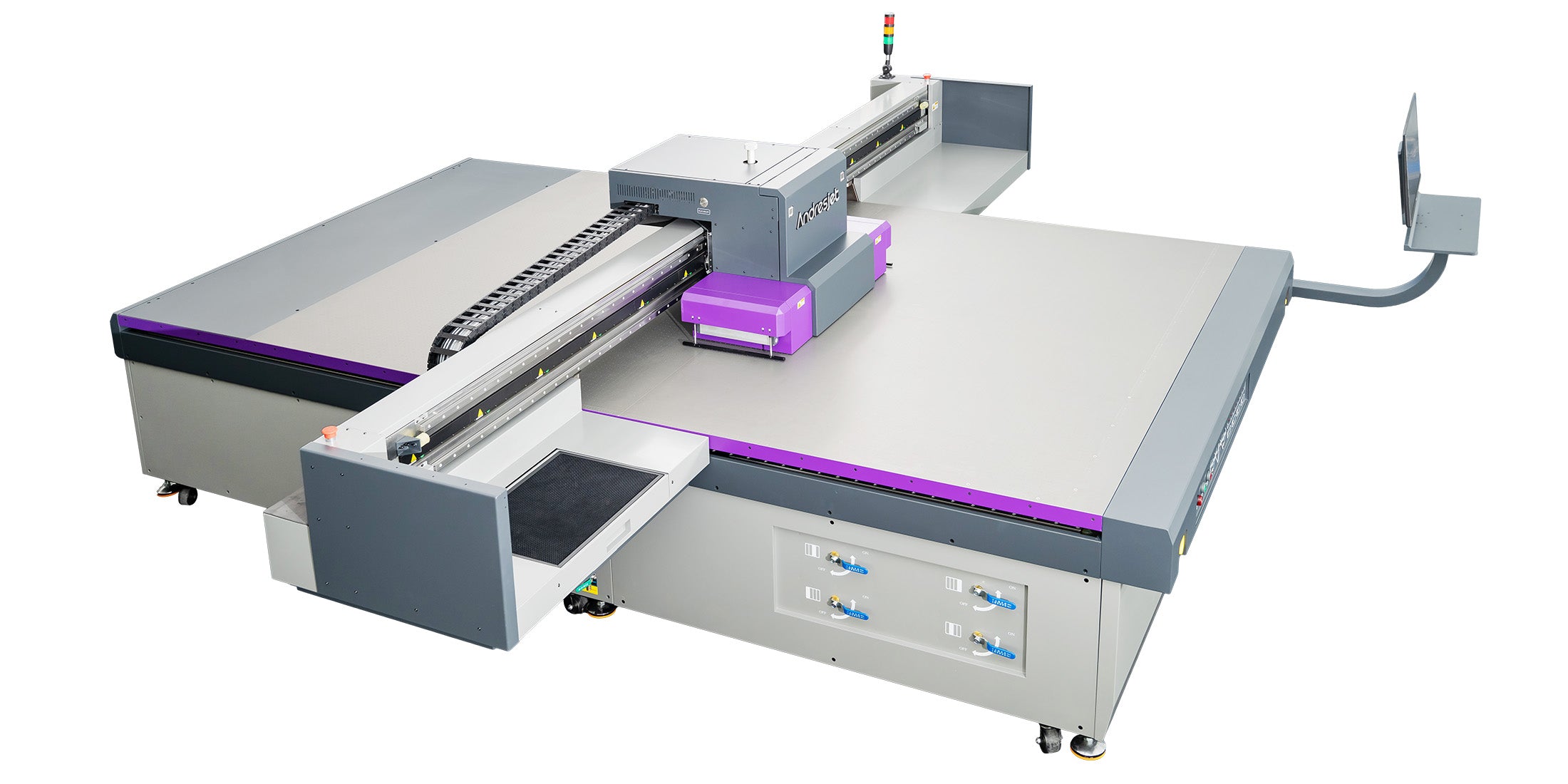
Review the AJ2130G/R product page for published equipment information, then request a sample using the panel, ink build and post-print fabrication expected in production.
Define when testing occurs after printing and the temperature and humidity during conditioning. Immediate handling may reveal incomplete cure or weak early adhesion, while a later test may represent normal use. If outdoor or accelerated exposure is required, agree the method, duration, control sample and evaluation interval with the buyer or relevant specification.
Use an unprinted panel and, where helpful, an approved reference print as controls. Controls help distinguish ink-system change from discoloration, warping or coating failure in the base panel itself.
| Field | Required entry |
|---|---|
| End use | Indoor display, fabricated component or outdoor sign |
| Critical risks | Named adhesion, abrasion, chemical or exposure conditions |
| Construction | Panel grade, coating, preparation and ink layers |
| Method | Equipment, sequence, conditioning and evaluation |
| Acceptance | Numeric rating or documented visual limit |
| Scope | Approved materials, lots or process window |
A report should also record failure location. Ink releasing from an intact coating is different from the coating itself releasing from PVC or ABS, and the corrective action may belong to different suppliers or preparation steps.
Durability qualification is an end-use test plan, not one universal pass. Select the risks the product will encounter and retain a report that connects results to material and process.
No. Weather, color change, moisture and thermal exposure require separate evidence.
No. Different grades and coatings can respond differently.
Repeat after meaningful changes to material, coating, preparation, ink build, cure or fabrication.
 How Should a UV Substrate Qualification Library Be Built?
Knowledge
How Should a UV Substrate Qualification Library Be Built?
Knowledge
 UV Printer Installation, Commissioning and Operator Training: What Buyers Must Plan For
Knowledge
UV Printer Installation, Commissioning and Operator Training: What Buyers Must Plan For
Knowledge
 How a Pre-Order UV Printer Sample Test Works: What to Send and What You Get Back
Knowledge
How a Pre-Order UV Printer Sample Test Works: What to Send and What You Get Back
Knowledge
 Order to Delivery: How UV Printer Lead Time Is Actually Built
Knowledge
Order to Delivery: How UV Printer Lead Time Is Actually Built
Knowledge