

- by John White
How Can PVC and ABS Panel Printing Cost Be Controlled?
- by John White
Print bigger, print faster — wide-format UV flatbed printers for signs, decor and industrial work.

PVC and ABS panel printing cost should be controlled through four records: material yield, ink-layer assumptions, productive labor and rejected-output causes. Printer price is outside this article’s scope. The immediate goal is to find which controllable loss—layout waste, setup, excessive ink build, rework or poor accepted yield—has the largest effect on each job.
Separate blank-panel cost, cutting or routing, cleaning and primer, ink layers, loading, print time, inspection, packing and scrap. Cost should follow the actual production route. If panels are cut after printing, fabrication damage belongs in accepted-output cost even though it occurs downstream.
Coverage, white underbase, varnish, repeat passes and purge or cleaning consumption affect ink cost. Estimate with the released artwork and validated recipe rather than a universal square-meter figure. Dark PVC, clear sheets and decorative varnish structures may have very different deposits.
The PVC and ABS application collection helps define the intended production category. Cost evidence should come from the exact panel and artwork.
Time file preparation, material verification, cleaning, loading, first article, run supervision, unloading and inspection. Allocate one-time setup across the job quantity, while treating recurring handling per sheet or load. A short job can have low ink consumption but high setup cost per accepted panel.
Cost per accepted panel = total job cost ÷ accepted panels. Record why each panel failed: contamination, adhesion, wrong file, banding, position, handling, fabrication or material damage. Without reason codes, a waste log counts loss but cannot direct improvement.
| Control | Measure | First action |
|---|---|---|
| Layout yield | Used area versus purchased sheet | Review nesting and standard sizes |
| Setup | Minutes to approved first article | Standardize file and recipe release |
| Ink build | Approved layers and estimated usage | Remove layers that add no required value |
| Scrap | Rejected cost by reason | Attack the largest repeated cause |
| Rework | Hours and accepted recovery | Define when rework should stop |
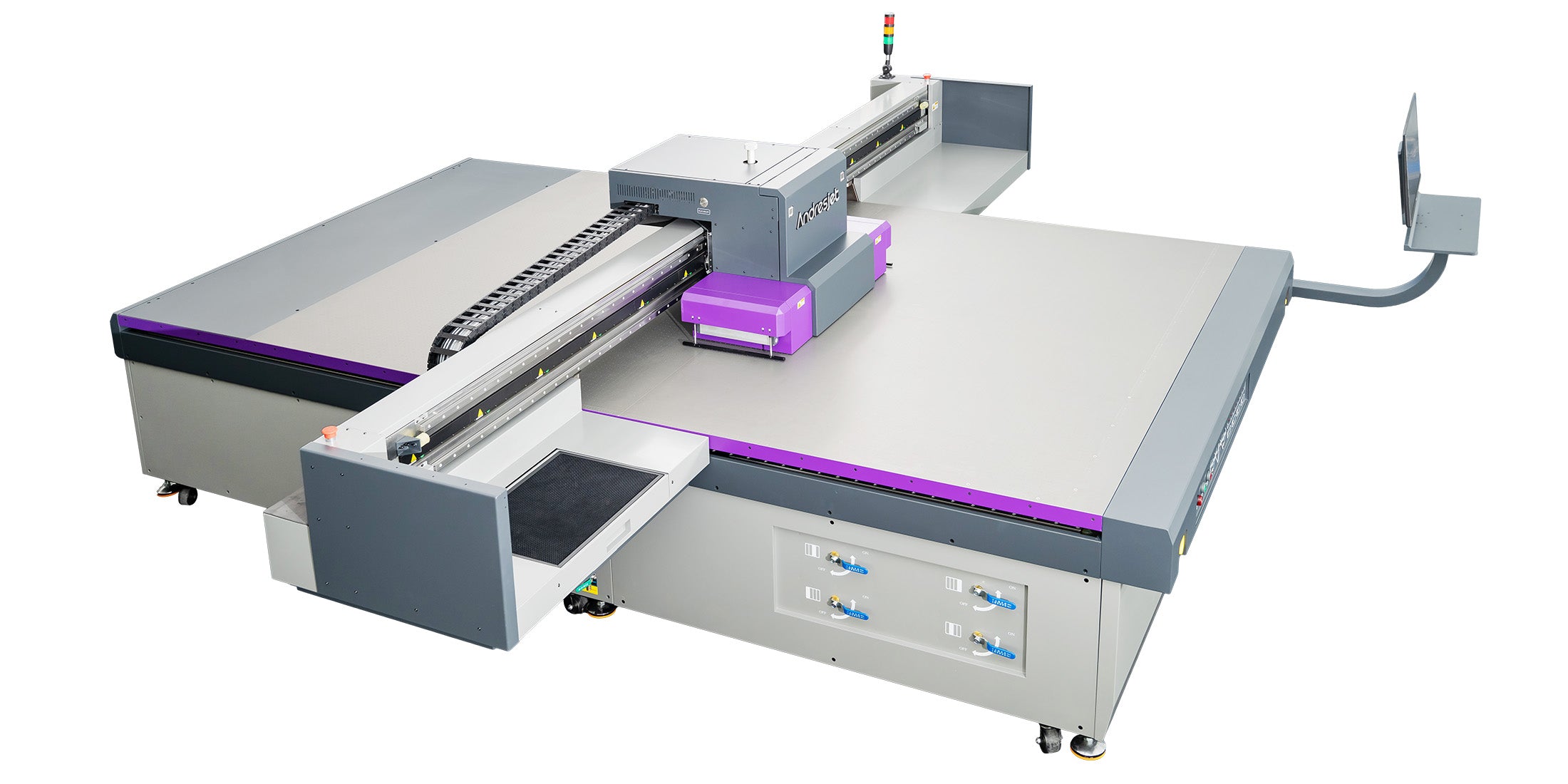
Compare estimated and actual quantity, labor, yield and major consumables. Do not rewrite the estimate to hide the variance; record whether the cause was inaccurate assumptions or an abnormal production event. The AJ2130G/R page provides equipment context, while the completed-job record supplies cost evidence.
A common mistake is to target the easiest cost to count rather than the largest cost to change. Ink may be visible, while a repeated full-panel rejection or forty-minute setup overrun has a larger commercial effect. The waste log should therefore show both quantity and added value at the point of failure.
Process engineers should review cost and defect records together. If contamination causes rejection, purchasing cheaper ink does not solve the loss. If artwork revisions cause reprints, the control belongs in file release. A useful costing system directs action to the process that created the variance.
Cost control works when the shop links money to process. Measure accepted output, categorize waste and correct the largest repeated loss before pursuing small theoretical savings.
No. Include the processing already added before rejection.
Not reliably without coverage and layer assumptions.
The largest repeated controllable loss shown by completed-job evidence.
 UV Printer Installation, Commissioning and Operator Training: What Buyers Must Plan For
Knowledge
UV Printer Installation, Commissioning and Operator Training: What Buyers Must Plan For
Knowledge
 How a Pre-Order UV Printer Sample Test Works: What to Send and What You Get Back
Knowledge
Order to Delivery: How UV Printer Lead Time Is Actually Built
Knowledge
How a Pre-Order UV Printer Sample Test Works: What to Send and What You Get Back
Knowledge
Order to Delivery: How UV Printer Lead Time Is Actually Built
Knowledge
 What MOQ Applies to a UV Printer Order, and When Customisation Changes It
Knowledge
What MOQ Applies to a UV Printer Order, and When Customisation Changes It
Knowledge