

How Should a Wide-Format UV Site Be Prepared?
- by John White
Print bigger, print faster — wide-format UV flatbed printers for signs, decor and industrial work.

A wide-format rigid-media installation should be released only after access, floor and working clearances, power and grounding, environment, ventilation, RIP workstation, network, material storage, safety controls and commissioning responsibilities have been verified against the selected configuration. A site-readiness checklist should assign an owner, evidence and due date to every item rather than relying on a general statement that the room is ready.
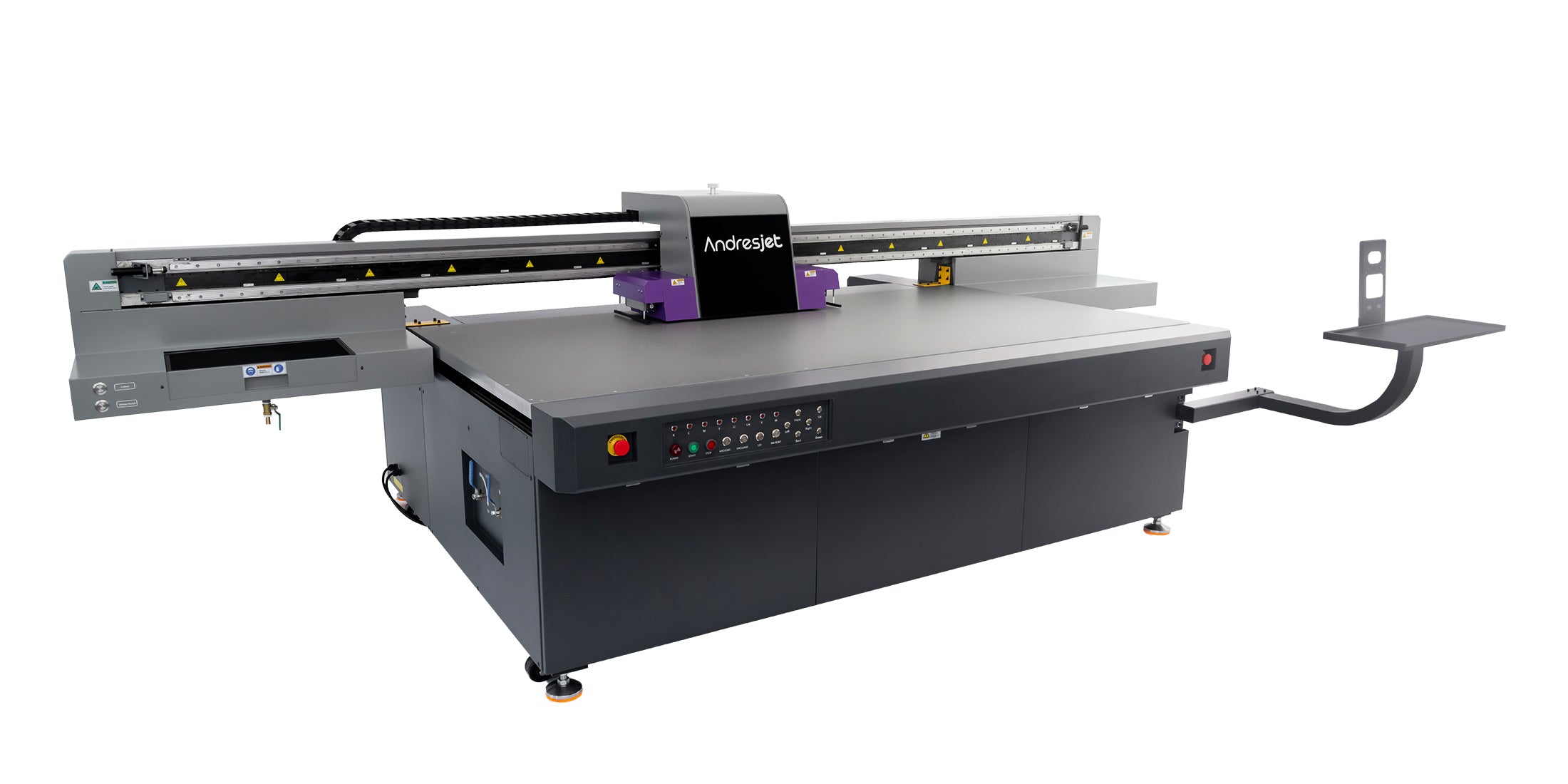
Map the complete delivery route: vehicle access, dock or lift, doors, corridors, corners, ceiling height, floor transitions and the final service envelope. Rigid-sheet equipment also needs a verified path for large crated components and safe sheet movement around the installed bed.
The wide-format UV flatbed printer collection helps establish the equipment category before the final site envelope is approved.
Use the packed dimensions and handling instructions confirmed for the purchased configuration. A product-page footprint is not automatically the shipping envelope, turning radius or installation clearance.
Confirm load-bearing suitability, levelness, vibration sources, operator access, material movement and maintenance clearance. Mark the final position and keep emergency routes, panels and service zones unobstructed.

The commissioning team should inspect the actual room, not only a drawing. If site constraints require a changed orientation or custom material path, close that decision before delivery.
The electrician should verify supply, protection, outlet location, grounding and any auxiliary equipment against the final purchase specification and local requirements. Include any chiller, air, extraction or accessories only when confirmed for the purchased configuration.
Published machine information can be reviewed on the AJ2513G/R product page; electrical and facility requirements must still be confirmed for the purchased configuration and region.
Do not publish or infer voltage, current or breaker values from a different model or region. Record measured readiness and obtain the responsible sign-off before energizing equipment.
Confirm temperature and humidity ranges required by the selected equipment and consumables, air cleanliness, direct sunlight, heat sources and ventilation or extraction identified by the safety assessment. Review ink, cleaner and primer safety data.
Environmental stability supports ink behavior, substrate conditioning, electronics and repeatable color. Ventilation decisions must follow the actual materials and local workplace requirements; this article does not replace a site-specific safety review.
Prepare the approved workstation, software responsibility, file-transfer route, backup, network security and color-measurement workflow. Plan horizontal rigid-sheet storage, conditioning space, forklift or cart routes and a clean staging zone beside production.
Separate incoming, qualified, printed and rejected material. Store inks and chemicals according to supplier information, and ensure operators can move production stock without crossing unsafe or congested routes.
| Readiness area | Owner | Evidence |
|---|---|---|
| Delivery access | Facilities/logistics | Measured route and handling plan |
| Floor and clearances | Facilities | Marked layout and approval |
| Power/grounding | Qualified electrician | Measured sign-off |
| Environment/ventilation | EHS/facilities | Assessment and controls |
| RIP/network | IT/production | Test file transferred |
| Material storage | Production | Defined zones and handling |
Before arrival, close open site actions and confirm substrate, files, fixtures and responsible operators. At commissioning, verify installation records, safe startup, communication, loading, first sample, operator training and maintenance documentation. Record unresolved items with owner and due date.

Wide-format installation readiness is complete only when the packed-machine route, floor loading, service envelope, utilities, ventilation, sheet flow and commissioning responsibilities are signed off. A product-page footprint cannot replace a measured site plan. AndresJet should confirm configuration-specific requirements, while the buyer assigns local facilities, electrical, safety, IT and production approvals before delivery.
Facilities, a qualified electrician, EHS or safety, IT, production and the project owner should sign the sections they control; the final release owner should be named.
No. Confirm the purchased configuration, accessories, region and local rules. Similar equipment can have different shipping, utility or service requirements.
Provide qualified substrate, final artwork, fixtures or load plan, acceptance criteria, trained operators and a named approver for the first production sample.
UV Printer Installation, Commissioning and Operator Training: What Buyers Must Plan For
Knowledge
 How a Pre-Order UV Printer Sample Test Works: What to Send and What You Get Back
Knowledge
How a Pre-Order UV Printer Sample Test Works: What to Send and What You Get Back
Knowledge
 Order to Delivery: How UV Printer Lead Time Is Actually Built
Knowledge
Order to Delivery: How UV Printer Lead Time Is Actually Built
Knowledge
 What MOQ Applies to a UV Printer Order, and When Customisation Changes It
Knowledge
What MOQ Applies to a UV Printer Order, and When Customisation Changes It
Knowledge