

A compact industrial UV printer specification should begin with applications and acceptance criteria, then define printable dimensions, object thickness and weight, substrate preparation, ink layers, positioning, workflow, utilities, training, spare parts and service. Buyers should require supplier evidence for every critical condition and keep preferences separate from pass/fail requirements.
Which Products and Jobs Must the Printer Handle?
Describe the intended objects, dimensions, batch sizes, artwork variability, substrate families, coatings and end-use conditions. Identify the hardest recurring job and the expected peak. This prevents an equipment list from becoming a collection of attractive features with no production test.
Classify requirements as mandatory, preferred or optional. A mandatory item must connect to a customer promise, safety condition or process constraint.
What Printable Envelope and Loading Method Are Required?
Specify maximum and minimum object dimensions, thickness, weight, flatness and clearance. State whether the job uses fixtures, vacuum hold-down, manual datum placement or a verified vision workflow. Bed dimensions alone do not prove that a product can be loaded safely and repeatedly.
For multiple products, provide a load drawing and required pieces per cycle. Ask the supplier to show edge clearance, collision protection and changeover procedure.
How Should Ink, Color and Material Requirements Be Written?
Define whether jobs require CMYK, white, varnish or another verified channel configuration. State the substrate and coating, cleaning method, primer decision and adhesion test. Do not write universal material compatibility into the purchase specification.
Use a customer-approved sample, file version and inspection conditions as the reference. Where color is critical, define the measurement method and tolerance with the buyer rather than assuming a universal value.
What Site, Workflow and Service Details Belong in the Specification?
Document file formats, RIP responsibility, network connection, operator roles, power, grounding, environment, ventilation and material storage. Define what training, commissioning records, maintenance guidance and spare-parts information must be delivered.
Service requirements should state contact route, escalation evidence and required documentation. Do not insert a warranty term or response time unless it is verified in the commercial agreement.
| Requirement | Priority | Acceptance evidence |
|---|---|---|
| Representative job fit | Mandatory | Approved sample |
| Loading repeatability | Mandatory | Observed batch |
| Ink-layer workflow | Mandatory | File and print record |
| Site readiness | Mandatory | Signed checklist |
| Training | Preferred | Agenda and competency check |
| Spare-parts plan | Preferred | Confirmed list |
Pass/Fail Acceptance Matrix
Each critical requirement needs a test, owner and result. Avoid vague words such as high quality or easy operation. Replace them with observable conditions: correct orientation, approved adhesion, no collision, accepted color reference and documented cycle time.
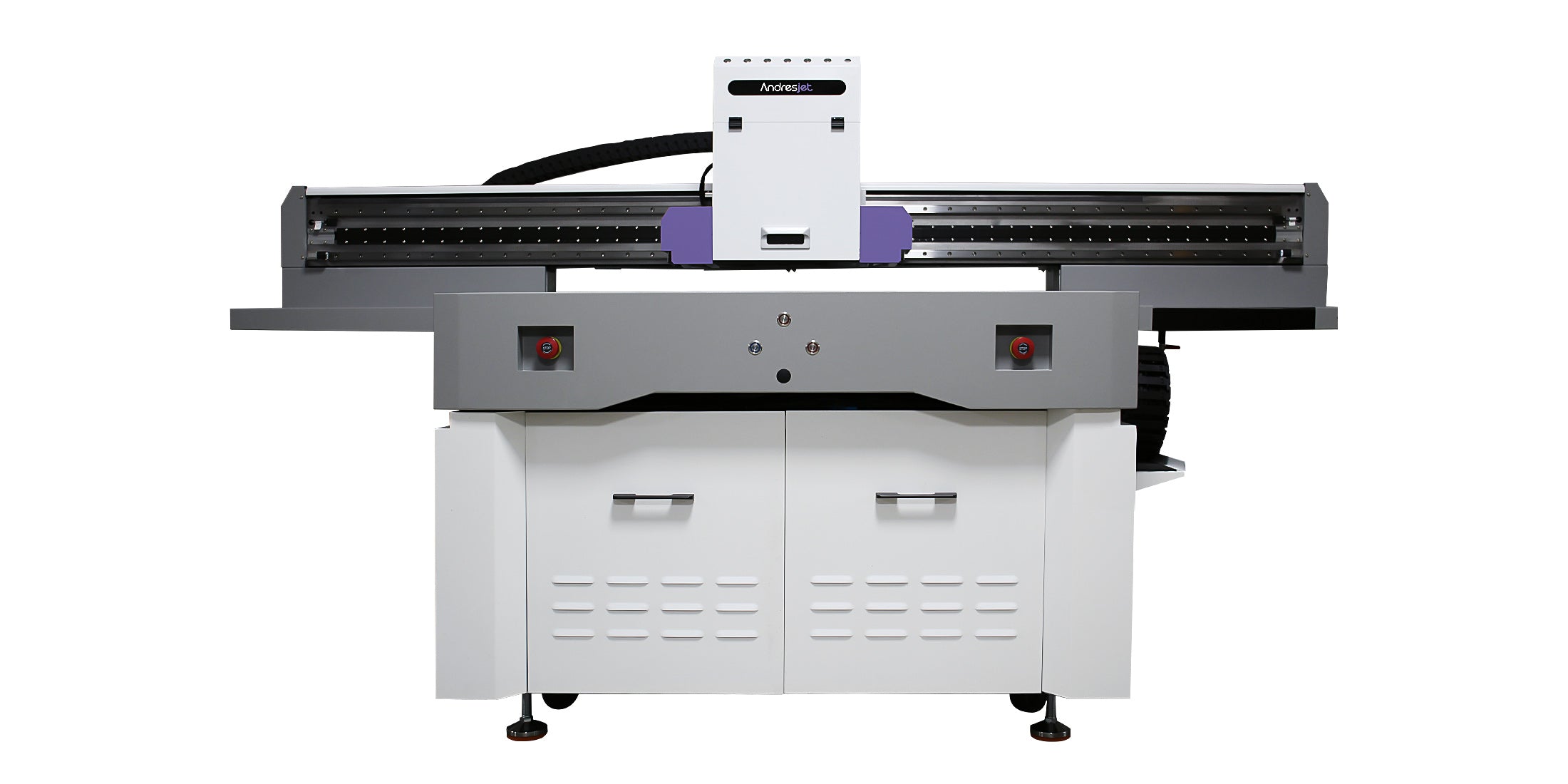
The small industrial UV flatbed printer collection supports category research, and the AJ1206 product page provides published specifications. Procurement should still validate the selected configuration against its own matrix.
Expert Views
A strong requirement document makes rejection possible. If a statement cannot be tested at sample stage or commissioning, rewrite it as an observable condition or remove it from the pass/fail list.
Conclusion
A compact industrial printer specification should connect every machine requirement to a product, workflow or acceptance test. Separate mandatory conditions from preferences, require evidence, and close unresolved assumptions before purchase.
FAQs
Which requirement should be tested first?
Start with the hardest recurring product and every mandatory pass/fail condition tied to it. A simple demonstration job can hide the actual procurement risk.
Are supplier specifications enough for acceptance?
No. Published specifications define boundaries, while an approved sample and witnessed workflow show whether the buyer's application fits inside them.
What should trigger a specification revision?
Revise it when product dimensions, substrate, ink layers, volume, site conditions or acceptance criteria materially change before purchase.
Share:
How Can UV Printers Cut Short-Run Changeover Time?
How Should PVC and ABS Panels Be Prepared for UV Printing?