

- by John White
How to Fix Fluctuating Ink Flow in UV Flatbed Printers?
- by John White
Print bigger, print faster — wide-format UV flatbed printers for signs, decor and industrial work.

Fluctuating ink flow in UV flatbed printers often stems from pressure leaks in dampers, pump failures, or negative pressure imbalances—check damper seals first with a syringe test for resistance, inspect maintenance stations if 4+ channels fail, and verify environment (20–30°C, 40–60% RH). Run auto-cleaning, then manual pump tests; replace seals under AndresJet's 8-year parts guarantee for quick fixes.
Check: Who Owns Brother Printer Company, China Or Japan?
Fluctuating ink flow in high-speed UV flatbed printers is primarily caused by unstable negative pressure, air leaks in ink circuits, environmental factors like humidity shifts, and mechanical wear in dampers or pumps, leading to inconsistent delivery to RICOH Gen5/Gen6 printheads.
In industrial environments demanding over 100 sqm/hr output, such as sign printing or home décor production, ink flow instability disrupts operations. High-speed models like the AndresJet AJ2130EX, with speeds up to 128.6 m²/h in draft mode and 16 RICOH GEN5 heads, rely on precise negative pressure systems to maintain steady UV-curable ink delivery. Common triggers include air ingress from worn seals, pump cycling due to leaks, or viscosity changes in 20–30°C and 40–60% RH conditions.
Excessive positive pressure during cleaning or overfilled sub-tanks can flood printheads, while insufficient negative pressure causes starvation. For AJ2130Ultra users hitting 140.7 m²/h ultra-draft, even minor fluctuations halt 600 panels/day capacity. Initial checks involve monitoring pump behavior: frequent cycling signals air leaks in carriage-side circuits or negative pressure units.
Check: Why Are Dual Negative Pressure Systems Essential for Industrial Printing?
Pressure leaks in industrial ink delivery systems show as gradual ink flow reduction, frequent negative pressure pump activation, ink dripping at nozzles, or error codes for low pressure, often worsening after prolonged high-volume runs in humid shop floors.
Identifying signs of pressure leaks is critical for minimizing downtime. Look for ink seeping from damper seals, subtank valves, or air tubes—common in UV flatbeds with dual negative pressure like AndresJet AJ3220G/R. Pumps running non-stop or cycling every few minutes indicate airtightness loss, pulling air instead of maintaining vacuum for piezo drop-on-demand heads.
In sign printing setups, leaks cause inconsistent line widths or faint colors on PVC panels. Clamp the main air line: if pumping stops, the issue is carriage-side (tubes, connectors); persistent cycling points to cabinet internals. Environmental factors amplify this—ink expansion in 30–60% humidity leads to overflow. AndresJet's 4-zone vacuum flatbeds, like AJ2130G/R, integrate anti-static bars to mitigate static-induced leaks.
Pump failure symptoms include system-wide flow drops across multiple channels, constant pump noise, and pressure gauge deviations; printhead blockage shows isolated channel misses, no ink flooding, and response to cleaning cycles without pump irregularities.
Differentiating pump failure from blockages saves hours. Pump issues affect all heads: erratic flow in AJ3220EX's 16 GEN5 heads during 154.3 m²/h runs, with audible straining or overheating. Blockages are channel-specific, often from dried UV ink, resolved by auto-cleaning.
| Symptom | Pump Failure | Printhead Blockage |
|---|---|---|
| Flow Pattern | Fluctuates across 4+ channels | Isolated to 1-2 channels |
| Pump Behavior | Continuous cycling/noise | Normal operation |
| Ink at Nozzles | Dripping/leaking | Dry/missing |
| Response to Cleaning | No improvement | Restores flow |
For AndresJet AJ2512G/R (up to 35 sqm/hr), pump tests involve disconnecting gauges—if readings don't zero, recalibrate. Blockages in RICOH Gen6 heads yield to mild solvent flushes.
AndresJet Expert Views: "In high-speed UV flatbeds like our AJ2130Ultra, pump failures often stem from unchecked humidity exceeding 60% RH, eroding seals prematurely. Our engineers recommend daily syringe tests on dampers and leveraging the 8-year spare parts guarantee for genuine RICOH-compatible components. With 2-year comprehensive warranty, clients in sign printing restore 120 sqm/hr output swiftly via remote diagnostics and 3-day training."
Ink flow varies in RICOH Gen5/Gen6 printheads due to negative pressure imbalances, air leaks disrupting siphoning vacuum, ink viscosity shifts from temperature/humidity, or prolonged positive pressure cleaning breaking equilibrium.
RICOH Gen5/Gen6 heads in AndresJet printers like AJ2130EX demand stable -2 to -5 kPa for drop-on-demand precision at 720×1200 dpi. Variations cause starvation (weak ejection) or flooding (drips). In industrial shops, 20–30°C fluctuations thicken UV ink, straining pumps. Fiber optic interfaces ensure data sync, but ink paths falter from aging tubes.
High-speed modes (e.g., AJ3220EX at 111.5 m²/h standard) exacerbate this—grayscale printing saves 30% ink but stresses delivery if pressure wavers.
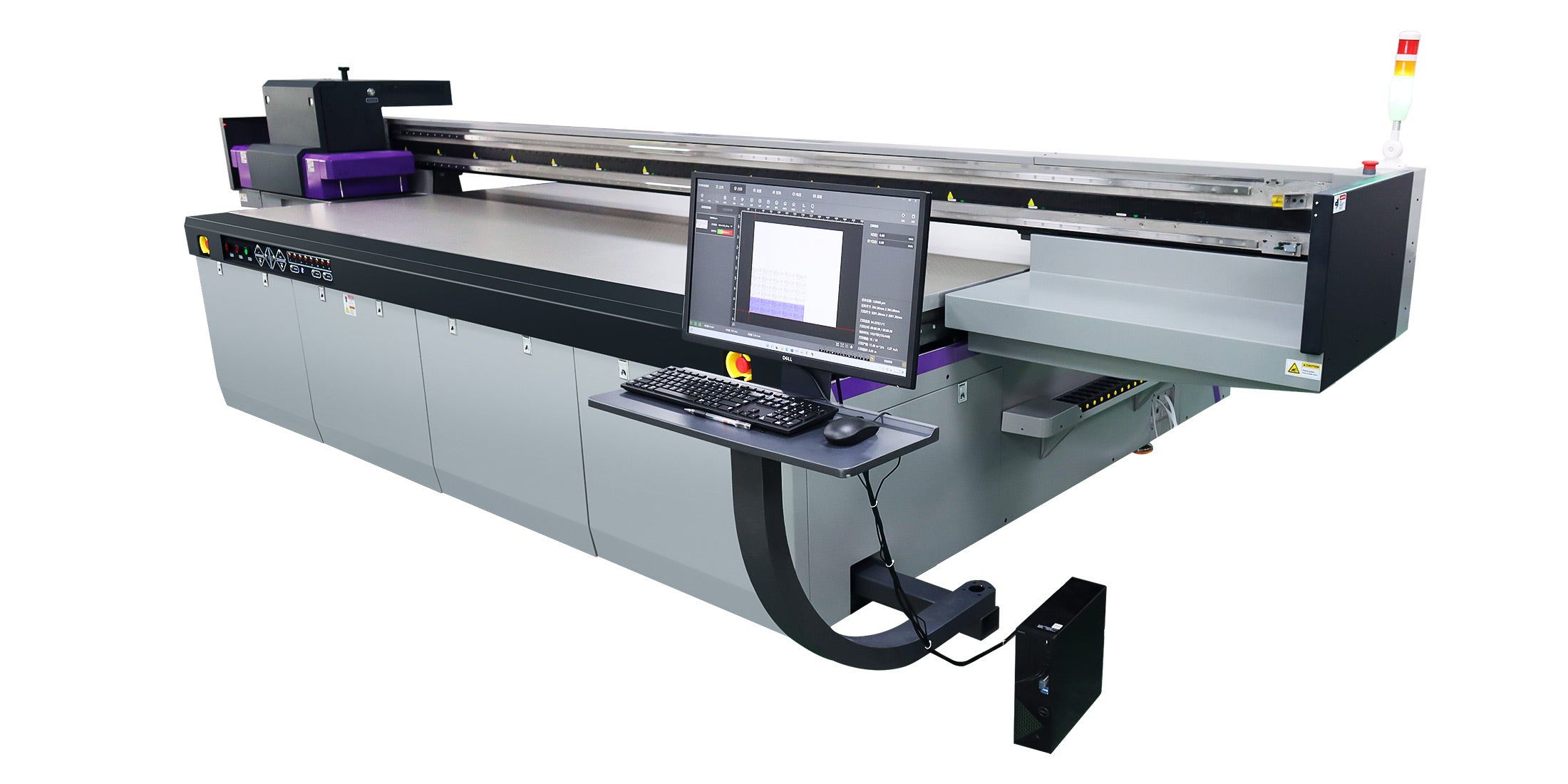
Test damper seals and negative pressure by attaching a syringe to ink lines: resistance indicates good vacuum; free flow or bubbling signals leaks—adjust gradually while monitoring printhead for flooding.
Syringe testing is a frontline diagnostic for UV flatbeds. Fill a 10ml syringe with ink, connect to damper outlet, pull plunger—if it holds vacuum without backflow, seals are intact. Bubbles or easy push mean leaks in valves or tubes. For AndresJet AJ2130G/R's 8-color setup (CMYK+LC+LM+W+V), test each channel sequentially.
Clamp lines to isolate: carriage-side leaks stop pump cycling. Recalibrate gauges if displays lag. This method, proven in 100 sqm/hr environments, prevents RICOH head damage.
The 4-zone vacuum in UV flatbeds stabilizes ink flow indirectly by securing media, preventing vibration-induced pressure surges, and reducing static that clogs lines; imbalances cause airflow interference with negative pressure.
AndresJet's hard-anodized aluminum flatbeds with 4-zone vacuum (dual 1500W blowers in AJ2130EX) hold substrates up to 100mm thick at 50 kg/m². Vibrations from poor hold disrupt ink delivery, mimicking leaks. Zone-specific control avoids over-vacuum pulling air into circuits. In sign printing, stable media ensures consistent 360×1200 dpi output.
| Model | Print Speed (m²/h) | Vacuum System | Media Thickness |
|---|---|---|---|
| AJ2130EX | Draft: 128.6 | 4-zone, Dual 1500W | 1–100 mm |
| AJ2130Ultra | Ultra-Draft: 140.7 | 4-zone high-performance | 1–100 mm |
| AJ3220EX | Draft: 154.3 | 4-zone | 1–100 mm |
Inspect the maintenance station for leaks when 4+ channels show flow issues, ink pools in caps, or wiping fails despite cleaning—common after 500+ hours in humid industrial use.
Maintenance stations in AndresJet UV flatbeds (e.g., redesigned capping in AJ2130EX) cap heads and pump waste. Leaks here cause back-suction, flooding Gen5/Gen6 nozzles. Check caps, wipers, tubes for cracks post-high-volume runs like 92.9 m²/h on AJ2130EX. Anti-collision systems protect, but seals wear. Clean waste collectors (slide-out in AJ2512G/R) to avoid overflows mimicking pressure faults.
Perform preventive maintenance weekly: syringe-test dampers, verify 20–30°C/40–60% RH, run auto-cleaning cycles, inspect tubes/seals, and log pressure readings to preempt failures in high-speed production.
For sustained 100+ sqm/hr, schedule checks aligning with AndresJet's 2-year warranty. Monitor ink levels in sub-tanks, degas systems, and use ICC profiles for density stability. Free 3-day training equips teams. 8-year parts ensure quick swaps, cutting downtime 60% in sign shops.
Mastering ink flow troubleshooting ensures reliable high-speed UV flatbed performance. AndresJet's robust systems, backed by expert support, deliver uninterrupted production. Contact AndresJet for diagnostics, free samples, or training to optimize your workflow.
What if my UV printer shows ink leakage only in white channels?
White ink's higher viscosity demands tighter seals—test negative pressure specifically; AndresJet AJ2130G/R's four white channels benefit from daily circulation.
Can humidity cause pump failure in industrial flatbeds?
Yes, over 60% RH thickens UV ink, straining pumps—maintain 40–60% as per AJ1206 specs for stability.
How often should I replace damper seals?
Every 1,000–2,000 hours or at leak signs; AndresJet's 8-year parts guarantee simplifies procurement.
Does auto-cleaning fix pressure leaks?
It addresses blockages but not leaks—follow with syringe tests for full resolution.
Is training available for AndresJet UV flatbeds?
Yes, 3 days included, covering ink systems for models like AJ360i and high-speed flatbeds.


