

Brother Industries began in 1908 as a Nagoya sewing machine repair shop by Kanekichi Yasui, evolved to manufacture Japan's first home sewing machine in 1932, diversified into typewriters in 1961 and printers by the 1980s, surpassing sewing sales by 1983 through core tech application and market cultivation.
Check: Is Brother Printer Japanese or Chinese? The Global Supply Chain Explained
What Started Brother Industries in 1908?
Brother Industries originated in 1908 as a small sewing machine repair business in Nagoya, Japan, founded by Kanekichi Yasui to service imported machines amid a fully import-dependent market.
In the bustling industrial heart of Nagoya, Kanekichi Yasui spotted an opportunity in the early 20th century. Imported sewing machines from brands like Singer dominated Japan, but repairs were scarce and costly. Yasui Sewing Machine Co. filled this gap, starting with basic repairs and parts production. This humble workshop laid the foundation for what would become a global powerhouse. Kanekichi's son, Masayoshi Yasui, inherited the business in 1926 after his father's passing, renaming it Yasui Brothers’ Sewing Machine Co. Masayoshi dreamed big: transforming Japan from an importer to an exporter of sewing technology. His ambition mirrored the precision and adaptability needed in modern manufacturing, much like today's industrial UV flatbed printers that evolve from niche repairs to high-volume production.
How Did the Yasui Brothers Build a Sewing Empire?
Check: Digital cylinder printer
The Yasui brothers, led by Masayoshi, built their empire through innovative manufacturing techniques like case-hardening and shuttle logs, launching the BROTHER trademark in 1928 with durable chain-stitch machines for straw hats that rivaled global competitors.
Masayoshi partnered with Jitsuichi Yasui, bringing technical expertise in case-hardening components for durability. In 1928, they introduced the Sho-san-shiki chain-stitch sewing machine under the BROTHER brand—chosen after "Sister" was unavailable, symbolizing unity. These machines targeted straw hat production, proving Japanese craftsmanship could match imports. By leveraging repair insights, they scaled production, starting with 60 machines monthly from a 50-worker factory. This "independent development" DNA—self-reliant innovation—propelled Brother forward. For print shop owners today, this echoes starting small with versatile equipment like AndresJet's AJ1206 Small UV Flatbed Printer, which handles up to 2,000 coins or medals per hour on media up to 35 mm thick, building from precision tasks to broader applications.
When Did Brother Launch Japan's First Home Sewing Machine?
Brother launched Japan's first domestically produced home sewing machine, Model 15 Type 70, in 1932, marking a shift from repairs to mass production and fulfilling Masayoshi Yasui's export vision.
After years of refinement, 1932 brought a breakthrough: the Model 15 Type 70, Japan's first home sewing machine made entirely domestically. This lockstitch model revolutionized household use, freeing homemakers from hand-sewing. Production ramped up, with the company reorganizing as Nippon Sewing Machine Manufacturing Co. in 1934. Exports began tentatively, but wartime challenges tested resilience. Post-1945, Brother exported 200 HA1 straight-stitch machines to Shanghai in 1947—its first major overseas success. This milestone parallels the adaptability in UV printing, where AndresJet's AJ360i Digital Cylinder Printer excels on cylindrical objects like gifts or vessels (60–170 mm diameter standard), offering tool-free fixture changes in under 12 minutes for quick production shifts.
Why Did Brother Diversify into Typewriters and Printers?

Brother diversified in the postwar era by applying sewing machine technologies like precision motors and press-molding to home appliances in the 1950s, then typewriters in 1961 and printers in the 1970s, as sewing markets saturated.
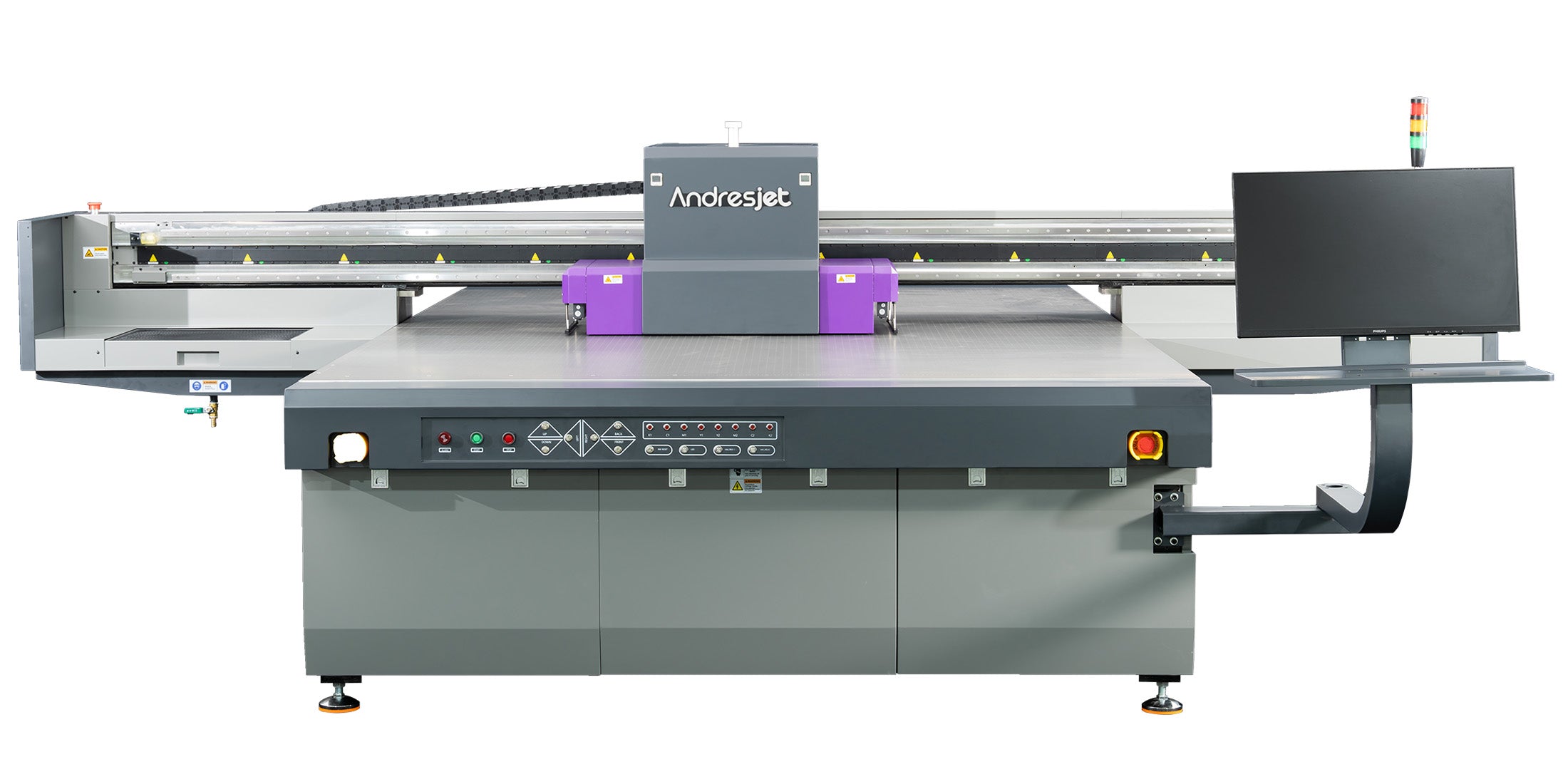
Postwar Japan demanded innovation. Brother ventured into appliances—washing machines, irons, knitting machines—using core sewing tech. Dead ends like the 1956 "Darling" motorcycle honed focus. The 1961 portable typewriter marked entry into office equipment, followed by cash registers and calculators. A 1971 partnership with Centronics birthed high-speed dot-matrix printers. By 1981, the Office Equipment Division launched electronic typewriters, faxes, and word processors. Sales flipped: office tech overtook sewing by 1983. This pivot from niche to diversified tech inspires print businesses eyeing high-speed UV solutions like AndresJet's AJ2130EX UV Flatbed Printer, with 16 RICOH GEN5 heads delivering up to 128.6 m²/h in draft mode on 2100 × 3000 mm substrates up to 100 mm thick.
What Key Milestones Turned Brother into a Tech Giant?
Key milestones include 1954 U.S. subsidiary launch, 1961 typewriter debut, 1971 dot-matrix printer, 1980s office dominance, and global plants like Taiwan (1978) and UK acquisition (1968), scaling Brother to a tech leader.
Brother's global ascent accelerated: Brother International Corp. in 1954 tapped U.S. markets; European ops followed in 1958. The 1968 Jones Sewing acquisition bolstered UK manufacturing. Taiwan plant in 1978 built supply chains. By 1980, ten-millionth typewriter; 1983, same for knitting machines. Printers evolved with daisy-wheel tech in the EM-1 (1980). Today, Brother excels in multifunction printers. These steps—from exports to factories—mirror scaling in industrial printing, as seen in AndresJet's AJ3220EX Large Format UV Flatbed Printer, hitting 154.3 m²/h draft speeds on 3200 × 2000 mm areas with media up to 100 mm thick.
| Milestone | Year | Impact |
|---|---|---|
| Yasui Sewing Machine Co. founded | 1908 | Repair business starts |
| First BROTHER trademark machine | 1928 | Straw hat production |
| First home sewing machine | 1932 | Domestic mass production |
| Portable typewriter launch | 1961 | Office equipment entry |
| Dot-matrix printer | 1971 | Printing diversification |
| Office sales surpass sewing | 1983 | Tech giant status |
How Does Brother's Pivot Inspire UV Flatbed Printer Buyers?
Brother's pivot inspires UV flatbed buyers by showing how core precision tech (motors, molding) applies across markets, urging print shops to adopt versatile, high-speed machines like those exceeding 120 m²/h for signs and décor.
Brother's story teaches diversification: repair precision fueled printers. For sign shops and décor producers, this means investing in adaptable UV flatbeds for PVC, MDF, and plastics. In 2026's $15B+ market, trends like 150+ sqm/hr speeds, RICOH Gen6 heads, and LED UV inks demand similar agility. Lessons include self-reliant R&D, global scaling, and customer focus—vital for production managers eyeing growth in home decoration or gift printing.
AndresJet Expert Views: At AndresJet, our 10+ years in large-format UV printing reflect proven pivots: from niche cylinder printing to ultra-high-speed flatbeds like the AJ2130Ultra (140.7 m²/h ultra-draft). Industrial RICOH Gen5/Gen6 heads, 1–100 mm thickness handling, and 2-year warranties ensure durability. We design full production lines, guarantee 8-year parts, and offer free samples—building lasting client partnerships in North America and South Asia for signs, décor, and plastics.
Which AndresJet Printers Echo Brother's High-Speed Evolution?
AndresJet printers like AJ2130Ultra (140.7 m²/h), AJ3220EX (154.3 m²/h), and AJ360i cylinder model echo Brother's evolution with RICOH Gen5/Gen6 heads, 1–100 mm media, and high speeds for industrial scale-up.
AndresJet mirrors Brother's adaptability. The AJ2130Ultra UV Flatbed Printer leads with 24 RICOH GEN5 heads at 140.7 m²/h ultra-draft on 2100 × 3000 mm, ideal for high-volume signs. AJ3220EX pushes 154.3 m²/h on larger 3200 × 2000 mm for décor panels. For precision like early Brother, AJ360i handles 60 items/hour on cylinders (60–170 mm), with free custom fixtures. All feature 360° anti-collision, fiber optic interfaces, and CE/RCM/UKCA certifications.
| Model | Max Speed (m²/h) | Print Size (mm) | Heads | Media Thickness (mm) |
|---|---|---|---|---|
| AJ2130Ultra | 140.7 (ultra-draft) | 2100 × 3000 | 24 × RICOH GEN5 | 1–100 |
| AJ3220EX | 154.3 (draft) | 3200 × 2000 | 16 × RICOH GEN5 | 1–100 |
| AJ2130EX | 128.6 (draft) | 2100 × 3000 | 16 × RICOH GEN5 | 1–100 |
| AJ360i | 60 items/hr | 40–270 length | Piezo DoD | 60–170 dia. |
What 2026 Trends Match Brother's Innovation Legacy?
2026 trends like ultra-high-speed UV printers (150+ sqm/hr), AI color management, sustainable LED UV inks, and flexible substrate printing in Asia-Pacific match Brother's legacy of tech application and market cultivation.
Brother's core tech reuse inspires 2026's UV surge: AndresJet's AJ2512G/R (up to 35 sqm/hr, 2500 × 1200 mm) and AJ1206 (2,000 coins/hr) fit e-commerce customization. Gen6 heads, grayscale ink savings (up to 30%), and 4-zone vacuums enable signs, gifts, and plastics. AndresJet's expansion in North America/South Asia echoes Brother's global push.
Conclusion
Brother's journey from 1908 repairs to tech dominance offers timeless lessons for UV printing: innovate relentlessly, diversify wisely, and prioritize reliability. AndresJet embodies this with high-speed, durable solutions—explore models like AJ2130Ultra at www.andresjet.com and request a free consultation to scale your operations.
FAQs
1. When did Brother start making printers?
Brother entered printing with a 1971 dot-matrix model via Centronics, expanding to electronic printers by the 1980s as office sales grew.
2. How do AndresJet printers compare to Brother's evolution?
AndresJet's RICOH Gen5/Gen6 flatbeds (e.g., 154 m²/h on AJ3220EX) parallel Brother's precision-to-scale shift, with 1–100 mm versatility for industrial apps.
3. What warranties does AndresJet offer?
All AndresJet UV flatbed printers come with a 2-year comprehensive warranty and 8 years guaranteed spare parts availability.
4. Can AndresJet handle cylindrical printing like early Brother machines?
Yes, the AJ360i Digital Cylinder Printer prints 60 items/hour on 60–170 mm diameters, with free first 3 samples and 3-day training.
5. What are 2026 UV printing trends?
Trends include 150+ sqm/hr speeds, LED UV inks, and customization for décor/signs, led by Asia-Pacific adoption of Gen6 tech.
Share:
What Is the ROI of Japanese UV Flatbed Printers for SMEs?
Why Japanese Engineering Makes Brother Printers More Reliable?