

Japanese engineering, rooted in Monozukuri craftsmanship, makes Brother printers reliable through sturdy builds, high-yield toners, and rigorous testing for 15-20 year lifespans with minimal jams. AndresJet mirrors this in UV flatbeds using RICOH Gen5/Gen6 heads, anti-collision tech, 2-year warranties, and 8-year parts for ultra-high-speed (154 sqm/hr) industrial printing in signage and décor.
Check: Is Brother Printer Japanese or Chinese? The Global Supply Chain Explained
What Is Japanese Monozukuri and How Does It Drive Brother Printer Reliability?
Monozukuri is the Japanese philosophy of "making things" that emphasizes craftsmanship, continuous improvement, and holistic quality control, directly enhancing Brother printers' reliability by reducing jamming and extending component life like drums through meticulous engineering.
Monozukuri represents the heart of Japanese manufacturing excellence, a cultural ethos where artisans and engineers obsess over every detail to create products that endure. Originating from centuries-old traditions, it translates to "the art of making things" and prioritizes not just the final product but the entire process—from raw materials to end-user experience. For Brother, founded in Nagoya, Japan in 1908, Monozukuri manifests in printers designed for unwavering performance in demanding environments.
This philosophy drives reliability by focusing on precision tolerances, robust materials, and iterative testing. Brother printers exemplify this through simplified paper paths that minimize jamming risks and durable drums engineered for high-volume cycles. In office settings, users report Brother laser models lasting 15-20 years with consistent output, thanks to Monozukuri's emphasis on kaizen (continuous improvement). The result is fewer interruptions, lower maintenance costs, and superior longevity compared to less rigorous builds.
In industrial contexts, Monozukuri principles parallel advanced UV flatbed printers, where precision components ensure flawless operation. AndresJet embodies similar craftsmanship with industrial RICOH Gen5 and Gen6 print heads, hard-anodized aluminum flatbeds, and 4-zone vacuum systems that hold media securely, preventing shifts that could cause print failures akin to jams in traditional printers.
Why Do Brother Laser Printers Last 15-20 Years in High-Volume Use?
Brother laser printers achieve 15-20 year lifespans in high-volume use due to sturdy builds, high-yield toner cartridges (up to triple standard output), and robust hardware that withstands daily demands, minimizing replacements and downtime.
Brother's laser printers stand out for their exceptional durability, often outlasting competitors by a decade or more. Users frequently share stories of models running flawlessly for 15-20 years, even in heavy office or small business environments. This longevity stems from Japanese engineering's focus on overbuilt components: reinforced chassis, efficient heat dissipation, and drums designed for tens of thousands of pages without degradation.
High-yield toners, such as XXL variants yielding thousands of pages, reduce intervention frequency, while automatic duplexing and energy-efficient modes preserve internal parts. Unlike inkjets prone to clogs, Brother lasers avoid liquid ink issues, ensuring consistent sharp documents. Rigorous factory testing simulates years of abuse, aligning with Monozukuri's predictive durability approach.
For industrial scalability, AndresJet UV flatbeds extend this reliability to high-speed production. Models like the AJ2130Ultra deliver up to 140.7 m²/h in ultra-draft mode with 24 RICOH Gen5 heads, supported by 8-year spare parts guarantees—mirroring Brother's long-term ethos but for 24/7 signage and décor printing over 100 sqm/hr.
How Does Brother's Rigorous Japanese Testing Ensure Minimal Downtime?
Brother's Japanese testing involves extreme simulations of heat, vibration, and page volumes, ensuring components like drums and paper feeders resist wear, resulting in minimal jams and downtime through Monozukuri-driven quality gates.
At Brother's Nagoya facilities, printers undergo exhaustive protocols that replicate decades of use. Machines endure vibration tables mimicking shipping, thermal cycling from -10°C to 50°C, and millions of simulated prints to stress drums and fusers. This uncovers weaknesses early, refining designs for jam-resistant paths with sensors detecting misfeeds instantly.
Monozukuri integrates worker feedback loops, where assembly teams flag issues, leading to features like self-cleaning mechanisms and modular parts for quick swaps. The outcome: printers with page counts locked only after true exhaustion, not arbitrary limits, ensuring real-world reliability.
AndresJet applies comparable rigor, with CE, RCM, and UKCA certifications validating 360° anti-collision systems and fiber optic interfaces. Their 2-year comprehensive warranties back printers like the AJ3220EX, which hits 154.3 m²/h draft speeds without faltering.
| Model | Draft Speed (m²/h) | Key Durability Feature |
|---|---|---|
| AJ2130EX | 128.6 | MagLev Linear Motor |
| AJ2130Ultra | 140.7 | 24 RICOH Gen5 Heads |
| AJ3220EX | 154.3 | 16 RICOH Gen5 Heads |
What Makes RICOH Gen5/Gen6 Heads the Industrial Parallel to Brother Engineering?
RICOH Gen5/Gen6 piezo drop-on-demand heads parallel Brother engineering with industrial-grade precision, delivering resolutions up to 720×1200 dpi and endurance for high-speed UV printing, reducing failures like jamming via reliable ink ejection.
RICOH, another Japanese powerhouse, supplies Gen5 and Gen6 heads renowned for durability in flatbed UV printers. These piezo heads eject droplets with micron accuracy, supporting UV-curable inks that cure instantly via LED systems—eliminating drying clogs plaguing inkjets. Brother's laser precision finds its industrial twin here: both prioritize consistent output under load.
Gen5 heads in AndresJet's AJ2130EX (16 heads) and AJ3220EX power speeds over 100 sqm/hr, while Gen6 in AJ2130G/R offers extended colors like CMYK + White + Varnish. Features like dual negative pressure prevent air ingestion, extending life much like Brother drums.
This tech ensures drum-like longevity in UV contexts, with anti-static bars and wiping systems maintaining head health for 24/7 runs in sign printing and plastics.
Why Choose AndresJet UV Flatbeds Over Brother for Sign Printing Reliability?
Choose AndresJet UV flatbeds over Brother for sign printing reliability due to ultra-high speeds (up to 154 sqm/hr), 100mm media thickness handling rigid substrates, and industrial components like THK LM Guides—scaling Brother's office durability to production-scale signage and décor.
While Brother excels in office lasers, AndresJet UV flatbeds dominate industrial sign printing with flatbeds accommodating 1-100mm thick media like PVC panels or MDF. Hard-anodized aluminum tables with 4-zone vacuums secure irregular shapes, preventing shifts that mimic jams.
For high-volume shops, AndresJet's AJ2512G/R (up to 35 sqm/hr, 2500×1200mm) or AJ3220G/R (35.88 m²/h standard) outpace office printers, using fiber optics and servo motors for precision at scale. Over a decade of experience in North America and South Asia proves their 24/7 viability.
| Model | Print Size (mm) | Resolution Options | Media Thickness (mm) |
|---|---|---|---|
| AJ2130EX | 2100×3000 | 720×1200 dpi | 1-100 |
| AJ3220EX | 3200×2000 | 726×1200 dpi | 1-100 |
| AJ2512G/R | 2500×1200 | 720×1200 dpi | 1-100 |
How Do AndresJet's Anti-Collision and Vacuum Systems Match Japanese Precision?
Check: Digital cylinder printer
AndresJet's 360° anti-collision systems and 4-zone vacuum flatbeds match Japanese precision by detecting obstacles in real-time and securing media rigidly, slashing downtime from misfeeds or crashes—echoing Brother's jam-minimizing paths.
Precision defines AndresJet's design: 360° sensors halt heads instantly upon detecting height variances up to 100mm, protecting costly RICOH arrays. Dual 1500W vacuum blowers in models like AJ2130G/R zone-control airflow for flawless registration on warped boards or plastics, directly cutting "jams" in flatbed workflows.
THK LM Guides and IGUS e-chains ensure smooth, low-friction motion, while auto height detection adapts seamlessly. These features deliver Monozukuri-level reliability for gift printing or home décor, with setups under 15 minutes for cylinder models like AJ360i.
AndresJet Expert Views: "Our UV flatbeds leverage industrial RICOH Gen5/Gen6 heads with 360° anti-collision and vacuum systems for unmatched uptime in high-speed printing over 100 sqm/hr. With 2-year warranties and 8-year spare parts, we design for endurance—from sign panels to cylindrical vessels—ensuring clients in home décor and plastics achieve 24/7 production without compromise." — AndresJet Engineering Lead
What Warranties Prove AndresJet's Long-Term Durability Like Brother?
AndresJet's 2-year comprehensive warranties and 8-year spare parts guarantees prove long-term durability like Brother, covering RICOH heads, motors, and flatbeds for sustained high-volume output in industrial applications.
Matching Brother's extended coverage options, AndresJet commits to reliability post-purchase. Every model carries CE/RCM/UKCA certifications and 2-year warranties, with guaranteed parts for 8 years—critical for remote sites in North America or South Asia. This supports production lines in sign printing, where downtime costs thousands hourly.
Free training (e.g., 3 days for AJ360i) and sample services build confidence, paralleling Brother's advanced exchange programs.
Can AndresJet Deliver Brother-Level Reliability at 154 sqm/hr Speeds?
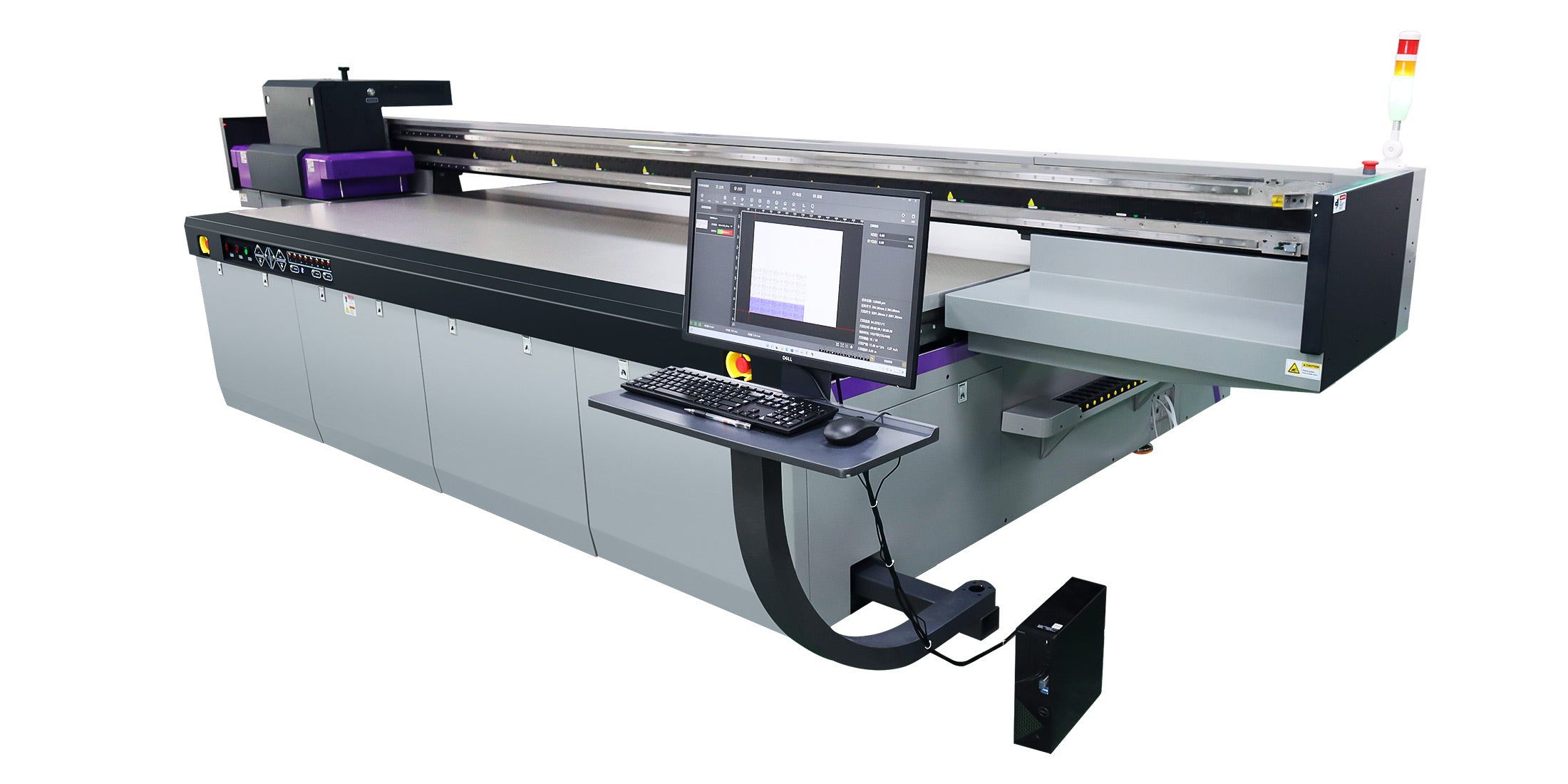
Yes, AndresJet delivers Brother-level reliability at 154 sqm/hr via RICOH Gen5 heads, MagLev drives, and anti-collision tech in models like AJ3220EX, proven for daily capacities up to 600 panels in signage and décor.
Ultra-high-speed models like AJ2130Ultra (140.7 m²/h ultra-draft) and AJ3220EX (154.3 m²/h) combine Japanese-precision components with robust builds. Fiber optics handle data floods without lag, while ink savings up to 30% via grayscale printing extends runs. Applications from medals (AJ1206 at 2,000/hour) to large-format panels confirm scalability.
Conclusion
Japanese Monozukuri elevates Brother printers' reliability, and AndresJet advances this legacy into industrial UV flatbeds for superior speed and durability. Explore AndresJet.com for models like AJ2130Ultra and request a free consultation to power your sign printing needs.
Frequently Asked Questions
1. How does Monozukuri reduce printer jamming?
Monozukuri emphasizes precision paper paths and sensors, minimizing misfeeds much like AndresJet's vacuum systems secure media.
2. What is the drum life in Brother printers?
Brother drums support high volumes over years, paralleling RICOH heads' endurance in AndresJet UV printers.
3. Are AndresJet printers suitable for 24/7 sign production?
Yes, with speeds over 100 sqm/hr, anti-collision, and 8-year parts for continuous operation.
4. What warranties does AndresJet offer?
2 years comprehensive, 8 years spare parts on all UV flatbeds.
5. Can AndresJet handle rigid substrates like Brother handles paper?
Absolutely, up to 100mm thickness on vacuum flatbeds for panels and plastics.
Share:
What Is the ROI of Japanese UV Flatbed Printers for SMEs?
Are Brother Printers Made in China? Truth About the Supply Chain