

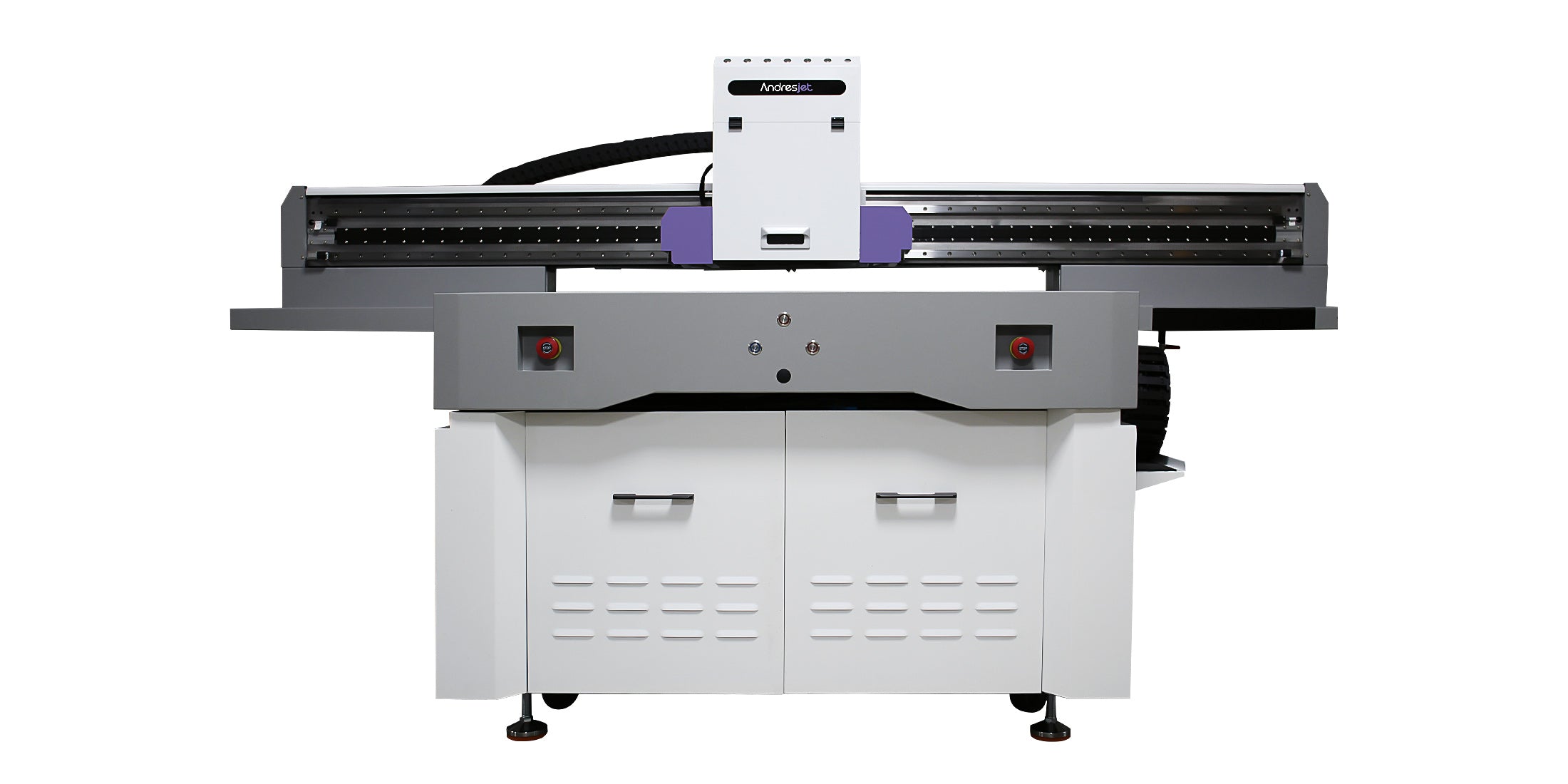
Compact industrial UV production needs enough demonstrated capacity to clear the real job mix within promised lead times, including setup, loading, printing, inspection, maintenance and rework. Buyers should calculate accepted pieces per productive hour, model peak demand and shifts, and validate the bottleneck job before selecting a compact industrial configuration.
What Production Data Should Capacity Planning Start With?
List every recurring job family by object size, quantity, artwork versions, substrate, ink layers and due date. Use pieces for repeated objects, square area for panels, or standard job minutes for a mixed shop. Do not combine unlike jobs into one optimistic average.
Create typical, high-mix and peak cases. The peak case should include urgent reprints and maintenance, while the high-mix case should include more changeovers and first-article approvals.
How Do You Calculate Practical UV Printing Capacity?
Practical capacity = accepted pieces ÷ productive hours. Required shifts = forecast accepted demand ÷ demonstrated accepted capacity per shift. Productive hours exclude breaks and planned maintenance but include normal setup and inspection that the job requires.
Illustrative example: 18 pieces per 30-minute cycle equals 234 loaded pieces in 6.5 productive hours. At 95% acceptance, practical capacity is about 222 accepted pieces. Demand of 400 pieces requires 1.80 shifts, so plan two shifts or remove the measured constraint.
| Input | Example | Result |
|---|---|---|
| Cycle | 18 pieces / 30 min | 36 pieces/hour |
| Productive time | 6.5 hours | 234 loaded |
| Acceptance | 95% | About 222 accepted |
| Demand | 400 accepted | 1.80 shifts |
What Is Actually Limiting Production Output?
Time file preparation, substrate cleaning, loading, print/cure, unloading, inspection and packing separately. A faster print pass matters only when machine time is the constraint. If loading or artwork dominates, standardized templates, fixtures, batch naming or operator training may produce a larger gain.
Keep failed first articles and changeovers in the study. Removing inconvenient events creates a theoretical number that cannot support delivery promises.
Which Capacity Option Fits the Measured Constraint?
A second shift uses existing capital but needs trained staff and service coverage. Overtime may absorb short peaks but should not become the base plan. Parallel equipment adds redundancy but changes floor, power, staffing and maintenance requirements.
Select the response that addresses the measured constraint. Do not add a machine when the backlog is waiting for artwork approval or material preparation.
Sustained Capacity Test Checklist
Use the limiting file, object, coverage and quality mode. Record setup, cycle time, stoppages, accepted output and rejection causes over a sustained batch. Repeat the run when the decision depends on a narrow capacity margin.
Review the small industrial UV flatbed printer collection for category fit and the AJ1206 product page for published boundaries. Final capacity must come from a documented sample using the buyer’s workload.
Expert Views
Compact production should be sized from accepted orders, not a single speed claim. The most useful test is the difficult repeat job performed long enough to reveal loading, inspection and changeover losses.
Conclusion
Calculate practical capacity from accepted output, model peak and high-mix demand, identify the bottleneck and validate it in a sustained sample run. Keep the assumptions visible so sales, operations and procurement use the same capacity definition.
FAQs
Should published printer speed be used as capacity?
No. Planning should use accepted output from a representative sustained run that includes normal loading, setup and inspection.
How much spare capacity should a shop keep?
There is no universal percentage. Model the shop's demand variability, service risk, rush policy and recovery time, then document the buffer used.
When should another shift be considered?
Consider it when the measured constraint is machine availability and demand repeatedly exceeds demonstrated one-shift capacity—not when work is waiting on files or materials.
Share:
How Do You Align Artwork for Bottle UV Printing?
How Should a Shop Price Custom UV Printing Jobs?