

How Do You Calculate UV Printing Business Break-Even?
- by John White
Print bigger, print faster — wide-format UV flatbed printers for signs, decor and industrial work.

UV printing business break-even is the number of accepted jobs or pieces required for total contribution margin to cover fixed costs. The calculation needs four inputs: fixed cost for the period, selling price, variable cost per accepted unit and the mix of jobs that can actually be produced and sold. Printer speed alone cannot establish payback because utilization, setup, yield and demand determine how much contribution the shop earns.
Break-even identifies the volume at which operating profit is zero for the defined period and assumptions. It does not prove that demand exists, that cash arrives on time or that every product has the same margin. A useful model therefore states the period, included costs, product mix and accepted-output assumptions.
Contribution per accepted unit = selling price − variable cost per accepted unit
Break-even accepted units = fixed costs ÷ contribution per accepted unit
Fixed costs may include equipment allocation or financing, software, insurance, scheduled service, production-space allocation and baseline administrative cost. Variable costs can include the blank object, ink, primer, cleaning consumption, direct labor, packing, transaction cost and expected rejection loss.
For product and market selection, the UV-printed product mix guide helps separate repeatable offers from an unfocused list of possible products. The break-even article then tests whether the chosen mix produces enough contribution.
Consider an illustrative monthly model. Fixed costs are $2,400. The average accepted order sells for $180 and has $75 of variable cost. Contribution is $105 per accepted order.
$2,400 ÷ $105 = 22.86
The business therefore needs 23 accepted orders per month to cover the defined fixed costs. If the average order contains 30 pieces, this is not automatically 690 printed pieces: different products, rework and partial orders can change both volume and contribution. Use accepted orders only when the average order is stable; otherwise model each product family separately.
| Case | Average selling price | Variable cost | Contribution | Break-even orders |
|---|---|---|---|---|
| Conservative | $160 | $85 | $75 | 32 |
| Base | $180 | $75 | $105 | 23 |
| Stretch | $200 | $70 | $130 | 19 |
The table uses the same illustrative $2,400 monthly fixed cost. It shows why small changes in price, yield or labor can move break-even sharply. The stretch case should not be used simply because it looks attractive; every assumption needs evidence from quotations, pilot jobs or actual orders.
Capacity is a separate gate. If 23 accepted orders require more productive hours than the shop can provide, the base case is operationally impossible. Conversely, a machine may have sufficient capacity but still fail to break even when there is not enough qualified demand.
| Input | Your value | Evidence source |
|---|---|---|
| Monthly fixed costs | Accounting records and supplier terms | |
| Average selling price | Actual quotations or orders | |
| Object and consumable cost | Supplier invoices and measured usage | |
| Direct labor per accepted order | Timed pilot workflow | |
| Expected accepted yield | Representative sample or production run | |
| Contribution per order | Price minus all variable cost | |
| Break-even orders | Fixed cost divided by contribution | |
| Hours required | Accepted orders multiplied by productive hours |
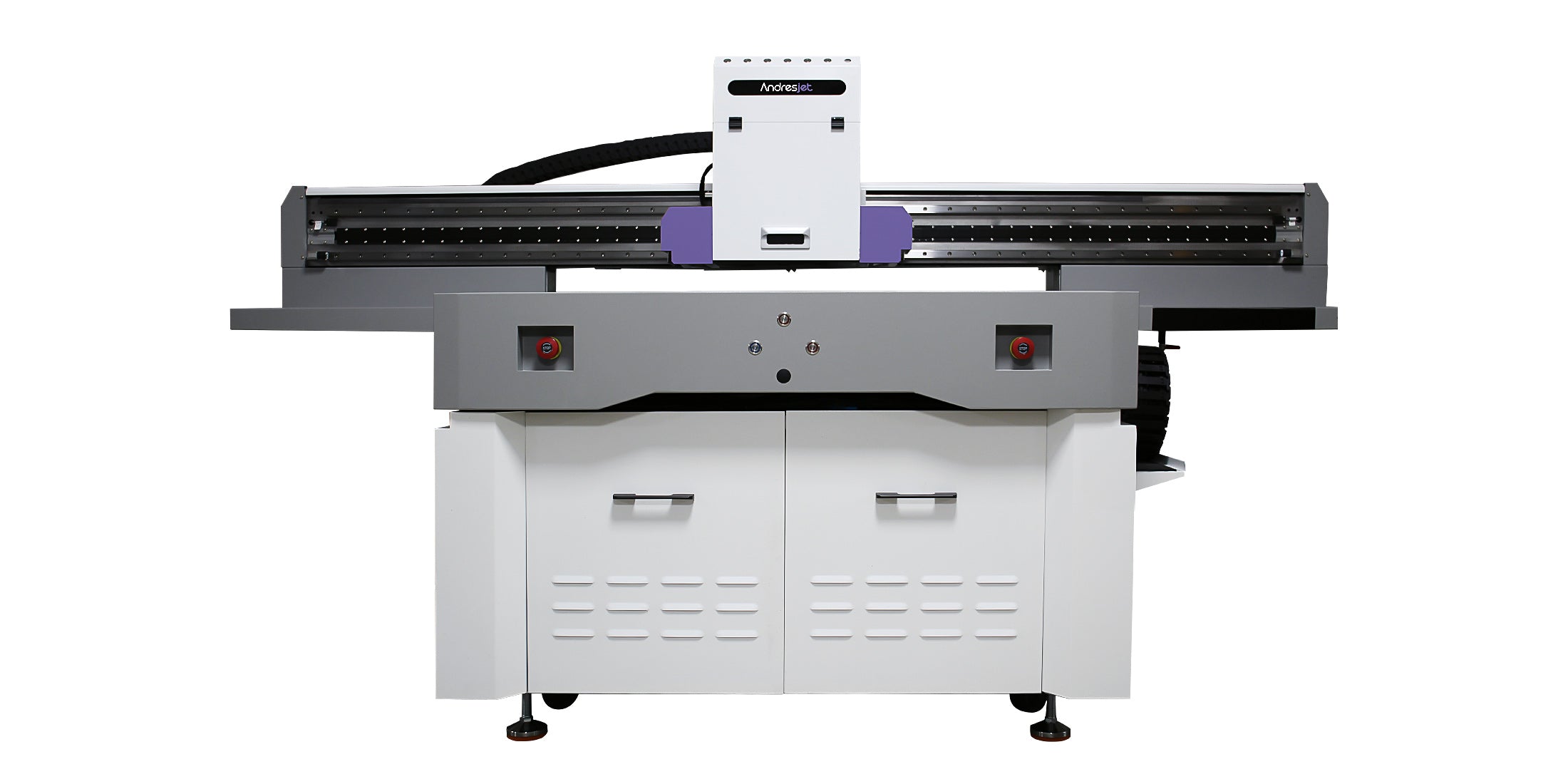
The small-business UV printing collection can help define the application category. When a shortlist exists, review published equipment information on the AJ1206 product page and request a sample workflow that supplies realistic yield, setup and cycle-time inputs.
Build conservative, base and stretch cases, then identify the assumption that changes break-even most. If the answer is selling price, validate willingness to pay. If it is labor, simplify setup and loading. If it is yield, qualify substrates and fixtures. If it is demand, do not replace missing orders with a faster machine assumption.
A procurement decision should be based on a feasible overlap between demand and production: enough qualified orders to reach break-even, enough accepted capacity to deliver them and enough cash to operate during the ramp-up period.
UV printing business break-even is simple to calculate but easy to misuse. Divide fixed cost by contribution per accepted unit, then test whether the required volume is both sellable and producible. A transparent model with conservative, base and stretch cases is more useful than a fixed payback promise because it shows exactly which business assumption needs validation.
For the complete decision path, continue with the uv printing cost, pricing & finance guide.
No. Operating break-even covers the costs defined in the period. Equipment payback and cash flow require additional timing and financing analysis.
Use the unit that has stable economics. For highly customized work, accepted order or job may be clearer; for a standardized product, accepted piece may be suitable.
It varies. Contribution margin, accepted yield, direct labor and realistic demand should all be tested because a small change in any one can alter required volume.


