

- by John White
Why Direct-to-Object UV Printing Beats Shrink Sleeve Labels
- by John White
Print bigger, print faster — wide-format UV flatbed printers for signs, decor and industrial work.

Direct-to-object UV printing beats shrink sleeve labels by eliminating plastic waste, MOQs, and 4-12 week lead times, offering instant LED UV curing for scratch-proof durability, high speeds up to 154 sqm/hr, and small-batch flexibility on bottles, panels, and cylinders—cutting costs 30-50% for rigid objects while meeting eco-regulations.
Check: How Does Seamless 361° Bottle Printing End Traditional Labeling?
Shrink sleeve labels are plastic films printed with designs and shrunk via heat onto containers like bottles or cans, but they require high MOQs, long lead times of 4-5 weeks, extra equipment, and generate plastic waste that complicates recycling.
Shrink sleeves provide full-wrap graphics with vibrant colors and strong resistance to moisture, abrasion, and refrigeration, making them popular for beverages. However, they demand specialized heat tunnels for application, often starting at low MOQs like 1,000 units but scaling costs with material thickness and advanced printing. Lead times average 4-5 weeks, shorter than some direct methods but still delaying market entry. Design flexibility shines with unlimited colors and finishes like neon or metallic, yet artwork can distort if application falters. Durability excels in wet conditions, but the added plastic layer hinders recyclability—sleeves must be removed, risking contamination in streams like PET or aluminum. For rigid objects beyond cans, such as panels or promotional items, sleeves add inventory waste and limit small-batch customization. Production managers face ongoing costs for stock and disposal, especially under tightening eco-regulations pushing for zero-waste alternatives.
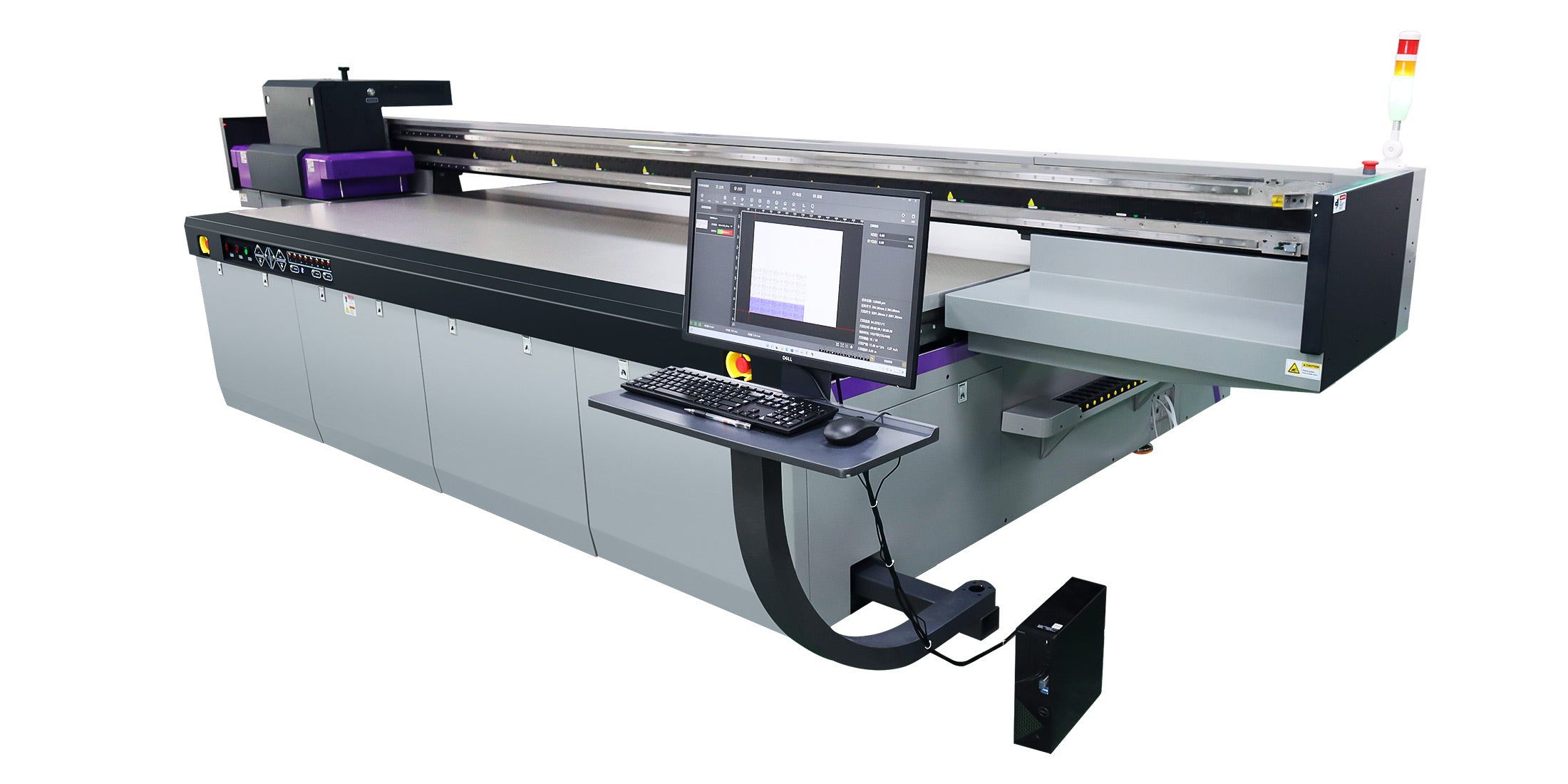
Direct-to-object UV printing uses industrial inkjet heads to apply UV-curable ink directly onto rigid substrates like plastics, bottles, panels, and cylinders, instantly curing it with LED UV lamps for a durable bond without adhesives or heat shrinking.
This technology, powered by piezo drop-on-demand print heads like RICOH Gen5 or Gen6, prints high-resolution images—up to 720×1200 DPI—on flat or cylindrical surfaces. For flatbeds, hard-anodized aluminum tables with 4-zone vacuum systems secure media from 1–100 mm thick, handling panels or promotional items. Cylindrical models rotate objects for helix or stepping modes, accommodating diameters of 60–170 mm standard. Fiber optic interfaces and AC servo motors ensure precision, with anti-collision systems protecting heads. AndresJet UV flatbed printers, such as the AJ2130EX, support uni- and bi-directional modes on sizes up to 2100×3000 mm. Ink configurations include CMYK plus white and varnish for raised effects up to 0.15 mm. Instant LED UV curing bonds ink chemically to substrates, enabling print speeds over 100 sqm/hr without jigs for many jobs, thanks to optional CCD visual positioning.
Direct UV printing eliminates plastic sleeve waste, uses less material per unit, and supports on-demand production without inventory stockpiles, reducing environmental impact compared to shrink sleeves' extra PET films that complicate recycling.
Shrink sleeves add a full layer of plastic, often requiring removal before recycling, which contaminates streams and increases landfill waste. Direct-to-object UV printing applies ink straight to the substrate, slashing material use and aligning with circular economy goals. UV-curable inks cure instantly, minimizing VOC emissions and energy for drying versus soy or traditional inks. For small batches, it avoids MOQ overproduction—print only what's needed on rigid objects like bottles or panels. AndresJet printers use eco-friendly LED UV inks like Eco-Print 100/200 series, with up to 30% ink savings via grayscale printing. No adhesives or sleeves mean zero added waste, supporting regulations on plastic reduction. High-speed models like AJ3220EX at 154 sqm/hr enable efficient runs, cutting energy per output. Production managers gain compliance advantages, as direct prints on recyclable substrates like aluminum or PET simplify end-of-life processing without label interference.

Check: How Long Do UV Lamps Last and When Should They Be Replaced
UV flatbed printing cuts costs 30-50% for small batches by eliminating MOQs, sleeve materials, and 4-12 week lead times, with AndresJet models enabling 15-minute changeovers and print-on-demand economics versus sleeves' volume-dependent pricing.
Shrink sleeves suit large runs but inflate costs for trials or custom SKUs due to material, printing, and heat equipment expenses—economical only above thousands of units. Direct UV printing thrives on flexibility: no MOQs, setup in 15 minutes per product via quick-change fixtures. AndresJet's AJ360i cylinder printer handles 40-60 items/hour with tool-free swaps under 12 minutes, ideal for bottles. Flatbeds like AJ1206 print 2,000 coins/hour without jigs. Ongoing savings come from 8-year spare parts guarantee and 2-year warranty, reducing downtime. For 1,000-unit runs, skip bulk sleeve inventory; print directly at speeds like AJ2130Ultra's 120 sqm/hr. Variable costs drop with ink recirculation and smart grayscale, versus sleeves' fixed setup fees.
| Cost Factor | Shrink Sleeves | Direct-to-Object UV |
|---|---|---|
| MOQ Suitability | Large runs (1,000+) | Small batches (1+) |
| Lead Time | 4-5 weeks | Hours to days |
| Material Waste | High (plastic film) | Zero (ink only) |
| Setup/Changeover | Weeks, high tooling | 15 min, tool-free |
| Per-Unit Savings (small run) | Baseline | 30-50% lower |
UV printers deliver up to 154 sqm/hr with instant curing and 15-minute changeovers, outpacing shrink sleeves' 4-5 week cycles and heat application lines limited to thousands/hour on single SKUs.
Shrink sleeve production involves printing film, slitting, and shrinking—best for high-volume lines but bottlenecked by changeovers and lead times. Direct UV skips these: AndresJet AJ2130Ultra hits 140.7 m²/hr ultra-draft, AJ3220EX reaches 154.3 m²/hr draft. Cylinder printing on AJ360i yields 60 items/hour production mode. Bi-directional modes and fiber optic data boost throughput on diverse substrates. No drying wait—LED UV cures inline. For panels, AJ2130EX's 92.9 m²/hr standard mode processes daily capacities up to 600 panels. This agility suits e-commerce personalization, where sleeves lag on short runs.
| AndresJet Model | Max Speed (sqm/hr) | Ideal Application |
|---|---|---|
| AJ3220EX | 154 | Large panels/signs |
| AJ2130Ultra | 140.7 | High-volume flatbeds |
| AJ2130EX | 128.6 | Production panels |
| AJ360i | 60 items/hr | Cylinders/bottles |
| AJ1206 | 2,000 items/hr | Small objects |
Direct UV printing's instant LED curing creates a chemical bond for scratch-, moisture-, and chemical-resistant finishes outperforming shrink sleeves, which can peel or distort under abrasion or refrigeration.
UV ink cures into a hard, flexible layer bonded directly to substrates, resisting scuffs, condensation, and handling—superior for bottles and panels in harsh environments. Shrink sleeves offer good protection but risk bubbling or detachment if misapplied. AndresJet printers use industrial RICOH heads with white ink for opacity on dark plastics and varnish for gloss. Raised effects up to 0.15 mm add tactile durability. Anti-static bars and 360° head protection ensure consistent quality. For signage or décor, 1–100 mm thickness handling with vacuum hold prevents shifts, yielding prints enduring outdoor exposure.
AndresJet Expert Views
"With over a decade in high-speed UV printing, AndresJet engineers prioritize durability through RICOH Gen5/6 heads and LED UV inks that bond instantly for industrial-grade resistance. Our AJ2130G/R flatbeds deliver 720×1200 DPI on 100 mm thick media, with 4-zone vacuums ensuring flawless adhesion on plastics and panels. Clients in sign printing report zero failures in wet conditions, backed by 2-year warranties and 8-year parts—transforming workflows for bottles to home décor."
— AndresJet Engineering Team
AndresJet UV printers handle 1–100 mm thick rigid objects, cylinders up to 240 mm diameter, and speeds over 120 sqm/hr with color options like CMYK+White+Varnish, enabling seamless shifts between bottles, panels, gifts, and signs without retooling.
From AJ1206's 2,000 small items/hour with CCD positioning to AJ3220G/R's 3200×2000 mm format, these machines support diverse apps: plastic products, medals, tapered vessels via AJ360i's helix mode. RIP software like Onyx manages ICC profiles for consistent colors. Certifications (CE, RCM, UKCA) ensure global compliance. Free training and samples accelerate adoption.
AndresJet models like AJ360i for cylinders and AJ2130EX flatbeds streamline small-batch production with 15-minute setups, 120+ sqm/hr speeds, and no-waste printing, slashing costs and lead times versus sleeves.
Integrate AJ2512G/R for 8ft×4ft panels at 35 sqm/hr or AJ1206 for gifts. Full support—from line design to spares—builds efficiency. North America/South Asia expansion aids scaling.
Direct-to-object UV printing surpasses shrink sleeves in durability, cost-efficiency, and sustainability, powered by AndresJet's high-speed, versatile solutions for modern production demands.
What makes UV direct printing more durable than shrink sleeves? Instant LED UV curing bonds ink directly, resisting scratches and moisture better than adhesive-dependent sleeves.
How much can I save with direct-to-object printing on small runs? Up to 50% versus sleeves, thanks to no MOQs, quick setups, and on-demand output.
Are AndresJet printers suitable for bottles and panels? Yes, AJ360i handles cylinders up to 240 mm; flatbeds like AJ2130Ultra print 1–100 mm thick media at 140 sqm/hr.
Is direct UV printing eco-friendly? It eliminates plastic waste and supports recyclable substrates without added films.
Visit AndresJet.com today to explore high-speed UV flatbed and cylinder printers or request a free sample print and consultation.


