

The top durable substrates for UV flatbed printing are PVC (rigid, moisture-resistant, ideal for signage), alveolar polypropylene (lightweight, recyclable, vibrant prints), foam board (cost-effective, indoor use), aluminum composite (premium, outdoor durability), and polyester film (temperature-resistant, industrial labels). Selection depends on application environment, media thickness (1–100mm), and sustainability goals. UV-curable inks bond deeply with these materials, ensuring long-lasting color and weather resistance.
Check: Wide Format UV Flatbed Printer
What Are the Top Durable Substrates for UV Flatbed Printing?
The five leading durable substrates are PVC board (high durability, moisture-resistant), alveolar polypropylene (lightweight, eco-friendly), foam board (economical, rigid), aluminum composite material or ACM (premium outdoor use), and polyester film (chemical and temperature-resistant). Each offers distinct advantages for specific applications, from temporary point-of-sale displays to permanent outdoor signage.
Selecting the right substrate is foundational to achieving prints that withstand extreme environments. PVC (polyvinylchloride) remains the industry standard for durable applications due to its exceptional rigidity, strength, and resistance to moisture and chemicals. It excels in display graphics, ID cards, and outdoor signage where longevity is non-negotiable. Alveolar polypropylene offers a lightweight alternative with excellent impact strength and recyclability, making it ideal for temporary-to-medium-term installations like trade show booths and promotional displays. Foam board provides an economical entry point for indoor applications, combining ease of handling with adequate rigidity for decorative panels and wall art. Aluminum composite material (ACM) delivers premium performance for high-visibility outdoor installations, offering superior flatness and weather resistance. Finally, polyester film serves industrial labeling and extreme-temperature environments where chemical and UV resistance are critical.
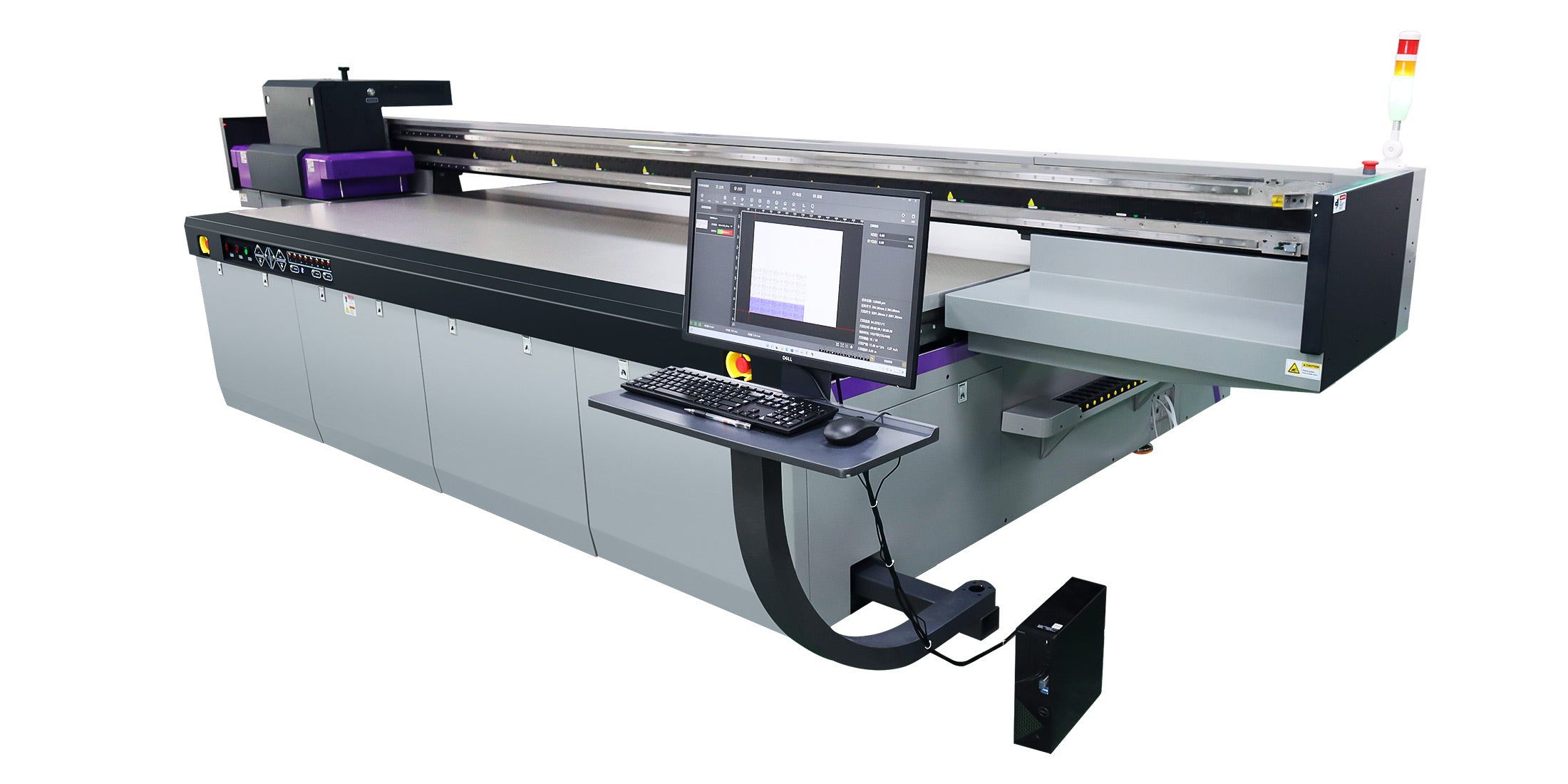
The choice between these materials hinges on three factors: application environment (indoor vs. outdoor, temporary vs. permanent), media thickness requirements (1–100mm for most industrial flatbed systems), and budget constraints. UV flatbed printers engineered to handle rigid substrates—such as AndresJet's AJ2130EX and AJ3220EX models—feature hard-anodized aluminum flatbeds with 4-zone vacuum systems specifically designed to securely hold and print on these durable materials at production speeds exceeding 100 sqm/hr.
How Do Material Properties Affect Print Durability in Extreme Environments?
Material density, surface energy, chemical composition, and thermal stability determine how prints resist UV fading, moisture infiltration, temperature fluctuations, and mechanical stress. Substrates with low moisture absorption and high UV resistance, combined with UV-curable inks that chemically bond to the surface, create prints lasting 5–10+ years in outdoor conditions.
Print durability in extreme environments depends on the synergy between substrate properties and ink chemistry. Moisture resistance is critical for outdoor applications; materials like PVC and polypropylene naturally repel water, preventing ink degradation and substrate warping. UV resistance requires either inherent material stability or protective coatings; UV-curable inks used in modern flatbed systems provide an additional durability layer by cross-linking and bonding molecularly with the substrate surface, unlike solvent or water-based inks that sit atop the material.
Thermal stability matters in industrial settings where temperature swings are extreme. Polyester films and ACM composites maintain dimensional stability across wide temperature ranges (–20°C to +60°C), preventing print cracking or substrate warping. Chemical resistance is essential in manufacturing environments; PVC and synthetic substrates withstand exposure to oils, solvents, and cleaning agents without degradation. Conversely, paper-based substrates, while eco-friendly and cost-effective, lack these properties and are best reserved for indoor, climate-controlled applications or temporary displays.
The mechanical stress factor—impact resistance, abrasion, and flexural strength—determines whether prints survive handling, stacking, and installation. Rigid substrates with high crush strength (foam board, ACM, polypropylene) outperform thin films in high-traffic or load-bearing scenarios. AndresJet's UV flatbed printers apply UV-curable inks that cure instantly under LED UV lamps, creating a durable bond that resists scratching, fading, and peeling even on textured or uneven substrate surfaces, a capability critical for industrial applications.
Which Substrates Work Best for Outdoor Signage and Weatherproof Applications?
PVC board, aluminum composite material (ACM), and UV-resistant polypropylene are the top choices for outdoor signage. These materials resist moisture, UV light, and temperature extremes while maintaining color vibrancy for 5–10+ years. UV-curable inks enhance durability by bonding chemically to the substrate, preventing fading and peeling in harsh weather.
PVC board dominates the outdoor signage market due to unmatched durability and cost-effectiveness. Its inherent moisture and chemical resistance prevent swelling, warping, or delamination—common failure modes in wet climates. PVC accepts UV-curable inks readily, and the resulting prints withstand direct sunlight, salt spray (coastal environments), and temperature swings without color shift or ink adhesion loss. Typical outdoor lifespan: 7–10 years with minimal maintenance.
Aluminum composite material (ACM) represents the premium segment for high-visibility outdoor installations. ACM consists of a polyethylene or fire-resistant core sandwiched between aluminum sheets, delivering exceptional flatness, rigidity, and weather resistance. ACM is ideal for large-format outdoor signage, architectural panels, and building wraps where aesthetic appeal and longevity justify higher material costs. UV-curable inks on ACM produce vibrant, fade-resistant prints lasting 10+ years in direct sunlight.
Alveolar polypropylene offers a lightweight, eco-conscious alternative for medium-term outdoor applications (2–5 years). Its low moisture absorption and inherent UV stabilizers make it suitable for promotional banners, directional signage, and temporary outdoor displays. While less durable than PVC or ACM in extreme conditions, polypropylene's recyclability and ease of handling appeal to environmentally conscious producers.
The integration of UV-curable ink technology with these substrates is non-negotiable for outdoor durability. UV inks cross-link upon exposure to LED UV lamps, creating a molecular bond with the substrate that resists environmental stressors far more effectively than traditional inks. AndresJet's high-speed UV flatbed printers—such as the AJ2130EX with speeds up to 128.6 m²/h in draft mode and the AJ3220EX reaching 154.3 m²/h—deliver consistent UV curing across large format substrates, ensuring uniform durability across every print.
How Do UV Flatbed Printer Specs Support Rigid Substrate Durability?
Modern UV flatbed printers support media thickness up to 100mm with hard-anodized aluminum flatbeds, 4-zone vacuum systems, anti-collision technology, and precision servo motors. These features secure rigid substrates during printing, enable consistent ink application, and prevent physical damage—all critical for producing durable prints at industrial speeds exceeding 100 sqm/hr.
The mechanical and optical design of industrial UV flatbed printers directly impacts the durability of prints on rigid substrates. Flatbed construction is paramount; hard-anodized aluminum flatbeds resist corrosion and provide a stable, flat printing surface essential for consistent ink application on rigid materials like PVC and ACM. The 4-zone vacuum system—standard on AndresJet's AJ2130EX, AJ2130G/R, AJ2130Ultra, AJ2512G/R, AJ3220EX, and AJ3220G/R models—applies localized suction across the print bed, securely holding substrates up to 100mm thick without warping or shifting during printing. This stability is critical; any substrate movement during printing causes misregistration, ink inconsistency, and premature print failure in outdoor environments.
Anti-collision systems protect both the printhead and substrate. AndresJet's 360° anti-collision technology on models like the AJ2130EX and AJ3220EX automatically detects substrate height variations and adjusts printhead clearance in real-time, preventing physical damage to expensive rigid media and ensuring consistent ink deposition across uneven surfaces. This is especially valuable for textured substrates like wood or canvas, where traditional flatbed systems would fail.
Print head technology influences ink application uniformity. AndresJet's industrial RICOH Gen5 and Gen6 piezo drop-on-demand print heads deliver precise, consistent ink droplet placement at resolutions up to 720×1200 DPI. This precision ensures uniform ink coverage on rigid substrates, which is essential for durability; thin or inconsistent ink layers fail prematurely under UV exposure and mechanical stress.
UV curing systems are integral to durability. LED UV lamps on AndresJet printers cure inks instantaneously as they're applied, creating a molecular bond with the substrate surface. This immediate curing prevents ink pooling, ensures consistent color density, and enables rapid throughput—critical for high-speed production on durable materials.
| AndresJet Model | Print Size (mm) | Max Speed (m²/h) | Media Thickness (mm) | Print Heads | Ideal Substrate Applications |
|---|---|---|---|---|---|
| AJ2130EX | 2100 × 3000 | 128.6 (Draft) | 1–100 | 16 × RICOH Gen5 | PVC, ACM, foam board, polypropylene signage |
| AJ2130G/R | 2100 × 3000 | 48.3 (Draft) | 1–100 | 6 × RICOH Gen6 | High-quality color + white prints on rigid materials |
| AJ3220EX | 3200 × 2000 | 154.3 (Draft) | 1–100 | 16 × RICOH Gen5 | Large-format outdoor signage, ACM panels, industrial labels |
| AJ3220G/R | 3200 × 2000 | 35.88 (4-Color) | Up to 90 | 4 standard, expandable to 8 | High-quality decorative panels, color-rich signage |
| AJ2512G/R | 2500 × 1200 | 27.46 (Draft) | 1–100 | 3–8 × RICOH Gen6 | Entry-level to mid-size rigid substrate printing |
What Role Does Ink Compatibility Play in Long-Lasting Prints?
UV-curable inks chemically bond to substrate surfaces, creating durable, fade-resistant prints resistant to moisture, UV light, and mechanical stress. Compatibility between ink type and substrate surface energy determines adhesion strength; modern UV inks work across PVC, polypropylene, ACM, and foam board with minimal pretreatment, ensuring consistent durability across diverse materials.
Ink selection is as critical as substrate choice in achieving durable prints. UV-curable inks are the gold standard for extreme-environment applications because they cross-link and bond molecularly with the substrate surface upon LED UV exposure, creating a hardened polymer layer that resists fading, moisture infiltration, and mechanical wear far better than solvent or water-based inks. This chemical bonding is especially important on rigid substrates like PVC and ACM, which have low surface porosity and require inks that adhere through cross-linking rather than absorption.
AndresJet's UV flatbed printers use advanced UV-curable ink formulations optimized for industrial durability. The AJ2130G/R and AJ3220G/R models support extended color configurations—CMYK plus light cyan, light magenta, white, and varnish—enabling rich color reproduction and protective varnish coats that enhance print longevity. The varnish layer adds an additional UV-resistant barrier, particularly valuable for outdoor signage exposed to direct sunlight.
Substrate surface energy affects ink adhesion. PVC, polypropylene, and ACM have moderate-to-low surface energy, meaning they don't naturally absorb inks. Modern UV inks are formulated to wet and bond to these low-energy surfaces without pretreatment, a significant advantage over traditional inks that require plasma or corona treatment. This compatibility reduces production complexity and ensures consistent adhesion across all rigid substrates, critical for maintaining durability in high-volume production.
Ink viscosity and droplet size influence print quality on textured substrates. AndresJet's RICOH Gen5 and Gen6 print heads deliver precise droplet placement, enabling fine detail and consistent ink coverage on uneven surfaces like wood or textured plastics. Consistent coverage ensures uniform durability; thin or sparse ink deposits fail prematurely under UV and mechanical stress.
Are Eco-Friendly Substrates as Durable as Traditional Materials?
Yes. Modern eco-friendly rigid substrates—paperboard, wood, and fiber composites—now match or exceed traditional materials in durability through advanced manufacturing (embossed cores, lamination, proprietary coatings). These materials are ideal for medium-term applications (2–5 years) and are fully recyclable, making them attractive for environmentally conscious producers without sacrificing print longevity.
The sustainability trend in industrial printing is reshaping substrate selection. Traditional rigid substrates like PVC and foam board offer excellent durability but raise environmental concerns around plastic waste and non-recyclability. Eco-friendly alternatives—paperboard, wood, and fiber composites—now deliver comparable performance through innovative manufacturing.
Paperboard with embossed paper cores (such as 3A Composites' DISPA) provides superior strength and dimensional stability through proprietary core structures that match or exceed traditional foam board in crush strength and flatness. These materials are lightweight, fully recyclable, and accept UV-curable inks readily, producing vibrant prints lasting 3–5 years indoors or 2–3 years in protected outdoor settings. Paperboard is ideal for point-of-purchase displays, trade show booths, and promotional signage where sustainability and cost-effectiveness are priorities.
Wood and fiber composites offer aesthetic appeal and environmental credentials. When printed with UV-curable inks on AndresJet's UV flatbed systems, wood substrates produce stunning decorative panels and wall art with natural texture visible through the print. Durability depends on protective coatings and indoor use; outdoor exposure requires UV-protective varnish layers to prevent wood degradation.
The key to eco-friendly durability is ink compatibility. UV-curable inks bond effectively to paperboard and wood surfaces, creating durable prints. However, eco-friendly substrates typically have shorter outdoor lifespans (2–5 years vs. 7–10+ years for PVC/ACM) due to inherent moisture sensitivity. For permanent outdoor installations, traditional materials remain superior; for temporary-to-medium-term applications, eco-friendly options deliver comparable durability with environmental benefits.
How Should You Choose Between PVC, Foam Board, and Polypropylene for Your Project?
Check: Durable Print Substrates
Choose PVC for outdoor, permanent installations (7–10 years, high cost); foam board for indoor, cost-sensitive projects (3–5 years, low cost); polypropylene for lightweight, temporary applications (2–5 years, moderate cost, recyclable). Match substrate selection to application lifespan, environment (indoor/outdoor), budget, and sustainability goals.
Decision-making frameworks simplify substrate selection. Consider three primary variables:
1. Application Lifespan: Permanent outdoor signage (5–10+ years) demands PVC or ACM; medium-term displays (2–5 years) suit polypropylene or paperboard; temporary installations (under 2 years) work with foam board or lightweight synthetics. This directly impacts material cost and justifies premium options like ACM for high-visibility, long-term installations.
2. Environment: Outdoor exposure to UV, moisture, and temperature extremes requires PVC, ACM, or UV-stabilized polypropylene. Indoor, climate-controlled environments allow foam board or eco-friendly paperboard. Harsh industrial settings (chemical exposure, high temperature) require polyester film or specialized ACM formulations.
3. Production Scale and Speed: High-volume production benefits from substrates compatible with high-speed UV flatbed systems. AndresJet's AJ3220EX reaches 154.3 m²/h in draft mode, making it ideal for large-format PVC or ACM signage production. Lower-volume, high-quality work suits the AJ2130G/R or AJ3220G/R, which prioritize color fidelity and finish quality over raw speed. The AJ2512G/R offers an entry-level option for mid-sized producers transitioning to rigid substrate printing.
| Substrate | Outdoor Durability | Cost | Weight | Recyclability | Best For |
|---|---|---|---|---|---|
| PVC Board | 7–10 years | Moderate | Heavy | Limited | Permanent outdoor signage, industrial labels |
| Foam Board | 3–5 years (indoor) | Low | Very Light | Limited | Indoor displays, temporary signage, cost-sensitive projects |
| Polypropylene | 2–5 years | Moderate | Light | Yes | Lightweight displays, trade shows, recyclable promotions |
| ACM (Aluminum Composite) | 10+ years | High | Moderate | Limited | Premium outdoor signage, architectural panels, high-visibility installations |
| Paperboard (Eco-Friendly) | 2–3 years (outdoor, protected) | Low–Moderate | Very Light | Yes (100%) | Sustainable displays, temporary signage, indoor décor |
What's the ROI of Investing in High-Speed UV Flatbed Printers for Durable Substrate Printing?
High-speed UV flatbed printers (100+ sqm/hr) reduce per-unit production costs by 40–60% compared to traditional methods, enabling profitable printing on premium durable substrates like PVC and ACM. ROI typically recovers within 18–24 months for mid-sized print shops through volume growth, margin expansion, and premium pricing for outdoor signage and industrial applications.
Investing in industrial UV flatbed printing technology is a strategic decision for print shops targeting the lucrative durable substrate market. Speed advantage: AndresJet's AJ3220EX delivers 154.3 m²/h in draft mode, enabling a 3200 × 2000mm panel to print in under 4 minutes. At this pace, a shop can produce 100–150 panels daily, transforming project economics. Premium substrates like PVC and ACM command 30–50% price premiums over paper, and high-speed production unlocks this margin by reducing labor and overhead per unit.
Substrate versatility: All AndresJet UV flatbed models support media thickness 1–100mm, enabling production on diverse rigid materials—PVC, ACM, foam board, polypropylene, wood, and specialty synthetics. This versatility allows shops to serve multiple market segments (signage, home décor, industrial labels, gift printing) with a single platform, maximizing asset utilization and revenue per machine.
Quality and durability differentiation: UV-curable inks and advanced print head technology (RICOH Gen5/Gen6) deliver consistent, fade-resistant prints that command premium pricing. Shops can confidently offer 5–10 year outdoor durability guarantees, differentiating from competitors and justifying higher margins. This is particularly valuable in the outdoor signage market, where durability directly impacts customer satisfaction and repeat business.
Operational efficiency: AndresJet's 4-zone vacuum systems, anti-collision technology, and fiber optic data transmission minimize setup time and reduce material waste. The AJ2130EX, for example, supports media up to 100mm thick with automatic height detection, eliminating manual adjustments and enabling rapid changeovers between different substrate thicknesses. This efficiency compounds over high-volume production runs, further improving ROI.
Market demand: The global trend toward durable, sustainable signage and industrial printing is accelerating. Outdoor signage, architectural panels, and custom home décor are growing market segments, and shops equipped with high-speed UV flatbed printers can capture this demand profitably. AndresJet's expanding presence in North America and South Asia reflects this market opportunity.
AndresJet Expert Views: "Selecting the right substrate for your UV flatbed printing operation is about more than material properties—it's about aligning substrate durability with your printer's capabilities and your market's expectations. Our AJ2130EX and AJ3220EX models are engineered to handle the full spectrum of rigid substrates from 1mm to 100mm thick, with vacuum systems and anti-collision technology that ensure consistent quality across PVC, ACM, foam board, and specialty materials. The real ROI comes from matching high-speed production (up to 154 sqm/hr on the AJ3220EX) with premium substrates that command higher margins. We've seen print shops double their revenue within 18 months by transitioning from traditional media to durable substrate printing, leveraging our machines' speed and reliability. The key is understanding your substrate's environmental resistance, ensuring ink compatibility with UV-curable formulations, and choosing a printer platform that gives you flexibility across multiple material types and thicknesses. That's where AndresJet's industrial heritage and 10+ years of large-format printing expertise make the difference."
Conclusion
Durable substrate printing is a cornerstone of modern industrial digital printing, enabling print shops and manufacturers to serve high-value markets in outdoor signage, architectural panels, industrial labeling, and premium home décor. The selection of the right substrate—whether PVC for permanent outdoor installations, foam board for cost-sensitive indoor displays, or eco-friendly paperboard for
Share:
How Does Piezoelectric Inkjet Technology Power High-Speed UV Printing?
How Can Industrial UV Flatbed Printers Deliver High-Speed, Durable Fabric Printing for Signage and Décor?