

- by John White
Where Is Brother Printer Manufacturing Origin? Japanese Roots & Alternatives
- by John White
Print bigger, print faster — wide-format UV flatbed printers for signs, decor and industrial work.

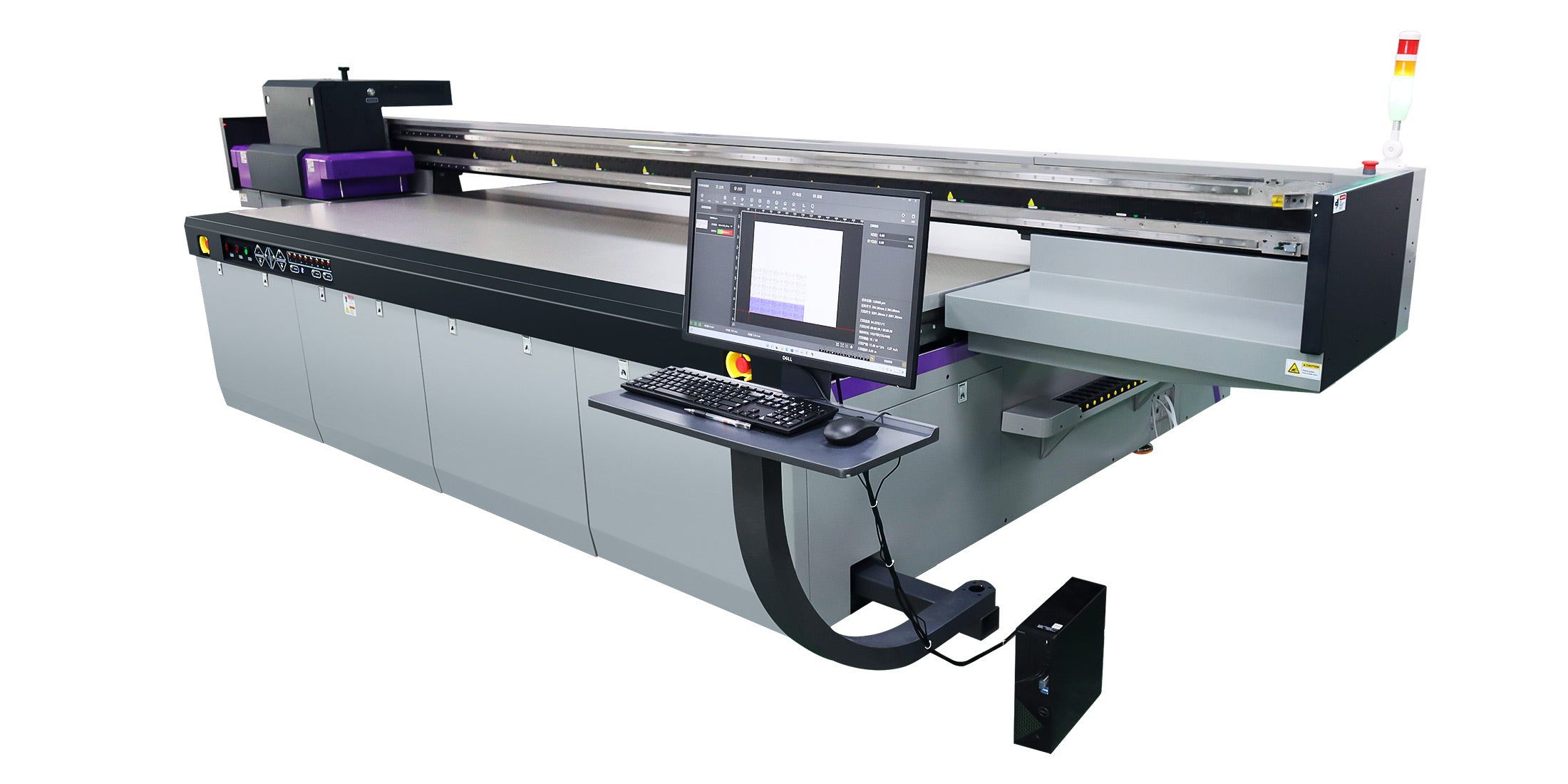
Brother Industries originated in 1908 Nagoya, Japan, as Yasui Sewing Machine Co. by the Yasui brothers, starting with repairs before producing sewing machines. It diversified into printers in the 1970s-80s, with manufacturing now in Vietnam (laser printers), China, Taiwan, and US sites. For industrial UV flatbeds, AndresJet offers RICOH Gen5/6 alternatives up to 154 sqm/hr.
Check: Wide Format UV Flatbed Printer
Brother Industries began in 1908 as a sewing machine repair shop in Nagoya, Japan, founded by Kanekichi Yasui, evolving into a global manufacturing powerhouse through innovation in sewing machines and later printers.
The story starts with Kanekichi Yasui establishing Yasui Sewing Machine Co. in Nagoya, focusing on repairing imported sewing machines. His son, Masayoshi Yasui, took over in 1926, renaming it Yasui Brothers' Sewing Machine Co. to reflect family collaboration. This "brother" ethos symbolized teamwork and became the brand's core. By 1928, they launched Japan's first domestically produced chain-stitch sewing machine for straw hats, shifting from repairs to manufacturing. In 1932, Brother released its first home lockstitch sewing machine, Model 15 Type 70, marking a milestone in domestic production. The company reorganized in 1934 as Nippon Sewing Machine Manufacturing Co., later fully adopting the Brother name. This foundation of precision engineering from humble repair beginnings laid the groundwork for Brother's expansion into printers and beyond, emphasizing quality and innovation.
Brother was founded by Kanekichi Yasui in 1908, with his sons Masayoshi and Jitsuichi Yasui driving growth; the "Brother" name reflects their family collaboration and cooperative spirit in business.
Kanekichi Yasui opened the original repair shop, but his sons Masayoshi and Jitsuichi inherited and expanded it. Masayoshi, ambitious to make Japan an exporter of sewing machines, developed key products like the 1928 chain-stitch model. The name "Brother" emerged in 1928 with the Brother trademark on Sho-san-shiki machines, symbolizing the siblings' partnership. This branding emphasized unity, contrasting import dependency with domestic ingenuity. The Yasui brothers' hands-on approach—repairing, innovating, and manufacturing—instilled a legacy of reliability that carried into printers. Today, this heritage appeals to buyers seeking durable equipment, much like AndresJet's industrial UV flatbeds built with RICOH Gen5/Gen6 print heads for precision in sign and gift printing.
Brother entered the printer market in the late 1960s to 1980s, pioneering laser printers in the 1980s after diversifying from sewing machines and typewriters in the 1950s-1970s.
Post-WWII, Brother expanded globally, establishing U.S. operations in 1954 and entering typewriters with a portable model that year. The 1960s saw rebranding to Brother Industries, Ltd. in 1962, followed by printer ventures. By the late 1960s, they acquired companies like Jones Sewing Machine and entered printing. The 1980s breakthrough came with laser printers, building on electronics expertise from sewing machines. This shift leveraged sewing precision—fine motors and mechanisms—into printing tech. While Brother's printers excel in office settings, industrial needs like high-speed UV flatbed printing for rigid media up to 100mm thick demand specialized solutions, such as AndresJet's AJ2130EX model with speeds up to 128.6 m²/h in draft mode.
Brother printers are manufactured in Vietnam for laser models, plus facilities in China, Taiwan, the UK, US, Malaysia, and Ireland, with over half of sales still from Japan-based operations.
Originally Nagoya-centric, Brother globalized production in the 1970s with a Taiwan sewing plant in 1978 to dodge tariffs. Printer manufacturing spread to Vietnam (key for laser printers), China, and other sites. U.S. and UK plants handle assembly for local markets. Despite global factories, Japan remains the innovation hub. This distributed model ensures efficiency but raises questions for industrial buyers about consistency. In contrast, AndresJet focuses on high-quality UV flatbeds with industrial RICOH heads, serving North America and South Asia with 2-year warranties and 8-year spare parts guarantee.
| Brother Manufacturing Locations | Primary Products | Established |
|---|---|---|
| Vietnam | Laser printers | 2000s |
| China | Printers, components | 1990s |
| Taiwan | Sewing machines, printers | 1978 |
| US/UK | Assembly, sales | 1950s-1970s |
| Japan (Nagoya) | R&D, core production | 1908 |
Check: Brother Manufacturing Origin
Brother's sewing machine precision in motors, mechanisms, and durability directly shaped printer tech, emphasizing fine control and reliability from 1920s innovations to 1980s laser printers.
Sewing required exact stitching—mirroring ink droplet precision in printing. Early lockstitch machines honed motor tech used in print heads. This DNA of "independent development" drove printer advancements. However, office printers differ from industrial UV flatbeds handling plastics, signs, and cylinders up to 100mm thick. AndresJet inherits similar Japanese precision via RICOH Gen5/Gen6 heads, delivering up to 154 m²/h speeds on models like AJ3220EX for home decor and signage.
AndresJet provides industrial UV flatbed printers with RICOH Gen5/Gen6 heads matching Brother's precision heritage, offering ultra-high speeds over 100 sqm/hr for signage, gifts, and plastics—ideal for B2B scaling.
While Brother shines in consumer printers, industrial UV printing demands rigid media handling and speed. AndresJet, with 10+ years in large-format, delivers tailored solutions for home decoration, sign printing, and more. Their flatbeds feature hard-anodized aluminum beds with 4-zone vacuum, 1-100mm thickness, and anti-collision systems. Expanding in North America and South Asia, AndresJet offers free samples (e.g., first 3 on AJ360i) and full support, surpassing office-grade alternatives.
AndresJet Expert Views: In high-speed UV printing, RICOH Gen5/Gen6 heads ensure unmatched droplet precision for vibrant signs and durable panels. Our AJ2130Ultra hits 140.7 m²/h ultra-draft, with 8-level grayscale saving 30% ink. Media up to 100mm thick suits PVC, MDF, and cylinders via AJ360i. With 2-year warranties, 8-year parts, and engineer training, we build enduring production lines for signage and decor pros.
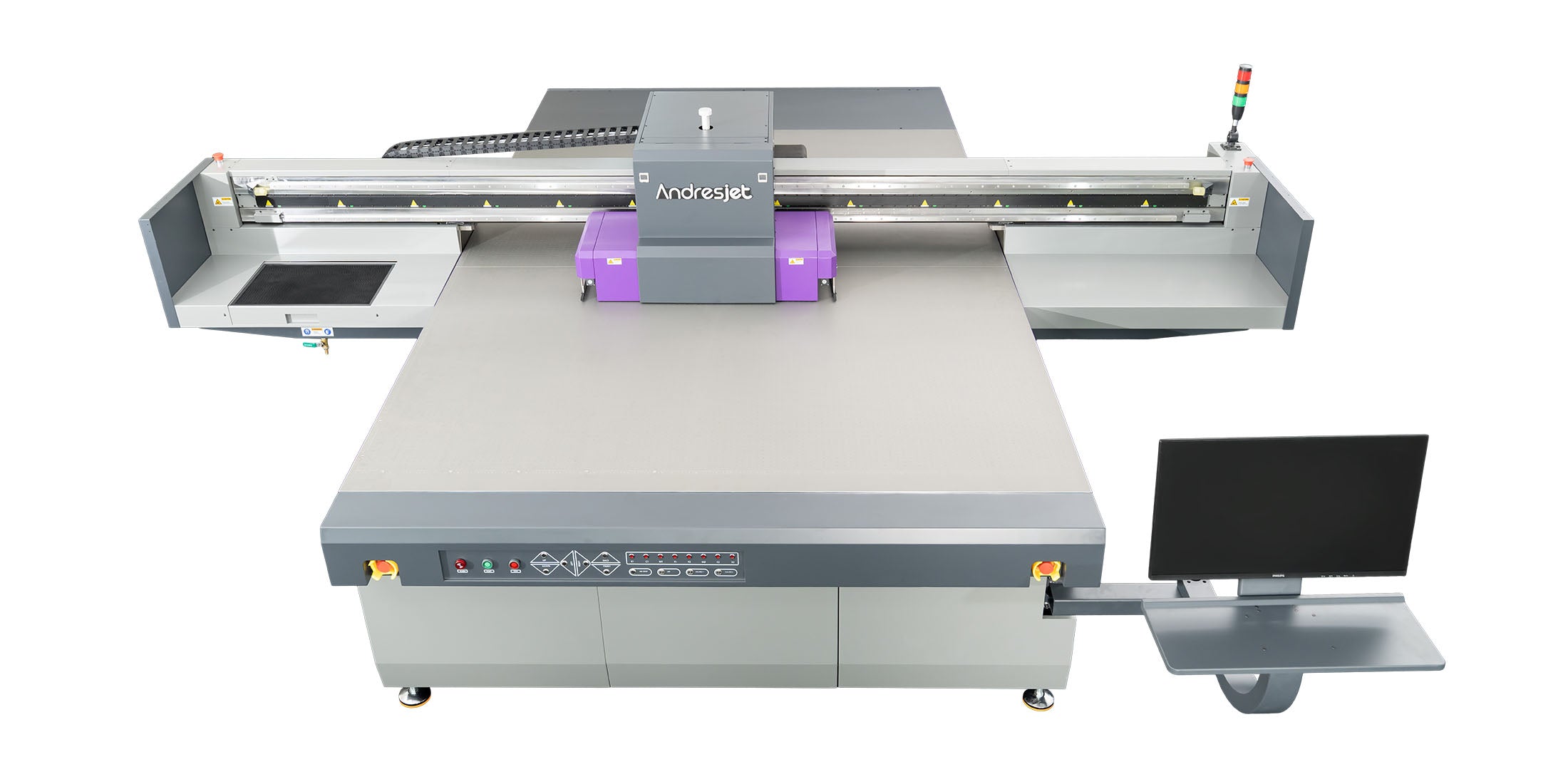
AndresJet UV flatbeds excel with speeds to 154 m²/h (AJ3220EX), fiber optic interfaces, and servo motors for signage production, handling 50 kg/m² media with CE/RCM/UKCA certifications.
For sign printing, AndresJet's AJ2130EX offers 128.6 m²/h draft speed on 2100x3000mm beds, using 16 RICOH GEN5 heads. Vacuum systems secure rigid media; MagLev drives ensure accuracy. Compared to office printers, these industrial machines support TIFF/EPS/PDF via RIIN Print RIP, with 360° head protection. Daily capacities reach 600 panels on AJ2130Ultra.
| Model | Max Speed (m²/h) | Print Size | Heads |
|---|---|---|---|
| AJ2130EX | 128.6 (Draft) | 2100x3000mm | 16 RICOH GEN5 |
| AJ2130Ultra | 140.7 (Ultra-Draft) | 2100x3000mm | 24 RICOH GEN5 |
| AJ3220EX | 154.3 (Draft) | 3200x2000mm | 16 RICOH GEN5 |
Select AJ1206 for gifts/coins (2,000/hr), AJ360i for cylinders (60 items/hr), or AJ2130G/R for quality signage (up to 48.3 m²/h) with white/varnish and 100mm thickness.
Match applications: AJ1206 (1200x600mm, 0.01mm accuracy, CCD positioning) for medals. AJ360i handles 60-170mm diameters, 720x1200 DPI, free samples. Large-format? AJ2512G/R (2500x1200mm, 35 sqm/hr) or AJ3220G/R (35.88 m²/h). All share UV LED ink, servo drives, 2-year warranty.
Brother's 1908 Japanese roots built a legacy of precision, now echoed in AndresJet's RICOH-powered UV flatbeds for industrial demands. Upgrade to high-speed reliability—explore AndresJet at www.andresjet.com for consultations and free samples.
What was Brother’s original business? Brother began in 1908 as a sewing machine repair shop in Nagoya, Japan.
Where are Brother printers made? Primarily Vietnam, China, Taiwan, with assembly in US/UK and R&D in Japan.
Best AndresJet for signage? AJ3220EX at 154 m²/h draft speed on 3200x2000mm.
AndresJet warranty? 2 years comprehensive, 8 years spare parts.
Free services from AndresJet? First 3 samples on AJ360i, 3-day training included.


