

High-speed industrial UV flatbed digital printing outperforms traditional UV offset for short-to-medium runs (under 10,000 units) on rigid substrates like PVC, MDF, and plastics, offering no plate setup, speeds up to 154 sqm/hr, variable data personalization, and instant UV LED curing—achieving ROI in 18-24 months via 30% ink savings and zero waste.
Check: Wide Format UV Flatbed Printer
What Is UV Offset Printing and How Does It Differ from Traditional Offset?
UV offset printing uses ultraviolet-curable inks on traditional offset presses, curing instantly under UV lamps for faster drying and expanded substrate options compared to standard offset's solvent-based inks that rely on absorption or oxidation.
Traditional offset printing transfers ink from plates to a rubber blanket then to the substrate, excelling in high-volume runs with precise color matching via Pantone inks. UV offset enhances this by employing UV inks that dry immediately upon UV exposure, reducing smudging and enabling printing on non-porous materials like plastics and metals. This differs from conventional offset, which uses slower-drying inks suited mainly to paper and requires more time for drying and finishing. UV offset maintains offset's strengths in quality for long runs but adds versatility for rigid substrates common in industrial applications such as signage and décor. However, it still demands plate creation, setup time, and generates waste from makeready processes, limiting agility for short runs.
What Are the Core Advantages of Digital UV Flatbed Printing Over Offset?
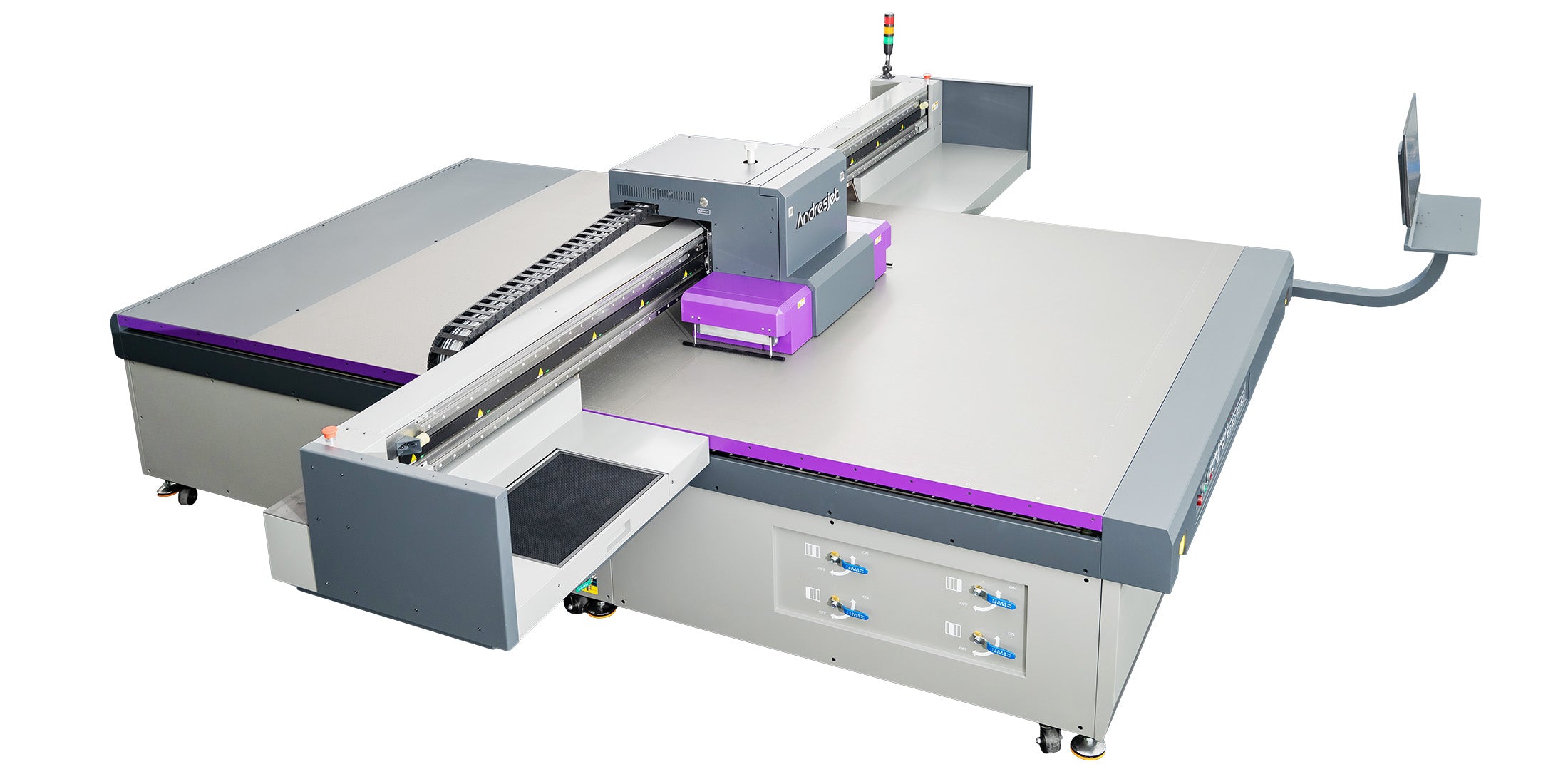
Check: UV Offset vs. Digital
Digital UV flatbed printing eliminates plates and setup waste, delivers instant UV LED curing on rigid substrates up to 100mm thick, supports variable data personalization, and achieves speeds over 100 sqm/hr—ideal for high-mix, short-to-medium industrial runs in signage, plastics, and home décor.
Unlike offset's plate-based workflow, digital UV flatbeds like those from AndresJet use piezo drop-on-demand heads to jet UV-curable inks directly onto media, curing instantly with LED lamps for vibrant, durable prints without drying delays. This enables printing on diverse rigid materials—PVC, ABS, MDF, acrylic, metal—handling thicknesses from 1-100mm across models such as the AJ2130EX and AJ3220EX. Key advantages include zero makeready waste, rapid turnaround for rush jobs, and mass customization via variable data, perfect for personalized gift printing or signage. Environmentally, it cuts VOC emissions and power use compared to offset's chemical plates and dryers. AndresJet printers feature industrial RICOH Gen5/Gen6 heads, fiber optic interfaces, and anti-collision systems for reliable high-speed operation, addressing offset users' downtime concerns.
How Do Print Speeds Compare: High-Speed UV (100+ sqm/hr) vs Offset Presses?
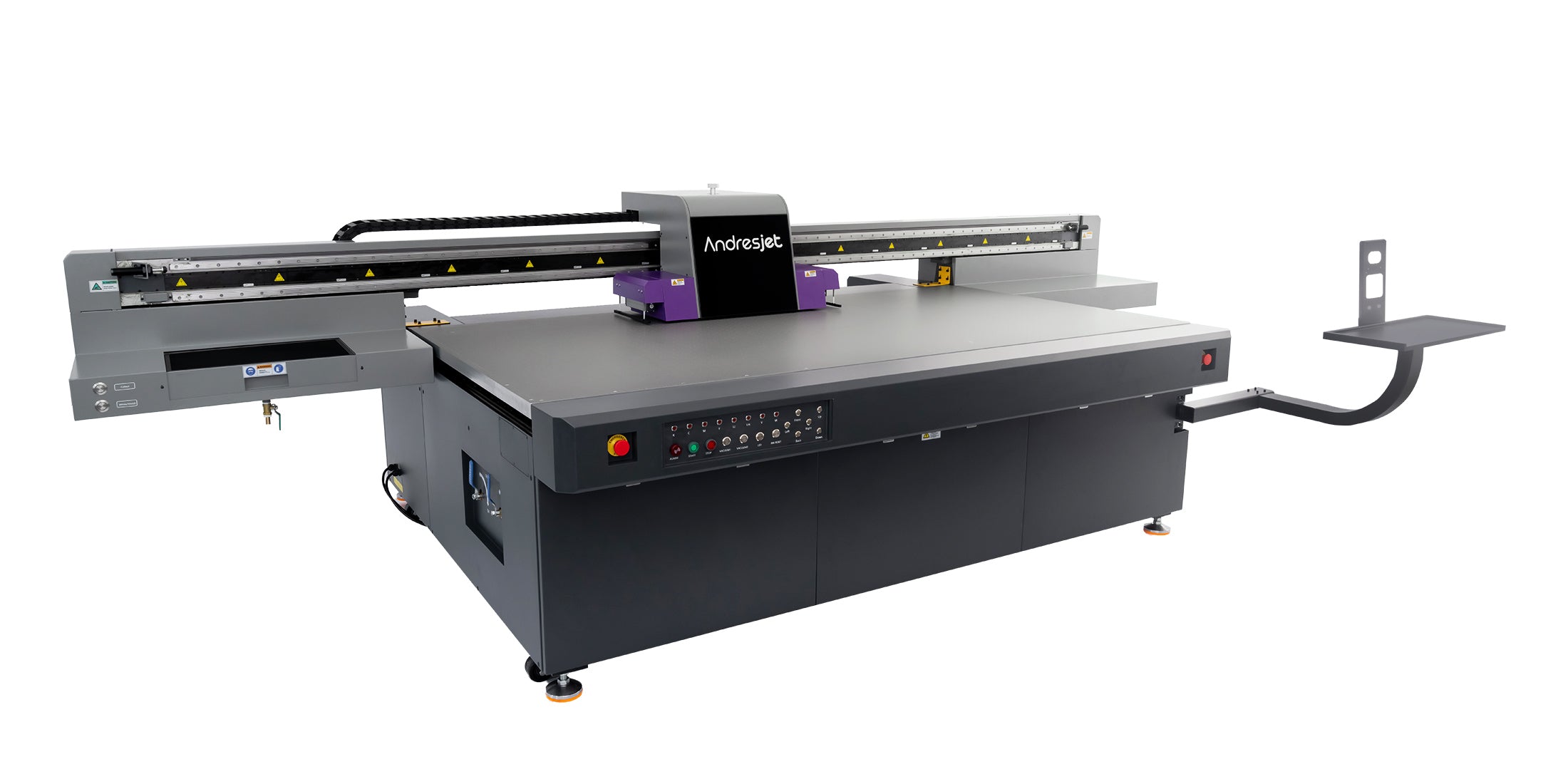
High-speed UV flatbeds reach 154 sqm/hr in draft mode, surpassing offset presses post-setup for short-to-medium runs, while offset excels only in ultra-high volumes after lengthy plate changes eliminate its initial speed disadvantage.
Offset presses achieve high speeds—up to thousands of sheets per hour—once running, but setup with plate imaging, ink balancing, and registration can take hours per job, stalling short-run efficiency. Digital UV flatbeds bypass this: AndresJet's AJ3220EX hits 154.3 m²/h draft, 111.5 m²/h production; AJ2130Ultra reaches 140.7 m²/h ultra-draft, 120.5 m²/h high-speed—over 100 sqm/hr for industrial panels. These speeds suit signage and décor production without offset's makeready delays. For context, offset might outperform in 100,000+ unit paper runs, but UV digital wins for rigid substrates where flatbed handling and instant curing accelerate workflows.
| Model | Draft Speed (m²/h) | Production Speed (m²/h) | Quality Speed (m²/h) |
|---|---|---|---|
| AJ2130EX | 128.6 | 92.9 | 74.6 |
| AJ2130Ultra | 140.7 | 120.5 | 104.5 |
| AJ3220EX | 154.3 | 111.5 | 89.6 |
This table highlights AndresJet's high-speed capabilities, enabling daily outputs like 600 panels on the AJ2130Ultra.
When Does UV Digital Beat Offset on Cost for Short-to-Medium Runs?
UV digital beats offset below 10,000 units by eliminating $500-2,000 plate and setup costs per job, plus zero waste; breakeven shifts to medium runs at 100+ sqm/hr speeds with 30% ink savings on rigid substrates.
For runs under 2,000 units, digital's per-click pricing crushes offset's fixed setup—plates, ink drawdown, and spoilage can exceed $1,000/job. At industrial scale, high-speed UV flatbeds like AndresJet's AJ2512G/R (up to 35 sqm/hr) or AJ2130G/R (48.3 m²/h draft) reduce cost-per-sqm via grayscale printing saving 30% ink. Breakeven for signage on PVC: ~5,000 sqm, factoring offset waste (10-20% makeready) vs digital's instant proofs. ROI accelerates with variable data avoiding reprint costs. For plastics and décor manufacturers, hybrid workflows—offset for mass paper, UV digital for custom rigid—optimize under 24 months.
Which Substrates Handle Better: Offset vs UV Flatbed on Plastics, MDF, and Signs?
UV flatbeds excel on rigid, non-porous substrates like plastics, MDF, acrylic, and metal (1-100mm thick), while offset suits flexible paper/board; UV digital handles signage/PVC without pretreatment offset often requires.
Offset thrives on absorbent stocks but struggles with rigid plastics/MDF without coatings, risking ink offset or cracking. UV flatbeds print directly: AndresJet models support 1-100mm thickness on hard-anodized beds with 4-zone vacuum for PVC panels, ABS products, wood décor. White ink layers enable opaque prints on metal/colored substrates, ideal for signs. Offset UV extends to some plastics via rollers but limits thickness and flatness. For industrial apps—home décor, gifts, signs—UV digital's versatility cuts outsourcing.
| Substrate | Offset Suitability | UV Flatbed Suitability (AndresJet) |
|---|---|---|
| PVC/Plastics | Moderate (coatings needed) | Excellent (1-100mm, vacuum hold) |
| MDF/Wood | Poor (absorption issues) | Excellent (white ink base layer) |
| Acrylic/Metal | Limited | Superior (instant cure adhesion) |
| Paper/Cardboard | Excellent | Good (but offset cheaper high-vol) |
Can UV Digital Match Offset Quality with White Ink and Varnish Effects?
Yes, UV digital matches offset quality at 720×1200 DPI with RICOH Gen5/Gen6 heads, adding white ink for opacity and varnish for gloss/raised effects—superior for non-white substrates without offset's post-press finishing.
Modern UV flatbeds close the quality gap: resolutions up to 720×1200 DPI rival offset's sharpness. AndresJet's AJ2130G/R (8 colors: CMYK+LC+LM+White+Varnish) delivers vibrant hues and 0.15mm raised white effects on the AJ360i. Varnish mimics offset coatings for durability/chemical resistance. Offset edges Pantone exactness for paper, but UV digital's ICC profiles and grayscale ensure consistency on rigids. Special effects integrate inline, skipping offset's offline foiling/embossing limitations.
AndresJet Expert Views
"For manufacturers transitioning from offset, our AJ2130Ultra and AJ3220EX deliver offset-competitive speeds up to 154 sqm/hr with digital flexibility—no plates, instant curing on 1-100mm substrates. White and varnish channels match special finishes, while 30% ink savings and 8-year parts guarantee ROI under 24 months. We've empowered North American and South Asian clients in signage and plastics with hybrid lines, free samples, and 3-day training for seamless integration." — AndresJet Engineering Team
What Is the ROI Timeline for Switching from Offset to Industrial UV Flatbeds?
ROI hits 18-24 months for short-run heavy shops via 50-70% setup savings, 100+ sqm/hr throughput, and zero waste; AndresJet's 2-year warranty/8-year parts minimize downtime risks.
Offset shops lose on short runs: $0.50-2/sqm waste vs digital's $0.20-0.50/sqm at scale. AndresJet models like AJ2130EX (92.9 m²/h standard) payback via 1,000-unit jobs, scaling faster for 10,000 sqm/month. Factors: reduced labor (no plate techs), energy (LED UV < offset dryers), and reprints. Case: signage firm cuts 40% costs post-upgrade. Full support—spare parts, line design—accelerates transition.
How Do AndresJet UV Printers Solve Offset Pain Points Like Setup Waste?
AndresJet UV flatbeds eliminate setup waste with direct-to-substrate printing, 15-min changeovers on models like AJ360i, and features like auto-height detection, positioning accuracy to 0.01mm for rigid industrial apps.
Offset waste from plates/makeready vanishes; AndresJet's fiber optics, servo drives, and RIP software (RIIN Print/Onyx) enable instant job switches. AJ1206's CCD camera skips jigs for coins/medals; large-format AJ3220G/R handles 10.5ft×6.5ft panels with THK guides. 360° anti-collision, CE/RCM/UKCA certs ensure uptime. Applications span home décor, plastics, signs—tailored support for global clients.
Conclusion
For industrial manufacturers, high-speed UV digital flatbeds like AndresJet's lineup outperform UV offset on short-to-medium runs, rigid substrates, and customization—delivering speed, savings, and versatility. Transition strategically for competitive edge in signage, décor, and plastics.
FAQs
What is the breakeven point between UV offset and digital? Typically under 10,000 units for rigids; digital wins below due to no setup costs.
Can UV flatbeds print white ink like offset specials? Yes, AndresJet models offer white channels for opacity on dark/colored media.
How fast are industrial UV flatbeds? Up to 154 sqm/hr draft on AndresJet AJ3220EX, ideal for production.
Are AndresJet printers suitable for plastics and MDF? Excellent, with 1-100mm thickness and vacuum hold for stable printing.
What warranty does AndresJet provide? 2 years comprehensive, 8 years spare parts guaranteed.
Share:
Where Is Brother Printer Manufacturing Origin? Japanese Roots & Alternatives
What Are the Best High-Quality High-Speed UV Flatbed Printers?