

- by John White
How to Manage Pint Glass Slope for Perfect Logo Printing?
- by John White
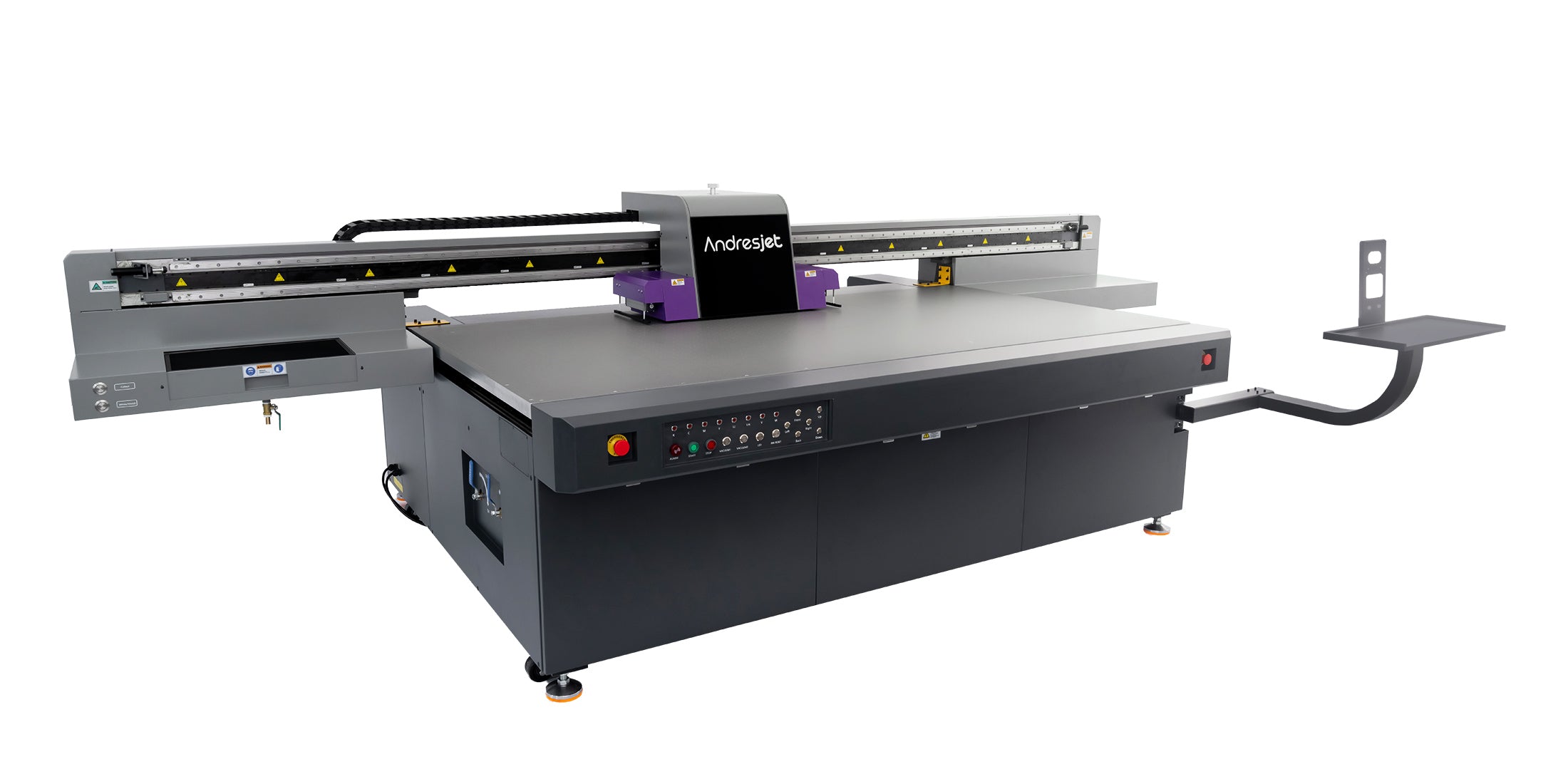
Print bigger, print faster — wide-format UV flatbed printers for signs, decor and industrial work.

To manage pint glass slope for perfect logos, use a rotary UV printer like AndresJet AJ360i with 0–7° taper support, 2-point calibration, and RIIN Print RIP software. Measure top/bottom circumferences, select stepping/helix mode, and use quick-change fixtures for 60 items/hour production at 720×1200 DPI without distortion—free first 3 samples available.
Check: How to Master Tapered Object Printing: Challenges and Solutions?
Logo distortion on tapered pint glasses occurs due to the varying circumference along the glass's slope, causing artwork to stretch or compress during rotary printing, especially in circles and text.
Tapered pint glasses, common in beerware, feature a conical shape where the bottom diameter is smaller than the top, typically narrowing gradually. This geometry tricks standard printing software into treating the surface as cylindrical, leading to convergence of graphics toward the narrower end. For instance, a circular logo appears elongated horizontally because the rotary mechanism rotates at a constant speed while the surface diameter changes. Industrial print shops face this in high-volume runs for promotional gifts, where even minor skewing ruins brand consistency. Traditional methods like screen printing exacerbate issues with setup waste, but digital UV solutions apply geometric reprojection to unwrap the cone accurately. AndresJet addresses this through specialized RIP software that mathematically corrects for taper, ensuring logos remain proportional across the print length.
Pint glasses' slopes cause digital printing distortions by altering ink deposition paths on curved, tapering surfaces, resulting in warped logos, uneven text, and alignment errors without proper correction.
The slope of a pint glass creates challenges like varying ink travel distance—the wider top requires more ink spread than the narrower base, leading to smearing or gaps if uncorrected. In digital rotary printing, the printhead moves linearly while the glass rotates, amplifying distortion in helix or stepping modes. Poor adhesion on glossy glass adds risks of cracking under curing. Specific challenges of the traditional tapered pint glass include alignment shifts from uneven pressure, ink pooling at curves, and registration inaccuracies over multiple units. For production managers, this means rejected batches and delays. Advanced systems mitigate this with 2-point calibration and auto-scaling, transforming sloped surfaces into printable canvases with high adhesion UV LED inks.
Common taper angles in pint glasses range from 0–7°, with most traditional designs around 2–5° to balance stackability, pourability, and aesthetics while challenging precise logo printing.
Standard UK pint glasses taper at about 3–4° for stability, while US nonic pints may reach 5–7° at the bulge. This range causes proportional scaling issues in printing, as circumference decreases linearly with height. Measuring involves calipers at top and bottom rims over the print height (typically 40–270mm). Without equipment handling 0–7°, distortion worsens, especially on cones or vessels. AndresJet's AJ360i Digital Cylinder Printer excels here, natively supporting 0–7° tapers for flawless prints on 60–170mm diameter parts, including optional fixtures for extremes.
Measure pint glass slope by calculating the taper angle from top/bottom circumferences using calipers and the formula: angle = arctan((R_top - R_bottom)/height), inputting into RIP software for correction.
Start with precise measurements: wrap a flexible tape at top (e.g., 95mm diameter) and bottom (85mm) over the logo area (e.g., 100mm height). Compute radius difference and divide by height for the angle. Input this into RIP tools like RIIN Print for automatic distortion mapping. Pneumatic clamping ensures stability during 2-point calibration. For efficiency, AndresJet AJ360i setups take 15 minutes per changeover, with total prep under 60 minutes using tool-free fixtures. This B2B workflow scales to 60 items/hour, ideal for gift printing runs.
The best printer for tapered pint glasses is a digital cylinder UV rotary like AndresJet AJ360i, offering 0–7° taper support, 720×1200 DPI resolution, and 60 items/hour speed with quick fixtures.
Flatbed UV printers struggle with curves, requiring jigs and manual tweaks, while rotary models like AJ360i handle cylinders, tapers, and cones natively. Key specs include LED UV ink for glass adhesion, four white channels for raised effects up to 0.15mm, and stepping/helix modes. For smaller runs, AJ1206 Small UV Flatbed with CCD positioning prints up to 35mm thick glass at 2,000 coins/hour equivalent speed. AndresJet's 10+ years in high-speed printing (over 100 sqm/hr on flatbeds) ensures reliability across applications like promotional glassware.
| Model | Category | Taper Support | Print Speed | Resolution |
|---|---|---|---|---|
| AJ360i | Digital Cylinder | 0–7° | 60 items/hr | 720×1200 DPI |
| AJ1206 | Small UV Flatbed | Visual Positioning | 2,000 coins/hr | 300×2400 DPI |
| AJ2130EX | High-Speed Flatbed | Flat/Rigid | 128.6 m²/h | 720×1200 DPI |
AJ360i handles 0-7° taper correction via RIIN Print RIP software with 2D/3D mapping, 2-point calibration, and pneumatic clamping for distortion-free logos on pint glasses up to 170mm diameter.
The AndresJet AJ360i uses industrial piezo heads and LED UV ink, applying taper inputs to reprojection algorithms that scale artwork per circumference change. Fixtures for 60–170mm diameters swap tool-free in under 12 minutes, with custom options in 7–10 days. At 720×1200 DPI in production mode, it delivers 60 items/hour on 80mm parts. White ink layers add texture, while fiber optic interface ensures lag-free data. This setup outperforms flatbeds for sloped glassware in gift and sign printing.
AndresJet Expert Views: "In high-volume pint glass production, taper distortion is the top challenge. Our AJ360i eliminates it with native 0–7° support and RIIN Print's automated unwrapping, achieving perfect logos at 60 items/hour. Paired with 3 days of training and free samples, it streamlines B2B workflows from setup to scale." — AndresJet Engineering Team
Stepping and helix print modes on rotary UV printers like AJ360i fix slope distortion on beer glasses by segmenting or spiraling prints with taper-adjusted scaling for uniform logo appearance.
Stepping mode prints discrete bands, ideal for short logos (40–270mm lengths), minimizing rotation errors. Helix mode wraps continuously for full coverage, with RIP correcting for angle. AJ360i supports both at high quality (40 items/hour) or production speeds. Combined with 4-zone ink (CMYK + White + Varnish), it ensures vibrant, durable prints on tapered vessels.
Achieve 60 items/hour using AJ360i's 7 standard tool-free fixtures (Ø60–170mm), 15-minute changeovers, and production mode at 720×1200 DPI on 80mm diameter pint glasses.
Quick-change fixtures reduce downtime to under 60 minutes total setup, with 2 custom free. Pneumatic clamping and anti-collision protect heads. Environment control (20–30°C, 30–60% humidity) maintains consistency. AndresJet's 2-year warranty and 8-year parts back scalability for promotional runs.
| Fixture Type | Diameter Range | Change Time | Custom Availability |
|---|---|---|---|
| Standard | 60–170mm | <12 min | 7 included |
| Optional | 10–60mm, 170–240mm | <12 min | 2 free |
Check: Is Brother Printer Japanese or Chinese? The Global Supply Chain Explained
RIIN Print, PhotoPrint, or Onyx RIP software ensures perfect logo alignment via ICC profiles, taper reprojection, and density adjustments for 0–7° slopes on AJ360i.
These tools support TIFF, JPEG, EPS, PDF formats with fiber optic transfer. AndresJet integrates them across models for distortion-free output, color management, and grayscale savings up to 30% on flatbeds. For pint glasses, they auto-scale based on measurements, delivering precise registration.
Mastering pint glass slope unlocks high-margin custom printing. AndresJet AJ360i delivers industrial efficiency with taper correction, rapid production, and full support—elevating your operations in gift and promo markets. Visit AndresJet.com to explore the AJ360i Digital Cylinder Printer, request your free first 3 pint glass samples, or schedule a consultation with our engineers today.
What is the main challenge of printing on tapered pint glasses?
The varying diameter causes logo distortion, stretching circles and skewing text without taper correction software and rotary fixtures.
Can flatbed printers handle pint glasses?
Yes, models like AJ1206 with CCD positioning work for small runs up to 35mm thick, but rotary like AJ360i excels for tapers at production speeds.
How fast is AJ360i for pint glass printing?
Up to 60 items/hour in production mode on 80mm diameter glasses at 720×1200 DPI.
Does AndresJet offer support for custom fixtures?
Yes, 2 custom fixtures provided free, designed in 7–10 business days for 10–240mm diameters.
What ink does AJ360i use for glass?
LED UV-curable ink with CMYK, White (four channels), and Varnish for durable, raised effects up to 0.15mm.


