

UV ink costs $3–6 per 4'×8' print using bulk systems versus eco-solvent's $4–15 with OEM cartridges, but UV's true advantage lies in 75% faster workflows via instant curing, 30% ink savings with grayscale technology, and zero post-processing labor. For rigid media like medals and PVC panels, UV delivers 8–18 month ROI despite higher equipment costs, making it ideal for high-volume small format operations seeking lower operational expenses.
Check: Who Owns Brother Printer Company, China Or Japan?
What Are the Core Ink Cost Differences Between UV and Eco-Solvent Small Format Printers?
UV inks typically cost $20–40 per liter, translating to $0.03–0.04 per square foot for production runs, while eco-solvent OEM cartridges range $0.36–0.55 per milliliter. For a standard 4'×8' banner at 30% coverage, UV costs $3–6 with bulk systems; eco-solvent costs $8–15 with OEM inks—a 50–60% difference favoring UV on material costs alone.
When evaluating small format printing technologies, understanding baseline ink expenses is critical. UV-curable inks have become increasingly cost-competitive, with bulk purchasing reducing per-milliliter costs significantly. A single liter of quality UV ink costs between $20 and $40 depending on color and formulation, which breaks down to approximately $0.12–0.18 per milliliter when purchased in bulk—substantially lower than eco-solvent alternatives.
Eco-solvent inks, by contrast, command premium pricing through OEM channels. Roland's OEM cartridges, representative of industry standards, cost $80–120 for 220ml cartridges and $140–200 for 440ml sizes, equating to $0.36–0.55 per milliliter. Even compatible eco-solvent inks cost $0.16–0.27 per milliliter, still 50–100% more expensive than bulk UV systems.
For a practical example: printing a 4'×8' banner at 30% ink coverage costs approximately $3–6 using UV bulk systems, $4–8 with compatible UV inks, or $8–15 with OEM eco-solvent cartridges. This raw material cost advantage compounds across high-volume operations, making UV particularly attractive for small format rigid media applications like medals, coins, and PVC panels where consistency and speed matter.
How Do OEM, Compatible, and Bulk Ink Systems Impact Operating Expenses?
OEM inks guarantee compatibility but cost $14,400–21,600 annually; compatible inks reduce expenses 50% to $7,200–10,800 yearly; bulk systems achieve 62% savings at $5,400–8,400 annually. Bulk UV systems offer the lowest per-print cost but require volume commitment and proper storage, while OEM options provide reliability for low-volume operations despite premium pricing.
Operating expense (OPEX) management hinges on ink sourcing strategy. The three primary channels—OEM, compatible third-party, and bulk systems—create dramatically different cost profiles:
| Ink System Type | Monthly Cost Range | Annual Cost Range | Cost Per Milliliter | Savings vs. OEM |
|---|---|---|---|---|
| OEM Cartridges | $1,200–1,800 | $14,400–21,600 | $0.36–0.55 | — |
| Compatible Ink | $600–900 | $7,200–10,800 | $0.16–0.27 | 50% |
| Bulk Ink System | $450–700 | $5,400–8,400 | $0.12–0.18 | 62% |
OEM inks, while expensive, deliver guaranteed performance and manufacturer support. For small format operations printing under 500 square meters monthly, OEM costs remain manageable and eliminate compatibility risks. However, as production scales, the financial burden becomes significant.
Compatible inks represent a middle ground, offering 40–50% savings while maintaining acceptable quality standards. High-quality third-party formulations now rival OEM performance, making them viable for shops prioritizing cost control over brand assurance.
Bulk ink systems unlock maximum efficiency for high-volume operations. A single liter bottle costs $120–180 and prints approximately 1,076 square feet—roughly 10–15 standard 4'×8' panels depending on coverage. The per-print cost drops to $3–6, making bulk systems ideal for operations running 50+ panels daily. The trade-off involves upfront capital investment in bulk infrastructure and commitment to consistent usage to prevent ink degradation.
Why Does UV Instant Curing Reduce Total Cost of Ownership for Small Format Operations?
UV's instant LED curing eliminates 8–12 hour drying periods and lamination steps required by eco-solvent, reducing labor costs by 33–40% and enabling same-day delivery. A factory processing 20 jobs daily saves approximately $84,000 annually in labor (4 operators vs. 6), plus $72,000 in waste recovery, achieving ROI within 8–18 months despite higher equipment investment.
Total cost of ownership extends far beyond ink expenses. UV flatbed technology fundamentally restructures production workflows, compressing timelines and reducing labor overhead. Traditional eco-solvent systems require extensive post-processing: prints must cure for 8–12 hours through outgassing, followed by optional lamination for durability on outdoor signage. This creates bottlenecks that force operators to stagger jobs, increasing staffing needs.
UV systems cure instantly under LED light, enabling same-day finishing and immediate customer delivery. For a mid-size factory processing 20 jobs daily across medals, PVC panels, and signage, this efficiency translates directly to payroll savings. A traditional eco-solvent operation requires 6 operators at $3,500 monthly ($252,000 annually) to manage drying queues and lamination. An equivalent UV operation requires only 4 operators ($168,000 annually)—a reduction of $84,000 yearly, or 33–40% labor dependency.
Beyond labor, waste reduction amplifies UV's financial advantage. Eco-solvent processes generate 8% material waste through failed prints, lamination errors, and drying defects. UV systems reduce waste to 3% through instant quality verification and elimination of lamination failures. For a factory with $1.44M annual revenue, this translates to $72,000 in recovered profit annually ($115,200 eco-solvent waste loss vs. $43,200 UV waste loss).
Combined savings—labor ($84,000) plus waste recovery ($72,000) plus new revenue capacity ($100,000+)—typically exceed equipment investment ($35,000–45,000) within 8–18 months, even under conservative 40% realization scenarios. This ROI advantage makes UV the dominant choice for high-volume small format rigid printing.
Which Substrates Favor UV Over Eco-Solvent, and What's the Cost Impact?
UV excels on rigid, non-porous substrates—medals, coins, PVC panels, acrylic, wood, and plastic—without pre-treatment, while eco-solvent requires coated flexible media. UV eliminates pre-coating labor costs and achieves superior durability on rigid media, reducing total substrate processing expenses by 15–25% compared to eco-solvent workflows requiring primer application and extended curing.
Substrate compatibility directly impacts production economics. UV-curable inks adhere directly to most rigid, non-porous surfaces without pre-treatment or primer coating. This is particularly valuable for small format applications like medals, coins, PVC panels, and decorative rigid plastic products. Operators simply load media and print—no coating steps, no waiting for primer to cure.
Eco-solvent inks, by contrast, require coated flexible media or pre-treatment on rigid substrates. This necessitates additional labor, chemicals, and drying time before printing can commence. For a shop producing 100 custom medals daily, applying primer to each unit before eco-solvent printing adds 20–30 minutes of labor per batch. Over a year, this represents 1,200–1,800 hours of unproductive time—equivalent to 0.6–0.9 full-time employees dedicated solely to pre-treatment.
UV's material compatibility also extends print durability. UV-cured inks on rigid substrates exhibit superior weatherproofing and UV resistance compared to eco-solvent, which fades faster under sun and chemical exposure. For outdoor signage and decorative products, this durability advantage reduces replacement rates and customer returns, lowering long-term support costs.
The substrate cost advantage favors UV by approximately 15–25% when accounting for pre-treatment labor, primer materials, and extended curing time. For operations processing 50+ rigid media items daily, this compounds to $15,000–25,000 annual savings.
How Much Can You Save Using Grayscale and Multi-Channel UV Inks on Rigid Media?
UV flatbed printers with 8-color configurations (CMYK + Light Cyan, Light Magenta, White, Varnish) and smart grayscale technology reduce ink consumption by up to 30% while maintaining color accuracy. For a factory printing 600 panels daily, 30% ink savings equates to $40,000–60,000 annually, directly improving margins on rigid media production.
Modern UV flatbed systems incorporate intelligent ink management features that compress operating expenses further. Multi-channel configurations—such as 8-color setups including light cyan, light magenta, white, and varnish channels—enable sophisticated color mixing and halftoning that reduces overall ink consumption.
Smart grayscale printing algorithms optimize tonal reproduction by using lighter ink channels instead of heavy CMYK overprinting. This reduces ink laydown by up to 30% while maintaining perceived color accuracy and detail. For a factory printing 600 panels daily at 50% average coverage, 30% ink savings represents 90 fewer milliliters of ink consumed daily—approximately 27 liters monthly or $540–1,080 monthly savings ($6,480–12,960 annually) depending on bulk pricing.
White ink and varnish channels further expand cost efficiency. White ink enables direct printing on dark or transparent rigid media without pre-coating, eliminating primer costs entirely. Varnish channels allow selective gloss or matte finishes without separate lamination steps, reducing post-processing labor by 15–20%.
The cumulative effect of multi-channel optimization is substantial. A high-volume small format operation leveraging grayscale technology, white ink capabilities, and varnish channels can reduce total ink OPEX by 25–35% compared to standard 4-color UV systems, translating to $40,000–60,000 annual savings for mid-sized factories.
What Are the Hidden Costs of Eco-Solvent Drying Time and Lamination for Small Format Printing?
Eco-solvent's 8–12 hour drying requirement and mandatory lamination for outdoor durability add $15,000–30,000 annually in labor, equipment maintenance, and material costs. UV's instant curing eliminates these hidden expenses, reducing total workflow cost by 40–50% on rigid media applications requiring weatherproof finishes.
While eco-solvent ink itself costs 50–60% more than UV bulk systems, hidden process costs amplify the disadvantage. Drying infrastructure—dedicated climate-controlled curing rooms, heat lamps, or air circulation systems—requires capital investment and ongoing energy consumption. A typical drying room with environmental controls costs $5,000–10,000 to establish and $200–400 monthly in electricity.
Lamination represents the largest hidden expense. For outdoor signage and durable rigid media applications, lamination is nearly mandatory with eco-solvent to prevent ink flaking and UV degradation. Professional lamination equipment costs $3,000–8,000 and consumes $300–600 monthly in film and maintenance. For a shop laminating 50 panels weekly, lamination labor alone costs $15,000–25,000 annually at $10–15 per panel.
Quality control and rework also inflate eco-solvent OPEX. Extended drying periods create opportunities for dust contamination, fingerprints, and mishandling. Rework rates on eco-solvent typically reach 5–8%, compared to 1–2% on UV where instant curing prevents contamination windows. For 600 panels monthly, this 3–6% rework difference represents 18–36 wasted panels monthly—$1,200–2,400 in material loss monthly or $14,400–28,800 annually.
UV eliminates these hidden costs entirely. Instant curing prevents contamination, eliminates drying infrastructure, and removes lamination necessity for most rigid media applications. The result is 40–50% lower total workflow cost compared to eco-solvent on applications requiring weatherproof, durable finishes.
Which Small Format Printer Technology Delivers Better ROI for Medals, Coins, and PVC Panels?
UV flatbed printers achieve superior ROI for rigid media: medals and coins benefit from instant curing enabling 2,000+ items hourly production and zero drying delays, while PVC panels achieve 75% faster order completion. Eco-solvent cannot match this throughput on rigid media, making UV ROI 8–18 months versus eco-solvent's 24+ month breakeven on comparable volumes.
Small format rigid media applications—medals, coins, promotional items, and PVC decorative panels—represent the strongest use case for UV technology. These products demand instant turnaround, high-volume capacity, and weatherproof durability. Eco-solvent struggles across all three dimensions.
Consider a medal printing operation. UV flatbed systems like the AndresJet AJ1206 Small UV Flatbed Printer process up to 2,000 coins or medals hourly in production mode, with instant curing enabling immediate quality inspection and packaging. An operator can produce 16,000 medals daily across two shifts. Eco-solvent systems cannot achieve this throughput on rigid media—drying delays alone create 50–70% production bottlenecks, limiting output to 4,000–6,000 medals daily on the same substrate.
For PVC panel printing—a core application in home decoration and signage—UV delivers 75% faster order completion. A traditional eco-solvent workflow requires 20 hours from print to finished product (including 8–12 hour drying plus lamination). UV reduces this to 5 hours (instant curing plus same-day finishing). This efficiency enables a single operator to complete 3–4 jobs daily on UV versus 1–2 jobs on eco-solvent, directly multiplying revenue capacity.
ROI calculations reflect this performance gap. A $40,000 UV flatbed printer investment generates $84,000 labor savings plus $72,000 waste recovery plus $100,000+ new revenue capacity annually—totaling $256,000+ in first-year benefits. Even at conservative 40% realization ($102,400), ROI achieves 2.5x payback within 8–18 months. Eco-solvent systems, lacking these efficiency multipliers, typically require 24–36 months for equivalent ROI on rigid media applications.
Can Small Format Shops Achieve 8–18 Month ROI Switching from Eco-Solvent to UV Flatbed Printing?
Yes. A mid-size shop with $1.44M annual revenue switching to UV flatbed printing realizes $84,000 labor savings, $72,000 waste recovery, and $100,000+ new revenue capacity annually, totaling $256,000 in benefits against $40,000 equipment cost. Conservative 40% realization yields $102,400 annual benefit, achieving 8–18 month ROI with payback through labor efficiency, waste reduction, and expanded production capacity.
ROI modeling for UV adoption requires realistic scenario planning. A typical mid-size shop—20–30 employees, $1.44M annual revenue, processing 600 panels or 12,000 medals monthly—faces concrete financial dynamics when evaluating UV conversion.
Labor Savings: Current eco-solvent workflow requires 6 full-time operators managing drying queues, lamination, and quality control. UV reduces this to 4 operators through eliminated drying delays and lamination steps. At $3,500 monthly per operator, annual savings reach $84,000 (2 operator-years × $42,000 annual cost).
Waste Recovery: Current 8% waste rate ($115,200 annual loss on $1.44M revenue) drops to 3% with UV ($43,200 loss). The $72,000 difference represents recovered profit through reduced rework, lamination failures, and drying contamination.
New Revenue Capacity: Faster turnaround enables 40–50% production volume increase without additional staffing. At current gross margins (35–45%), 40% volume increase on $1.44M base generates $100,000–200,000 incremental revenue. Conservative modeling assumes $100,000 new revenue at 40% gross margin ($40,000 gross profit).
Total Annual Benefit: $84,000 (labor) + $72,000 (waste recovery) + $40,000 (new revenue gross profit) = $196,000. Equipment investment of $40,000 yields 4.9x annual ROI, or approximately 2.4 months simple payback.
Even under conservative 40% realization scenarios (accounting for implementation challenges, learning curve, and market absorption), annual benefits reach $78,400, yielding 8–18 month payback. This makes UV flatbed adoption financially justified for shops with consistent rigid media volume above 500 panels or 10,000 medals monthly.
AndresJet Expert View: "Small format rigid media printing has fundamentally shifted toward UV technology in 2026. Our AJ1206 Small UV Flatbed Printer and AJ2512G/R entry-level models are engineered specifically for this transition, delivering 2,000+ coins hourly and 30% ink savings through 8-color configurations with white and varnish channels. Shops switching from eco-solvent consistently report 8–18 month ROI through labor efficiency, waste elimination, and production capacity gains. The key is matching machine capability to application volume—our team provides free sample printing and ROI consultation to validate financial projections before investment."
Conclusion
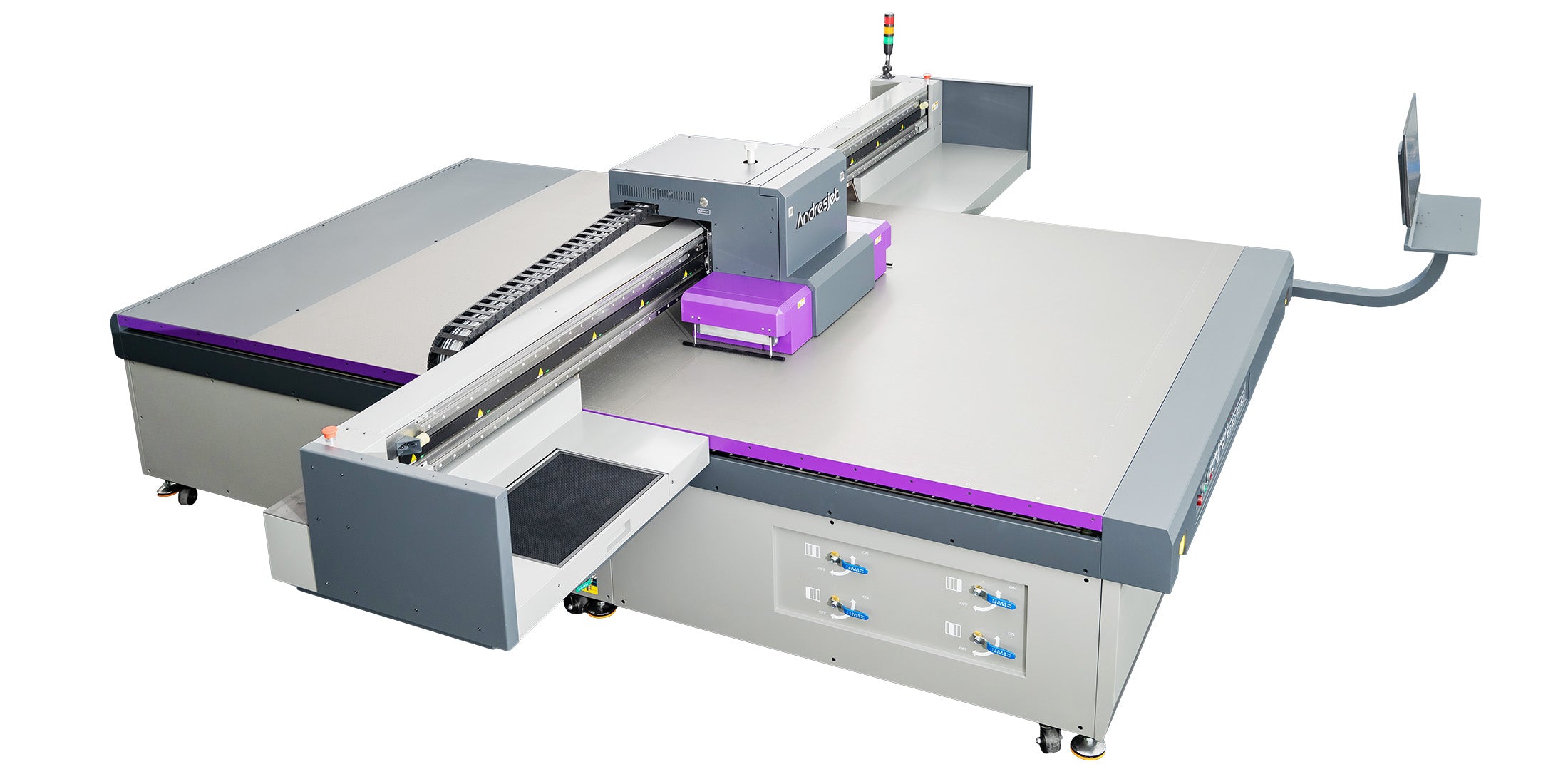
UV flatbed printing delivers 40–62% lower ink costs than eco-solvent systems while compressing production timelines by 75% through instant curing. For small format rigid media applications—medals, coins, PVC panels, and decorative products—UV technology achieves 8–18 month ROI through labor savings ($84,000 annually), waste recovery ($72,000 annually), and production capacity gains ($100,000+ new revenue). While eco-solvent inks cost less per cartridge than OEM alternatives, UV's total cost of ownership advantage becomes decisive when accounting for drying delays, lamination expenses, waste, and labor overhead.
AndresJet's portfolio—particularly the AJ1206 Small UV Flatbed Printer with 2,000 coins/hour capacity and 30% grayscale ink savings, plus the AJ2512G/R entry-level mid-size option—addresses the specific needs of small format rigid media operators. Both systems leverage industrial RICOH Gen5/Gen6 print heads, 8-color UV configurations, and instant LED curing to eliminate eco-solvent bottlenecks. For shops processing consistent volumes above 500 panels or 10,000 items monthly, UV adoption represents the financially optimal path forward, delivering measurable OPEX reduction within months of implementation.
Frequently Asked Questions
1. What is the actual cost per print for UV versus eco-solvent on a 4'×8' banner?
UV bulk systems cost $3–6 per print; compatible UV inks cost $4–8; OEM eco-solvent costs $8–15. The difference compounds across high-volume operations—100 banners monthly saves $500–1,200 with UV, or $6,000–14,400 annually.
2. Do I need to pre-treat rigid substrates before UV printing?
No. UV inks adhere directly to most rigid, non-porous surfaces (medals, PVC, acrylic, wood, plastic) without pre-coating or primer. Eco-solvent typically requires coated media or pre-treatment, adding 15–25% to substrate processing costs.
3. How much can I save with 8-color UV and grayscale technology?
Up to 30% ink reduction through smart halftoning and light channel optimization. For 600 panels monthly, this saves $6,480–12,960 annually in ink expenses alone, plus additional labor savings from eliminated lamination.
4. What is the real payback period for switching from eco-solvent to UV?
8–18 months for mid-size shops (20–30 employees, $1.44M+ revenue) with consistent rigid media volume. Payback combines $84,000 annual labor savings, $72,000 waste recovery, and $100,000+ new revenue capacity against $40,000 equipment investment.
5. Can UV print on flexible media like vinyl or fabric?
UV is optimized for rigid, non-porous substrates. Eco-solvent remains superior for flexible signage on vinyl, fabric, and coated flexible media. Choose UV for rigid applications (medals, PVC, acrylic); eco-solvent for flexible signage requiring lamination and extended outdoor durability on permeable substrates.
Share:
Why 2026 Is the Year of Small Format Personalization?
How to Avoid the 5 Biggest Mistakes When Buying a Small Format UV Flatbed Printer