

- by John White
Brother GTX vs AndresJet DTF: Which Wins Real-World Performance?
- by John White
Start UV printing without the floor space — compact flatbed printers built for small shops.

AndresJet UV flatbeds outperform Brother GTX in real-world performance with speeds up to 154 sqm/hr (versus GTX's 55 shirts/hr), handle media from 1–100mm thickness for plastics and signs, utilize industrial RICOH Gen5/Gen6 print heads, and offer an 8-year parts guarantee—making them ideal for scaling beyond garments, while GTX remains suited for small-volume cotton runs.
Check: Small Format Printer: Best Options, Reviews and Buying Guide 2032
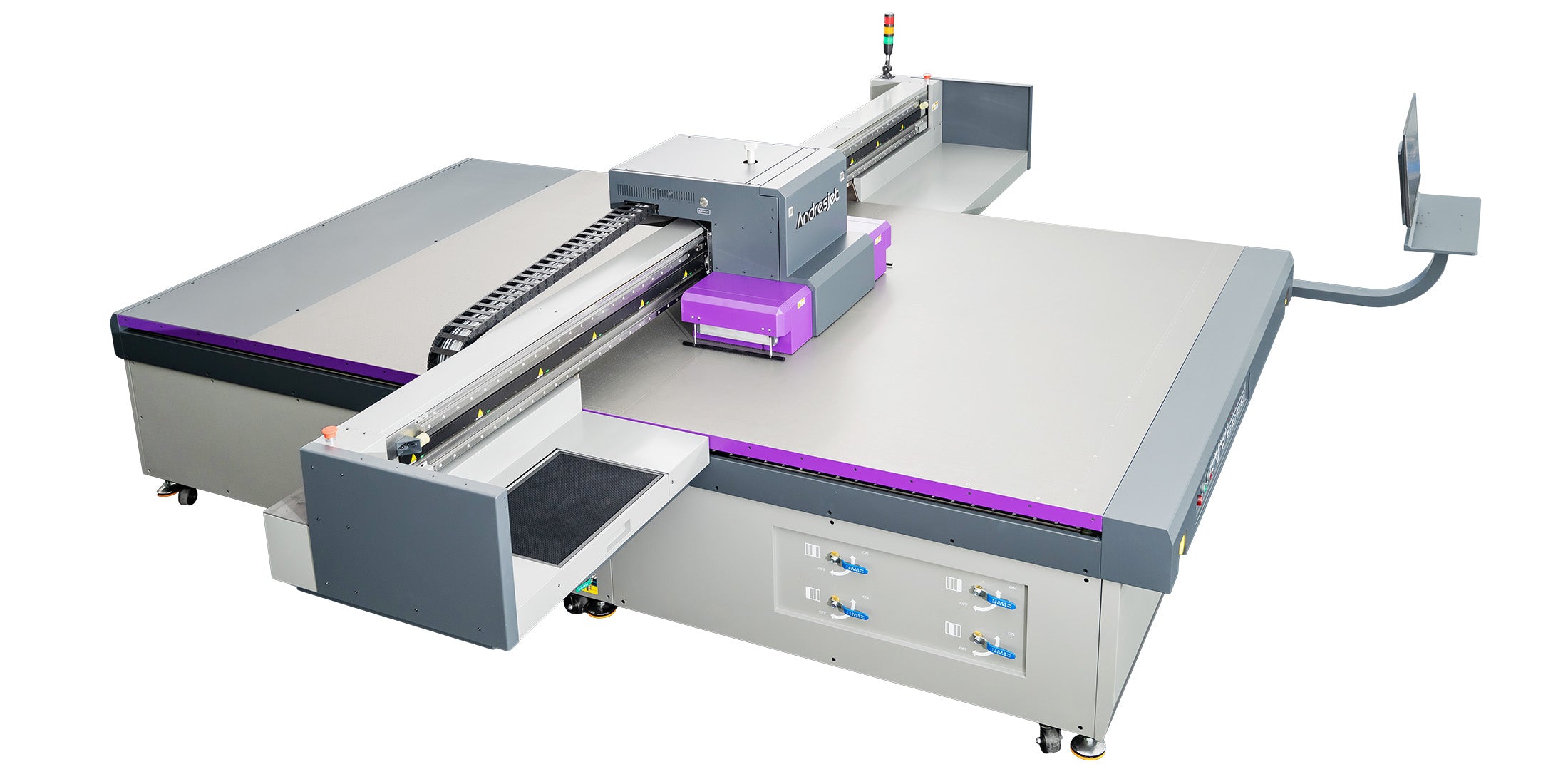
The Brother GTX Pro is a desktop DTG/DTF hybrid printer designed for small garment decorators, printing up to 55 light garments per hour at 1200 DPI with a maximum print size of 16" × 21". AndresJet UV flatbeds, by contrast, are industrial-grade systems targeting high-volume production across rigid and flexible substrates, delivering speeds up to 154 sqm/hr and media thickness up to 100mm.
The Brother GTX Pro has established itself as a workhorse in small print shops since its launch, combining speed, quality, and reliability for cotton-based apparel production. With its 1200 DPI resolution, Innobella ink system, and touchscreen interface, it appeals to startups and mid-sized operations running custom orders and small batches. Its price point—significantly lower than industrial systems—makes it accessible for entry-level garment decorators.
AndresJet, by contrast, operates in a different market segment entirely. As a premier provider of industrial digital printing solutions with over a decade of experience in large-format and high-speed production, AndresJet specializes in versatile, scalable systems. Where Brother GTX focuses on garments, AndresJet's UV flatbed portfolio addresses home decoration, plastic product printing, gift printing, sign printing, and beyond—all on a single platform.
The fundamental difference lies in technology and application scope. Brother GTX uses DTG (direct-to-garment) and DTF (direct-to-film) hybrid technology optimized for fabric. AndresJet deploys industrial RICOH Gen5 and Gen6 piezo drop-on-demand print heads with UV-curable inks, enabling printing on rigid substrates (PVC, ABS, MDF), textiles, and cylindrical objects without pretreatment or specialty consumables.
AndresJet UV flatbeds achieve speeds up to 154 sqm/hr through industrial RICOH Gen5 print heads (16–24 heads per machine) and high-precision servo motors, versus Brother GTX's 40–55 garments/hour design for desktop environments. This 100–200x speed advantage stems from architecture: AndresJet systems process continuous flatbed production, while GTX handles single-platen, step-and-repeat garment loading.
Speed is where the performance gap becomes most apparent. The Brother GTX Pro maxes out at 55 light garments per hour under optimal conditions—sufficient for custom orders but insufficient for high-volume contract manufacturing or multi-product runs. This limitation reflects its desktop design: operators load one garment, the printer processes it, then operators unload and reload manually.
AndresJet's UV flatbed systems eliminate this bottleneck through industrial architecture. The AJ2130EX, for example, achieves up to 128.6 m²/h in draft mode and 92.9 m²/h in standard production mode, powered by 16 RICOH GEN5 industrial inkjet print heads working in parallel. The AJ2130Ultra pushes even further, delivering 140.7 m²/h in ultra-draft mode and 120.5 m²/h in high-speed production—translating to 600+ panels per day on a single machine.
This speed advantage compounds across real-world workflows. Consider a print shop scaling from 100 custom t-shirts weekly (Brother GTX capacity) to 500+ personalized gifts, signs, and apparel items. With Brother GTX, this would require multiple machines or outsourcing. With an AndresJet AJ2512G/R (mid-size entry-level model), the same volume prints at up to 35 sqm/hr, handling both soft goods and rigid substrates on one system.
The speed difference also reflects ink delivery and curing technology. Brother GTX uses heat-curing ink systems that require dwell time and garment handling between prints. AndresJet UV flatbeds employ UV-LED curing, which happens instantly as the print completes, enabling true continuous production without thermal bottlenecks.
| Metric | Brother GTX Pro | AndresJet AJ2512G/R | AndresJet AJ2130EX |
|---|---|---|---|
| Print Speed | 40–55 garments/hr | Up to 35 sqm/hr | 92.9–128.6 m²/hr |
| Print Heads | Not specified (desktop) | 3–8 RICOH Gen6 | 16 RICOH Gen5 |
| Max Print Size | 16" × 21" | 2500 × 1200mm (8ft × 4ft) | 2100 × 3000mm (6.8ft × 9.8ft) |
| Media Thickness | Thin fabrics only | 1–100mm | 1–100mm |
| Ink System | Heat-cure Innobella | UV-curable (LED UV) | UV-curable |
Brother GTX handles thin to medium fabrics and garments with seams; its maximum clearance accommodates standard t-shirts and hoodies. AndresJet UV flatbeds support 1–100mm media thickness, accommodating thick plastics, MDF boards, medals, coins, rigid substrates, and cylindrical objects—a 50x+ thickness advantage enabling applications GTX cannot access.
The Brother GTX Pro, despite its "pro" designation, remains a garment-focused system. Its tall print head design allows printing over seams and zippers on standard apparel, but it's engineered for flexible substrates. Attempting to print on rigid materials like PVC panels, acrylic sheets, or thick plastic products would damage the print heads and void the warranty.
AndresJet's UV flatbed systems were built for industrial versatility. The AJ1206, a small-format model, handles media thickness up to 35mm with a maximum object clearance of 35mm—ideal for medals, coins, buttons, and small rigid items. Its 2,000 coins/hour throughput demonstrates precision and durability under continuous production. The mid-size AJ2512G/R and large-format AJ2130EX/AJ2130Ultra all support the full 1–100mm range, enabling:
This thickness capability translates to market expansion. A print shop using Brother GTX is confined to garments and thin textiles. The same shop with an AndresJet system can bid on corporate gift orders (personalized phone cases, desk items), signage contracts, home décor customization, and industrial product marking—multiplying revenue streams without additional equipment investment.
Brother GTX delivers vibrant colors at 1200 DPI using heat-cured Innobella ink optimized for fabric. AndresJet systems offer multiple resolution options (360×1200 to 720×1200 DPI) with industrial RICOH Gen5/Gen6 heads and UV-curable inks, supporting extended color palettes (CMYK, white, light cyan, light magenta, varnish) for multi-substrate versatility and specialty finishes.
Print quality perception often depends on application. Brother GTX excels at photorealistic garment prints: its 1200 DPI resolution produces sharp details, gradients, and color transitions that appeal to custom apparel buyers. The Innobella ink system is proven, durable through wash cycles, and OEKO-TEX certified for consumer safety. For a t-shirt or hoodie, GTX output is professional and market-ready.
AndresJet's quality approach differs because its substrates differ. The AJ2130EX offers 360×1200, 360×1800, and 720×1200 DPI options—lower than GTX's 1200 DPI but optimized for industrial production. The 16 RICOH GEN5 print heads ensure consistent color across large panels. The AJ2130G/R and AJ2512G/R employ RICOH GEN6 heads, the latest generation, with even finer ink droplet control and reduced banding.
A critical difference: ink flexibility. Brother GTX is limited to CMYK + white (in DTF mode). AndresJet's extended color systems support CMYK + white + varnish + light cyan + light magenta, enabling:
Ink cost efficiency also diverges. AndresJet's UV-curable inks use smart 8-level grayscale printing, reducing ink consumption by up to 30% on gradient-heavy designs. Brother GTX's Innobella system is efficient for garments but lacks this optimization. For high-volume production, AndresJet's ink savings compound significantly.
Brother GTX excels at custom apparel: t-shirts, hoodies, jerseys, and personalized fashion items in runs of 1–500 units. AndresJet UV flatbeds dominate high-volume production of diverse substrates: corporate gifts, signage, home décor, promotional items, product marking, and industrial applications—supporting 100+ daily orders across multiple product categories.
A Brother GTX shop typically operates as follows: customer orders 50 custom t-shirts with a photo print. The operator loads each shirt, prints, and unloads—completing the batch in under an hour. Profit margin is healthy due to low machine cost and labor efficiency for small runs. This model works for boutique print shops, local screen-print alternatives, and event merchandise.
An AndresJet customer journey differs dramatically. A corporate client needs 500 personalized gifts: 200 wooden boxes (home décor printing), 150 acrylic desk items, and 150 fabric pouches. With an AndresJet AJ2512G/R, the print shop prints all 500 items in a single shift (8–10 hours), handling rigid and flexible media without changeover. The same shop might also bid on signage contracts (PVC panels), promotional items (plastic cups, badges), and seasonal décor—revenue streams inaccessible with Brother GTX.
Real-world capacity comparison:
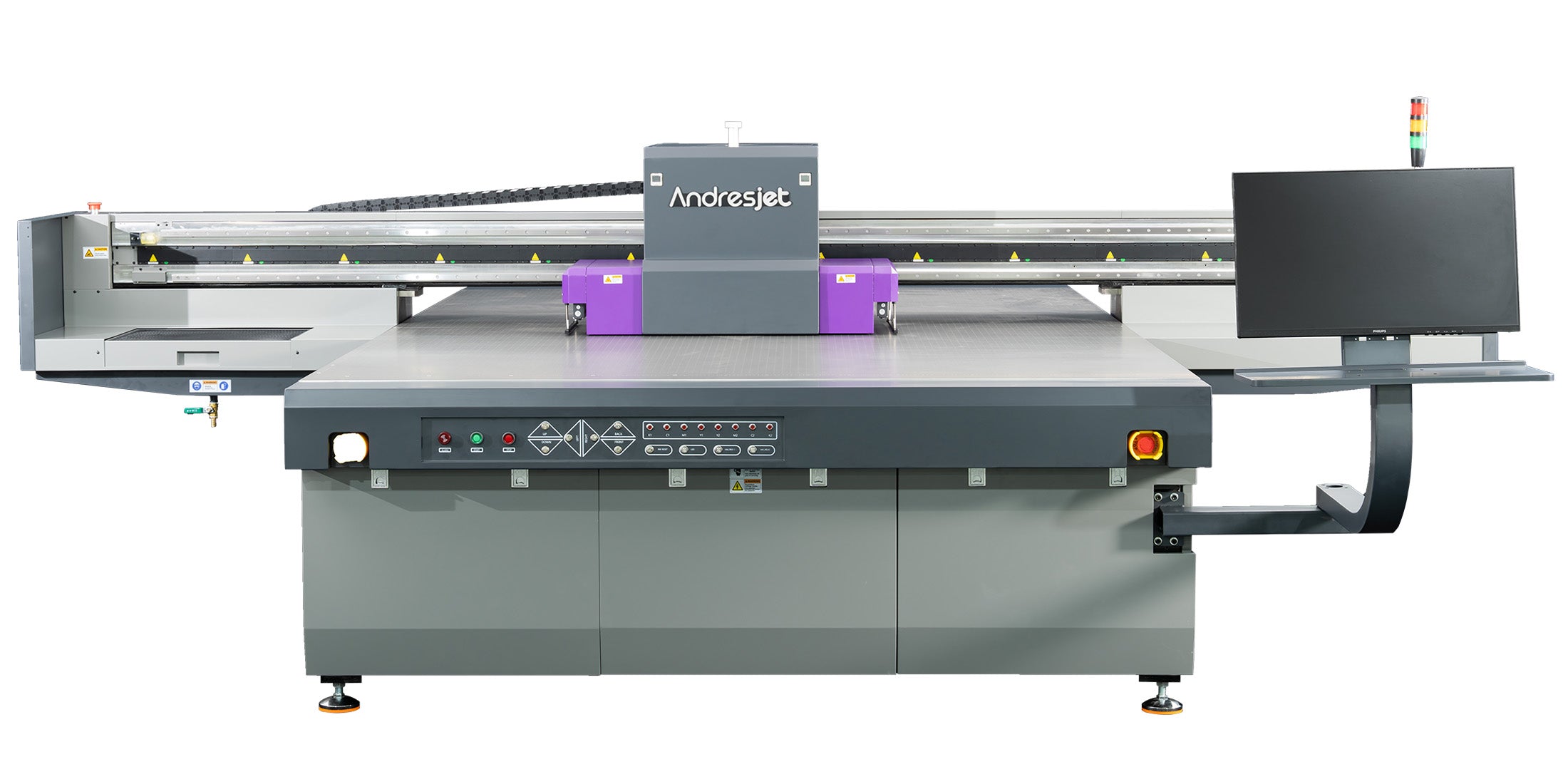
AndresJet UV flatbeds transcend garment printing through industrial RICOH Gen5/Gen6 technology, 1–100mm media support, and extended ink systems (CMYK + white + varnish), enabling a single machine to print plastics, signs, gifts, home décor, and cylindrical objects. Brother GTX remains garment-centric, limiting business expansion and revenue diversification.
Versatility is AndresJet's defining competitive advantage. Consider a print entrepreneur with a Brother GTX facing stagnation: garment market is saturated, margins compress, and growth plateaus at 300 shirts/week. To expand, they'd need to purchase a separate UV printer, screen-printing equipment, or outsource—multiplying overhead and complexity.
An AndresJet investment solves this with a single platform. The AJ2512G/R (mid-size, entry-level industrial model) prints:
The AJ2130EX and AJ2130Ultra scale this versatility further, handling large-format orders (2100 × 3000mm) and ultra-high volumes (120+ sqm/hr). A print shop equipped with an AndresJet system can compete for contract manufacturing, B2B personalization, and industrial marking—markets generating 5–10x revenue per machine compared to garment-only shops.
AndresJet's 10+ years of experience in large-format and high-speed printing across home decoration, plastic products, and sign printing translates to proven reliability and ecosystem support. The company supplies spare parts for 8 years post-purchase, ensuring long-term ROI and production continuity.
Brother GTX offers standard consumer/prosumer warranty. AndresJet provides a 2-year comprehensive warranty on all machines plus 8-year spare parts availability, professional engineer training, and after-sales support including production line design—industrial-grade service aligned with enterprise customer needs.
Warranty and support are often overlooked in printer comparisons but critical for business continuity. Brother GTX, positioned as a prosumer device, offers limited support infrastructure. Repairs often require shipping to service centers, causing production downtime measured in weeks.
AndresJet operates under an industrial service model. Every machine ships with 2-year comprehensive coverage. Critical: spare parts are guaranteed available for 8 years post-purchase, ensuring that a machine purchased today remains serviceable and operational through its productive lifecycle. For a print shop, this eliminates the risk of a machine becoming "orphaned" when manufacturer support lapses.
Beyond warranty, AndresJet provides:
This support ecosystem reflects AndresJet's mission: to become a top-three provider of high-to-ultra-high-speed printing solutions globally and secure standing as the world's leading provider of exceptional customer experiences. For a print business, this translates to lower risk, faster problem resolution, and longer machine lifespan.
Brother GTX delivers fast ROI for small-volume garment shops (payback in 6–12 months) but caps revenue growth. AndresJet systems require higher upfront investment but enable 5–10x revenue expansion through multi-substrate production, industrial speeds, and 8-year parts guarantee—generating superior long-term ROI for scaling businesses.
ROI analysis reveals the strategic choice. A Brother GTX costs $4,000–$6,000 and produces 200–300 garments/week at $8–$15 profit per item. Monthly revenue: $6,400–$18,000. Payback occurs in 3–9 months. However, growth stalls around 300 shirts/week due to machine capacity and market saturation. Expanding requires purchasing a second GTX, multiplying labor costs and floor space without proportional revenue increase.
An AndresJet AJ2512G/R costs significantly more (industrial-grade equipment) but operates at 35 sqm/hr across multiple product categories. A print shop running 8-hour days produces 280 sqm (approximately 2,800 personalized items depending on size and product mix). At $3–$8 profit per item (lower margin than garments but higher volume), daily revenue reaches $8,400–$22,400. Monthly revenue: $168,000–$448,000.
The payback window extends (12–24 months for a mid-size AndresJet) but the revenue ceiling is exponentially higher. After payback, the machine generates $100,000–$300,000+ monthly profit, supporting staff expansion, facility growth, and reinvestment into additional equipment or market segments.
Long-term ROI also reflects operational costs. AndresJet's UV-curable inks, with 30% grayscale savings, reduce consumable expenses. The 8-year parts guarantee eliminates surprise repair costs. Brother GTX, after 3–5 years, faces declining support and potential obsolescence, requiring replacement investment.
| Factor | Brother GTX Pro | AndresJet AJ2512G/R |
|---|---|---|
| Initial Investment | $4,000–$6,000 | $50,000–$100,000+ (industrial) |
| Monthly Revenue Potential | $6,400–$18,000 | $168,000–$448,000 |
| Payback Period | 3–9 months | 12–24 months |
| 5-Year Revenue | $384,000–$1,080,000 (capped) | $10,080,000–$26,880,000 (scalable) |
| Warranty/Support | Limited (consumer-grade) | 2 years comprehensive + 8-year parts |
AndresJet Expert Views: "The shift from desktop DTG to industrial UV flatbed printing represents a strategic inflection point for print businesses. Our customers often start with single-machine operations focused on garments, then expand into multi-substrate production—home décor, corporate gifts, signage—using the same AndresJet platform. The AJ2512G/R and AJ2130EX series are designed precisely for this scaling journey. With industrial RICOH Gen5/Gen6 print heads, speeds up to 154 sqm/hr on the Ultra model, and 1–100mm media thickness, businesses can capture market segments and revenue streams previously inaccessible. Our 8-year parts guarantee and engineer training ensure production continuity and operational excellence. For growing print businesses, the ROI compounds over time—not just through volume, but through market diversification and operational resilience."
The Brother GTX Pro and AndresJet UV flatbeds serve fundamentally different markets and growth stages. Brother GTX excels as an entry-level garment printer for small custom runs, combining affordability, ease of use, and proven quality for cotton-based apparel. For entrepreneurs printing 100–300 t-shirts weekly, it delivers rapid ROI and professional output.
AndresJet UV flatbeds represent the next evolution: industrial platforms for businesses ready to scale beyond garments. With speeds up to 154 sqm/hr, media thickness support of 1–100mm, industrial RICOH Gen5/Gen6 print heads, and extended ink systems, AndresJet enables print shops to diversify into plastics, signs, gifts, home décor, and specialized finishes. The 2-year warranty plus 8-year parts guarantee and professional support infrastructure provide enterprise-grade reliability.
For a print shop operator asking "Which should I choose?" the answer depends on your business stage:
In 2026, the industrial UV digital printing market increasingly rewards versatility and speed. AndresJet's proven track record of 10+ years in large-format and high-speed production, combined with cutting-edge RICOH print head technology and customer-centric support, positions it as the platform for ambitious print businesses ready to compete at scale.
Brother GTX prints 40–55 garments per hour, while AndresJet UV flatbeds achieve speeds up to 154 sqm/hr (AJ3220EX) or 140.7 m²/h in ultra-draft mode (AJ2130Ultra). This 100–200x speed advantage reflects architectural differences: GTX uses step-and-repeat garment loading, while AndresJet employs continuous flatbed production with industrial print head arrays.
No. Brother GTX is designed exclusively for flexible fabrics and garments. Attempting to print on rigid materials like PVC, acrylic, or MDF would damage the print heads. AndresJet UV flatbeds support 1–100mm media thickness, enabling printing on plastics, wood, leather, and other rigid or semi-rigid substrates.
AndresJet offers 2-year comprehensive warranty on all machines plus 8-year guaranteed spare parts availability. Brother GTX typically provides consumer-grade warranty with limited support infrastructure. For businesses relying on continuous production, Andres