

The correct white-ink and varnish structure for canvas and art-panel production depends on substrate color, opacity, texture, viewing direction and the required finish. Industrial production should begin with the simplest candidate—color only, white under color, or a verified varnish build—then compare density, registration, surface character, curing and adhesion on the real material before saving a repeatable RIP recipe.
When Does the Job Need White Ink?
White ink is useful when the substrate color or transparency would otherwise alter the artwork. White ink may be unnecessary on bright coated art panels, while dark, translucent or strongly textured media may require a controlled underbase. Flexible canvas also makes excessive rigid ink build a handling concern. On a white opaque surface, color-only may provide the cleanest and most economical structure; on a dark or strongly colored surface, a controlled white underbase can improve color separation.
White ink should solve a defined optical requirement. Extra deposit can increase texture, curing demand and registration sensitivity, so opacity must be judged together with adhesion and surface quality rather than maximized without a target. For canvas, include flexing and weave direction in the release decision.
Which Layer Sequence Fits the Viewing Condition?
For canvas and art-panel production, the viewing side and finish determine layer order. Varnish can create selective accents, but broad gloss over woven texture may appear nonuniform; flexing and stretching must be simulated before approval. Reverse or second-surface constructions apply only when the viewer looks through a transparent face; they should not be copied to an opaque panel workflow.
The production file should name each white and varnish object clearly, preserve knockout and overprint behavior and use the RIP conventions verified for the selected configuration. A first article should be inspected at high-contrast edges for white halo, scaling error and varnish misregistration. Art-panel coating identity belongs beside the color reference.
| Application condition | Candidate structure | Approval checks |
|---|---|---|
| White opaque surface | Color only | Color, adhesion, texture |
| Dark or colored surface | White under color | Opacity, halo, cure |
| Selective highlight | Color plus verified varnish | Registration, gloss, handling |
| Raised texture request | Multiple verified layers | Height consistency, cure, cost |
How Should Color Be Controlled?
Color control starts after the substrate, preparation, white density, print mode and viewing condition are stable. The approved reference should identify the material lot and recipe. Measuring color against a reference can support repeat production, but no universal Delta-E tolerance should be inserted unless the customer defines the instrument, geometry, illuminant and acceptance limit. Broad varnish must be judged across the actual texture.
Texture and substrate color can change visual judgment. Operators should compare samples under consistent lighting and orientation, record the profile and mode, and re-check after a material or white-density change rather than correcting color only in the artwork. Do not transfer a rigid-panel recipe to flexible canvas without testing.
What Can Varnish Add—and What Can Go Wrong?
Varnish can create selective gloss, tactile contrast or a protective design feature when the printer, ink set, RIP and substrate have been validated together. It does not automatically provide a certified abrasion, chemical or outdoor rating. Those claims require an application-specific test. For canvas, include flexing and weave direction in the release decision.
Common failure modes include visible edge offset, uneven gloss across texture, insufficient cure and cracking where the substrate flexes. Mitigation is to limit the effect to a defined area, test realistic handling and lock the approved layer count rather than treating varnish as a decorative afterthought. Art-panel coating identity belongs beside the color reference.
File and RIP Release Checklist
Before release, preflight dimensions, orientation, color spaces, image resolution, spot-layer names, overprints, transparency and choke/spread. Then record the RIP preset, layer order, white density decision, varnish areas, print mode and approved sample. The controlled production PDF and native source should have clear revision identifiers. Broad varnish must be judged across the actual texture.
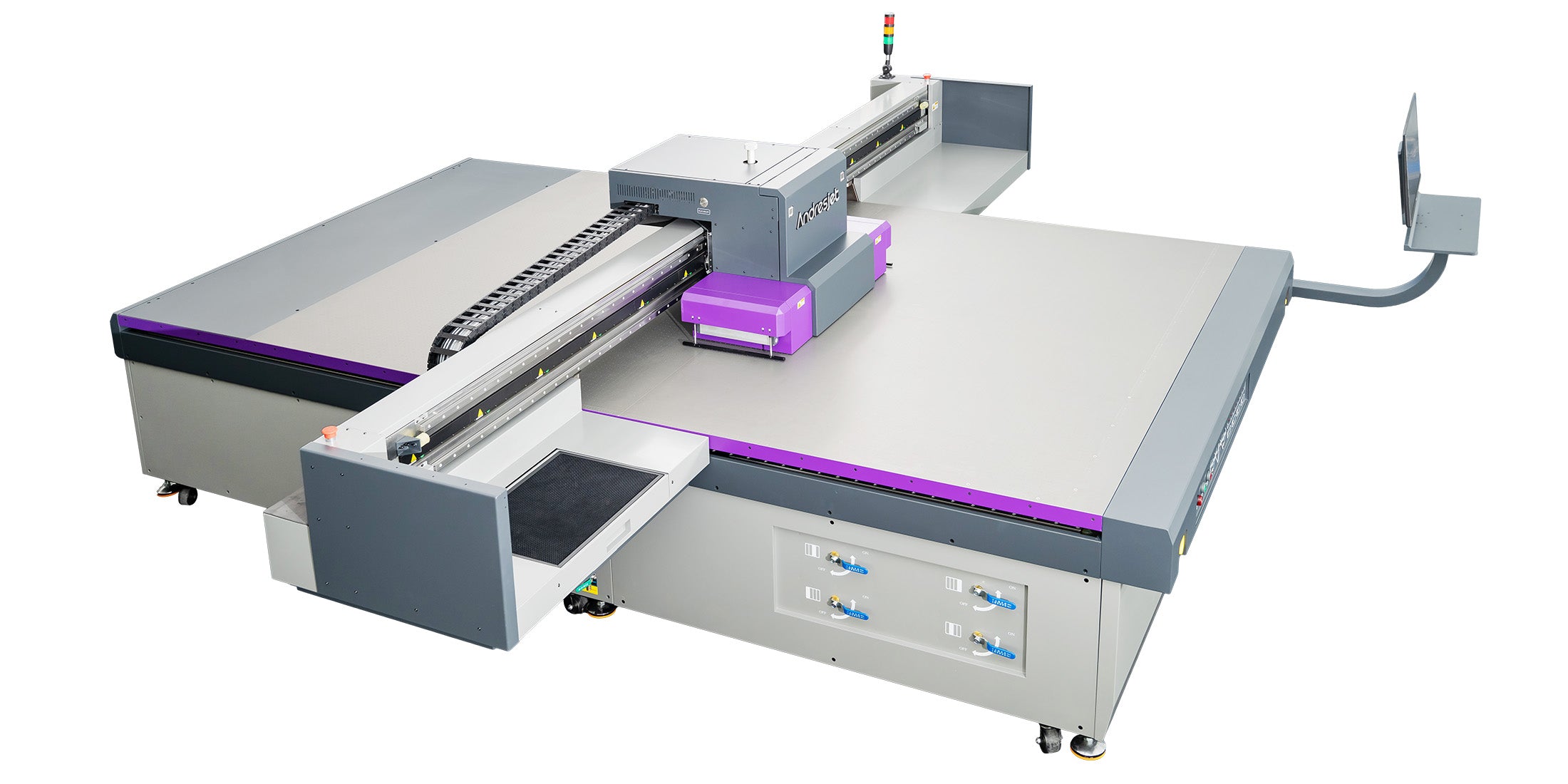
The AndresJet application collection helps a B2B buyer confirm category fit. The AJ2130 product page is the appropriate place to review published machine information before requesting an AndresJet sample test with the final file and substrate.
Repeatable Recipe Record
A repeatable record connects the visual result to material supplier and lot, preparation, file revision, ink-layer structure, RIP preset, print mode, cure condition, inspection lighting, operator and approval date. Requalification is needed when any boundary variable changes materially. Do not transfer a rigid-panel recipe to flexible canvas without testing.
Without the buyer’s substrate, artwork, selected ink configuration and measured samples, no article can prescribe a universal white density or varnish layer count. The defensible output is a comparison method and approval record, not an unsupported recipe number. For canvas, include flexing and weave direction in the release decision.
Conclusion
For B2B production, the defensible decision is the one supported by identified material, controlled artwork, a documented print recipe, representative samples and written acceptance criteria. Ask the UV printer manufacturer which specifications are published, which configuration points remain application-specific, how the sample will be evaluated, and what commissioning, operator training, spare-parts planning and After-Sale Service are included. AndresJet can review the application and arrange a sample test, but the final process must be approved on the buyer’s production material and real artwork. Art-panel coating identity belongs beside the color reference.
FAQs
Should canvas always use white under color?
No. Start from the canvas color, coating, opacity and intended gamut. White adds value only when it solves a measured visual requirement.
Can a rigid-panel recipe be copied to flexible canvas?
Not safely. Flexing, surface texture and coating behavior differ, so adhesion and bend handling must be requalified.
How should an art-panel repeat order be checked?
Compare the same material identity, file, white density, profile, print mode and viewing condition against the retained approved reference.
Share:
How Should Stone and Slate Be Prepared for UV Printing?
How Do You Build a Repeatable Metal Panel UV Printing Workflow?