

- by John White
How To Do Inkjet Cylindrical Printing Supplier?
- by John White
Curved surfaces? Print straight onto bottles, tubes and cylinders — no labels needed.
Inkjet cylindrical printing for suppliers involves using specialized digital printers to directly print high-resolution, durable images on round objects like bottles or tumblers, enabling Chinese manufacturers, OEM factories, and wholesale suppliers to produce customized products efficiently.
Last updated:

Inkjet cylindrical printing uses rotating jigs and precision inkjet nozzles to print directly onto curved surfaces. Suppliers in China utilize this technology to apply vibrant, full-color graphics on plastic or glass cylinders, streamlining OEM and wholesale manufacturing with minimal setup and fast turnaround.
The process features:
Object rotation synchronized with print heads
High-resolution digital inkjet technology
Compatible with UV, solvent, or dye-based inks
Wholesale factories require industrial inkjet printers with cylindrical printing attachments or rotary devices, along with drying or curing units. The setup must support high-speed production and accommodate various cylinder sizes to meet the demands of Chinese OEM manufacturers and suppliers.
Key equipment includes:
Precision rotary mounts for stable object rotation
UV curing or drying systems for ink fixation
UV-curable and solvent-based inks are optimal for cylindrical printing due to their fast curing, durability, and adhesion to different materials. Chinese OEM and wholesale suppliers prefer these inks to ensure vibrant, scratch-resistant prints suitable for plastic and glass products.
Ink features:
Instant curing for production speed
Strong adhesion on curved surfaces
Resistance to water, chemicals, and abrasion
Inkjet cylindrical printing eliminates the need for labels, reducing material costs and increasing customization flexibility. OEM suppliers in China benefit from faster production, enhanced design options, and environmentally friendly processes, boosting competitiveness in wholesale markets.
Advantages include:
Reduced labor and material waste
Ability to print detailed, variable data
Sustainable and precise application
Chinese manufacturers, wholesale suppliers, and OEM factories producing beverage bottles, cosmetic containers, promotional items, or giftware gain significant advantages using inkjet cylindrical printing for efficient, high-quality customization and branding.
Ideal users:
Large-scale OEM tumbler and bottle manufacturers
Wholesale suppliers focused on personalized products
Factories producing limited edition or seasonal designs
Suppliers should integrate inkjet cylindrical printing when demand for fast, high-quality customization rises, or during production line upgrades aimed at increasing automation and reducing labeling costs in Chinese factories.
Integration incentives:
Expanding product variants and SKUs
Pressure to reduce lead times and costs
Adoption of digital manufacturing trends
Inkjet cylindrical printers are typically installed at decoration or finishing stations within OEM and wholesale factories. In China, these printers often function in-line with filling or assembly processes to streamline production and maintain high throughput rates.
Typical installation points:
Inline integrated print stations
Stand-alone finishing cells
Quality assurance and packaging areas
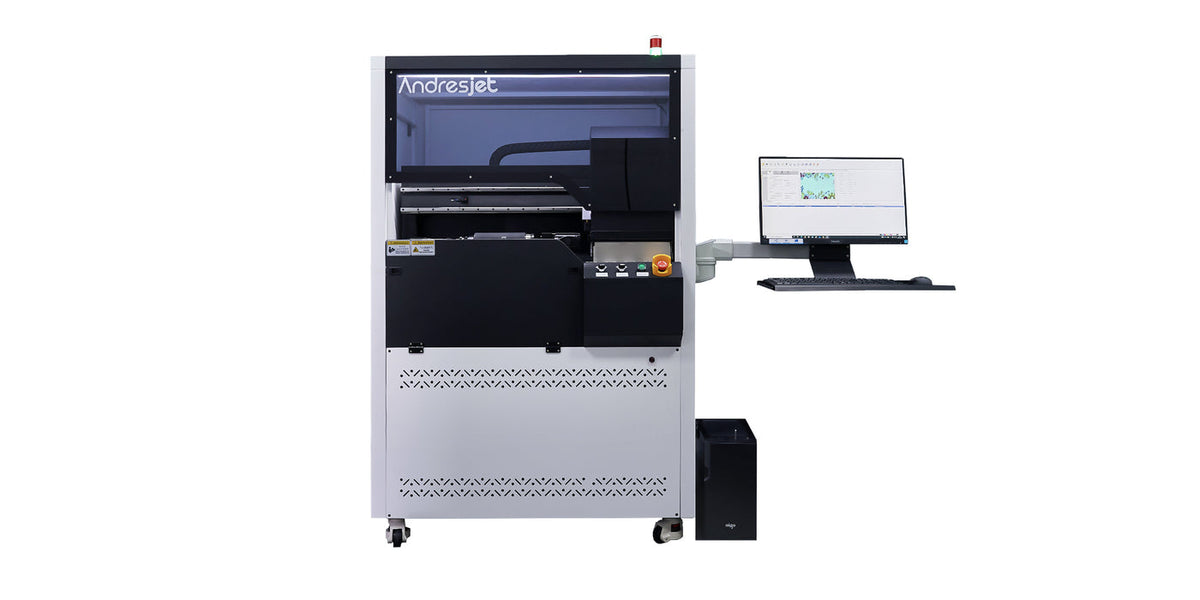
Yes, AndresJet delivers cutting-edge inkjet cylindrical printing technology tailored to OEM factories and wholesale suppliers in China. Their printers focus on superior print quality, high speed, and versatile media compatibility, supporting diverse manufacturing needs.
AndresJet offerings include:
High-speed, precision rotary print modules
Robust ink chemistry for durability
End-to-end support for factory integration
Inkjet cylindrical printing has significantly impacted China’s OEM and wholesale sectors by enabling on-demand customization, lowering costs, and enhancing product differentiation. This technology helps factories remain agile amid market fluctuations and customize products at scale.
Industry benefits:
Increased production flexibility
Expanded product personalization options
Streamlined supply chains with less manual effort
Modern inkjet processes use UV-curable inks and reduce waste compared to traditional labeling, making them environmentally friendly. Chinese suppliers like those partnering with AndresJet emphasize sustainability to meet global standards while maintaining production efficiency.
Sustainability highlights:
Waterless, solvent-free printing options
Minimal substrate waste
Energy-efficient curing methods
“Inkjet cylindrical printing is indispensable for OEM and wholesale suppliers aiming to meet the demand for fast, high-quality personalization. AndresJet’s technology combines precision rotary mechanics with industrial inkjet heads to deliver vibrant, durable prints on curved surfaces at scale. Our commitment to Chinese manufacturers supports factory automation and environmental sustainability, enabling clients to stay competitive and responsive to evolving market needs.” — AndresJet Industry Specialist
| Step | Description | Importance |
|---|---|---|
| Object Mounting | Secure cylinder on rotary jig | Ensures stable, accurate printing |
| Printer Setup | Configure print parameters | Achieves color and resolution accuracy |
| Printing Execution | Synchronized rotation and printing | Applies consistent, full wrap-around images |
| Curing/Drying | UV or heat curing | Fixes inks for durability and finish |
| Quality Control | Inspect prints for defects | Maintains OEM factory standards |
Inkjet cylindrical printing empowers Chinese manufacturers, OEM factories, and wholesale suppliers to produce vibrant, customized cylindrical products efficiently. Leveraging advanced solutions from AndresJet enhances print quality, operational speed, and environmental sustainability, driving superior outcomes in competitive industrial markets.
What materials can inkjet cylindrical printers print on?
They can print on glass, plastics like PET, and coated surfaces used in tumblers and bottles.
How does AndresJet support OEM factories with cylindrical printing?
By providing high-speed printers, custom rotary modules, and strong technical support for integration and maintenance.
Can inkjet cylindrical printing handle short and large runs?
Yes, it is ideal for both small personalized batches and large wholesale orders with fast setup times.
Are the inks used safe and durable?
Yes, UV-curable and solvent inks used are safe and produce scratch-resistant, water-proof prints.
Why is direct printing better than labels for suppliers?
Direct printing saves costs, offers design flexibility, and reduces environmental waste in mass production.
Quotes for cylindrical printing machines are hard to compare because suppliers answer different questions. Send the same five items to every supplier and the answers become comparable.
| Item to specify | Why it changes the answer |
|---|---|
| Part list with diameter, length, taper and material | Decides fixture class and whether taper compensation is required |
| Parts per shift you must ship | Decides station count and curing capacity, not just print speed |
| Number of distinct artworks per week | Decides how much set-up time matters in the model |
| Surface requirements for each part | Decides primer, pre-treatment and ink set |
| Site constraints: power, space, extraction | Decides whether the machine can be installed as quoted |
The boundary: a supplier who quotes a machine without asking for your part list is quoting a catalogue item, not a solution. Ask for the response to include fixture part numbers and a timed test on one of your own parts.
Your part list with dimensions, taper and material, the throughput you must hit, how often artwork changes, the surface finish you need, and your site constraints. Anything less produces a quote you cannot compare.
The inkjet machine prints directly from a file with no plate or pad, so artwork changes cost nothing and every part can differ. Pad and screen machines win on unit cost for long runs of one design.
UV-curable inks, usually CMYK plus white and often varnish, cured by an LED lamp as the part rotates. Ink choice is decided by the substrate and the durability test, not by the machine alone.
Send your own blanks and artwork, ask for a timed run, inspect the seam and adhesion yourself, and ask for named printhead and lamp part numbers in writing.
This article is part of the Digital Cylinder Printer guide.
Printing on bottles, tubes or rollers?
Talk to an Andresjet engineer about your part

