

- by John White
How Do You Build a Repeatable Foam-Board UV Workflow?
- by John White
Print bigger, print faster — wide-format UV flatbed printers for signs, decor and industrial work.

A repeatable foam-board display printing workflow uses controlled gates from job intake to packed output: define requirements, qualify material, release one production file, plan loading, approve a first article, inspect the batch, finish and pack safely, and retain traceability records. Each gate needs an owner and evidence; final inspection cannot compensate for an uncontrolled file or material handoff.
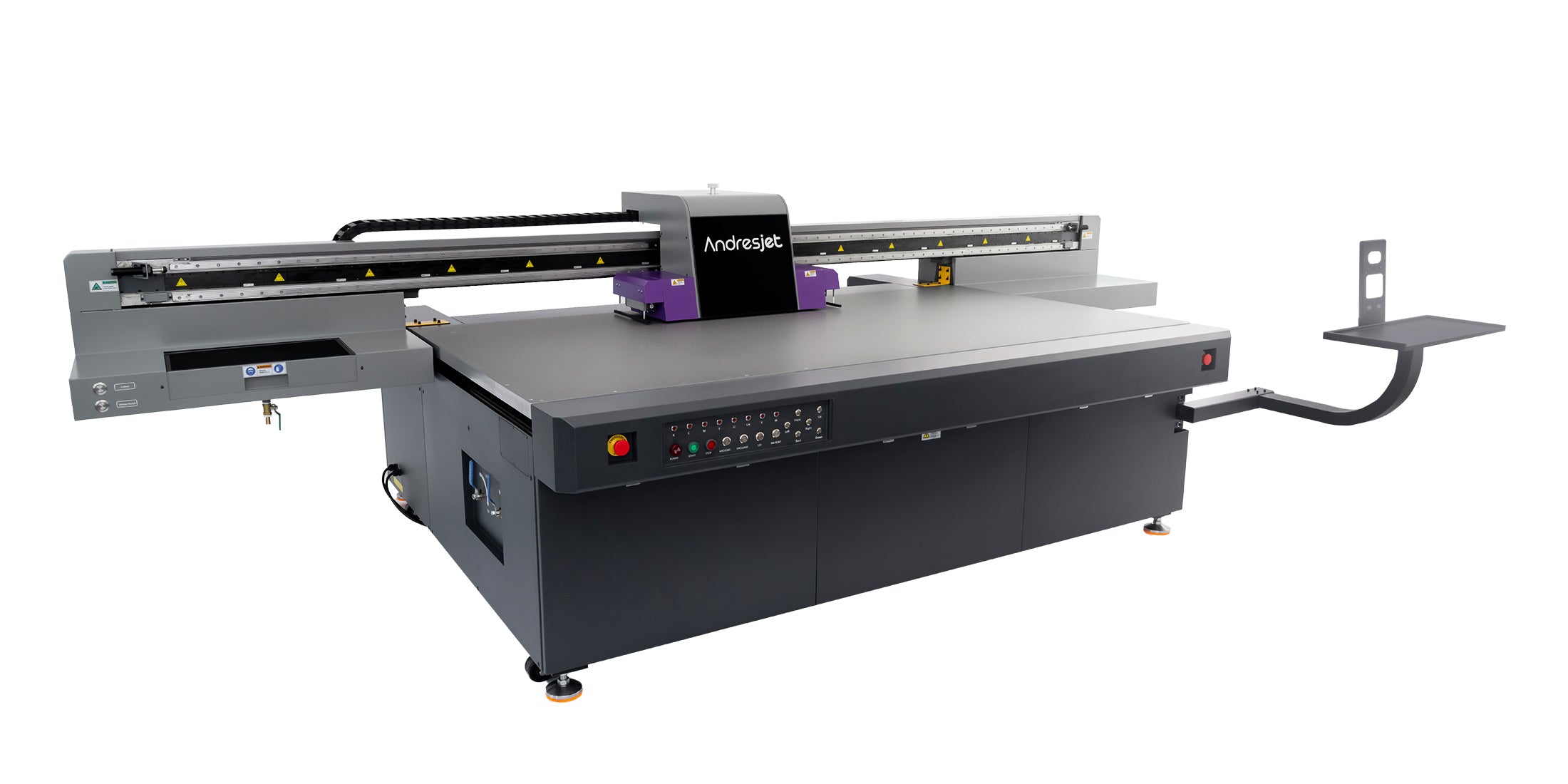
The job ticket should state customer, application, dimensions, quantity, artwork revision, substrate specification, finish, due date and acceptance criteria. Record board skin, core type, thickness, flatness, print side, protective film, finished size and whether the job will be cut, routed, mounted or folded. Unresolved fields should block production rather than be interpreted at the machine.
Sales and production should use the same definition of an accepted piece. The first-article approver, revision allowance and response to supplied-material variation must be agreed before scheduling. Foam-board control should include skin type, core, thickness and measured flatness.
Incoming material is checked for identity, coating, damage, contamination, flatness or thickness variation and storage condition. Artwork preflight confirms dimensions, fonts, images, orientation, bleed, color space, white and varnish layers, and file revision. Support and clearance decisions must reflect the full sheet, not one corner.
Release one production PDF and retain the native source separately. A common failure is allowing operators to choose among similarly named files; the consequence is a visually correct but obsolete version. Revision-controlled storage and a job-ticket checksum or filename prevent that mistake. Test cutting or mounting before approving the batch route.
The load plan identifies datum, orientation, clearance, pieces per cycle and fixture or vacuum zones. Support the sheet to prevent bowing, verify clearance across the full board and use a load plan that does not dent the face. A trained operator should be able to repeat the position from the record without relying on memory.
Before printing, verify safe head clearance and material stability according to the selected equipment procedure. Production speed is irrelevant if loading variation creates repeated reprints or collision risk. Protect soft edges and printed faces in the packing trial.
Approve the first article before batch release, then place in-process checks after the variables most likely to drift: material change, file change, loading restart or maintenance intervention. Inspect registration, appearance, surface condition and any job-specific adhesion or handling requirement. Foam-board control should include skin type, core, thickness and measured flatness.
The checkpoint frequency should follow risk and batch size. Record accepted, rejected and reworked quantities separately so the factory measures sellable output instead of loaded output. Support and clearance decisions must reflect the full sheet, not one corner.
| Gate | Required evidence | Release decision |
|---|---|---|
| Job intake | Complete ticket and criteria | Requirements clear |
| Material | Qualified lot and preparation | Ready to load |
| Artwork | Released production file | Ready for RIP |
| First article | Signed reference | Batch authorized |
| In-process | Checkpoint record | Continue or stop |
| Packing | Final count and trace | Release shipment |
Allow the verified handling condition before finishing or stacking. Allow verified handling before stacking, protect corners and printed faces, and test the actual cutting or mounting method for edge damage or delamination. Packaging must protect the printed face from abrasion, transfer, pressure points and contamination expected in the chosen transport method.
The batch traveler should connect packed output to material lot, file version, RIP preset, machine configuration, operator, first-article approval and exception record. Rework receives its own disposition rather than being mixed silently with accepted output. Test cutting or mounting before approving the batch route.
Use the AndresJet application collection when the product geometry, material handling or production volume changes enough to question category fit. Review published model information on the AndresJet product page, then request a sample using the limiting job.
AndresJet application engineering and commissioning can support the workflow definition, but final capacity, quality and handling conclusions require the buyer’s substrate, artwork, selected production mode and measured acceptance data. Protect soft edges and printed faces in the packing trial.
For B2B production, the defensible decision is the one supported by identified material, controlled artwork, a documented print recipe, representative samples and written acceptance criteria. Ask the UV printer manufacturer which specifications are published, which configuration points remain application-specific, how the sample will be evaluated, and what commissioning, operator training, spare-parts planning and After-Sale Service are included. AndresJet can review the application and arrange a sample test, but the final process must be approved on the buyer’s production material and real artwork. Foam-board control should include skin type, core, thickness and measured flatness.
Storage, humidity, asymmetric coatings, heat and unsupported loading can contribute. Inspect flatness and test the intended board before release.
No. Paper, polymer and coated faces behave differently. Qualify the exact board construction and preparation.
Compare estimated and actual setup time, accepted output, rejection causes, finishing loss and packing time, then update standard work.
 How Should a UV Substrate Qualification Library Be Built?
Knowledge
How Should a UV Substrate Qualification Library Be Built?
Knowledge
 UV Printer Installation, Commissioning and Operator Training: What Buyers Must Plan For
Knowledge
UV Printer Installation, Commissioning and Operator Training: What Buyers Must Plan For
Knowledge
 How a Pre-Order UV Printer Sample Test Works: What to Send and What You Get Back
Knowledge
Order to Delivery: How UV Printer Lead Time Is Actually Built
Knowledge
How a Pre-Order UV Printer Sample Test Works: What to Send and What You Get Back
Knowledge
Order to Delivery: How UV Printer Lead Time Is Actually Built
Knowledge