

A repeatable corrugated packaging printing UV printing workflow moves every order through defined gates: job intake, material qualification, file and color preparation, loading, print and cure, inspection, finishing, packing and traceability. The factory should release work only when the previous gate is complete and should preserve the file, recipe, material lot and approved sample for repeat orders.
What Must Be Confirmed Before Production Starts?
Record dimensions, quantity, artwork versions, substrate specification, finish, due date and inspection standard. Record board grade, flute direction, warp, print side, converting lines and whether the printed sheet will be cut, creased or folded after printing.
Confirm who approves the first article and what happens when supplied material differs from the qualified lot.
How Are Material and Artwork Released for Production?
Inspect incoming material for damage, contamination, coating changes and dimensional variation. Use the approved cleaning or conditioning method and quarantine unqualified stock.
Preflight dimensions, fonts, images, orientation, bleed, white and varnish layers. Save a production file with revision control.
How Should Loading and Job Sequence Be Planned?
Create a load map with datum, orientation, clearance and pieces per cycle. Sequence jobs to reduce risky changeovers without allowing work-in-process to obscure priorities.
Record operator, machine configuration, print mode and start time. The load should be repeatable by another trained operator.
Where Should In-Process Quality Be Checked?
Compare the first article with the approved reference before releasing the batch. Check registration, color appearance, surface condition and any application-specific adhesion requirement.
Use scheduled checkpoints based on risk. Do not wait until packing to discover a repeated loading or file error.
| Gate | Evidence | Release decision |
|---|---|---|
| Intake | Complete job ticket | Requirements clear |
| Material | Qualified lot | Preparation approved |
| File | Preflight and version | Ready for RIP |
| First article | Signed reference | Batch released |
| In-process | Checkpoint record | Continue/stop |
| Packing | Final count and trace | Ship |
Finishing, Packing and Traceability Checklist
Allow the verified handling condition before stacking or finishing. Protect printed faces from abrasion and transfer. Count accepted, rejected and reworked pieces separately.
The traveler should connect the packed order to material lot, production file, recipe, operator and approval sample.
When Should Equipment Fit Be Revalidated?
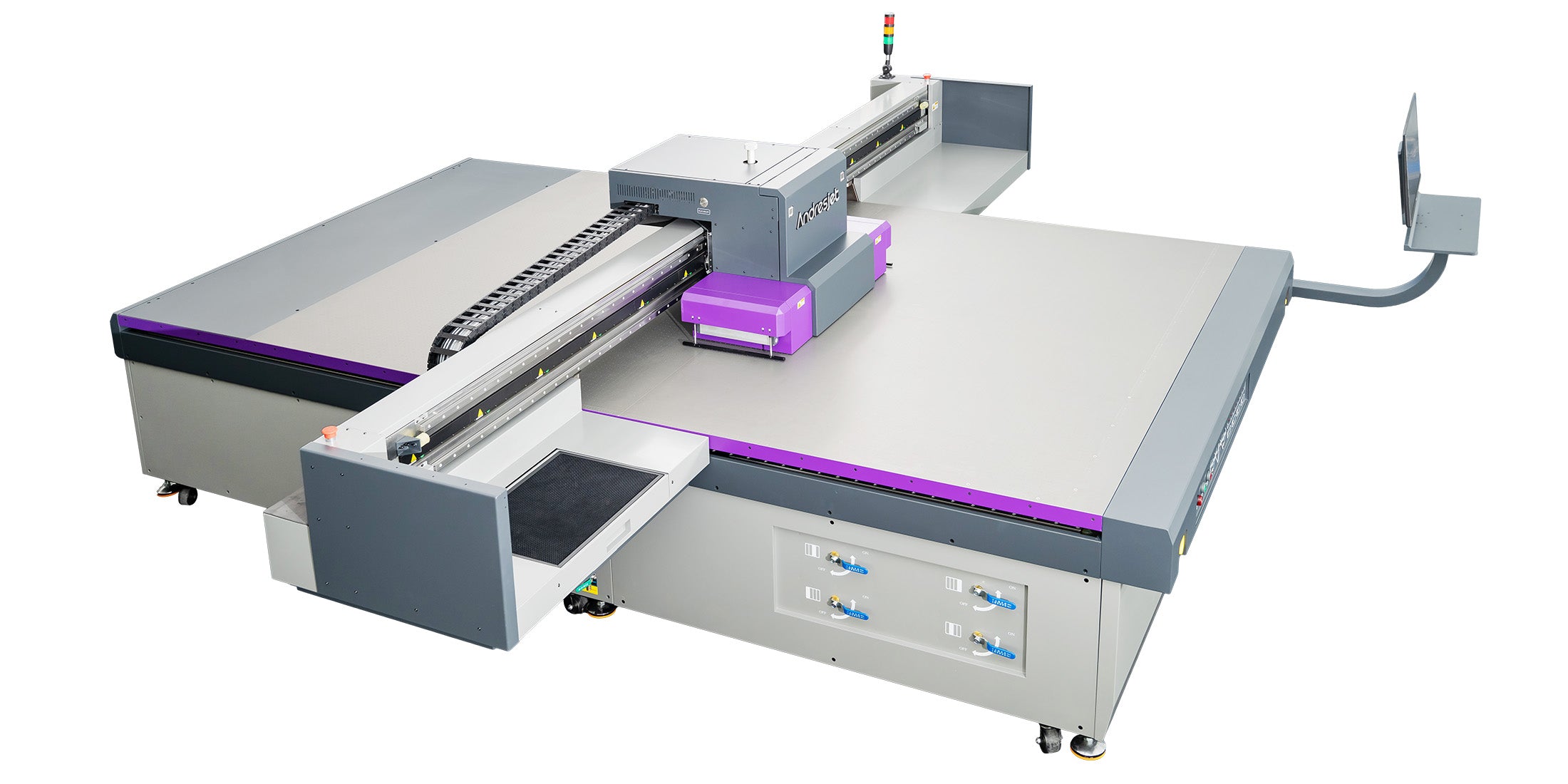
The corrugated packaging printing UV printer collection explains application-category fit, while the AJ2130 product page provides the relevant equipment path. Use these resources during scoping, then validate the workflow with production material.
After the first runs, compare estimated and actual setup, output, rejection and packing time. Update the standard work when evidence supports the change.
Expert Views
Workflow control is strongest at handoffs. A signed first article, clear material identity and one production file prevent more waste than a final inspection that occurs after the entire batch is complete.
Conclusion
A repeatable corrugated packaging printing workflow uses explicit gates, controlled files, qualified material, first-article approval and batch traceability. Measure losses at each stage and improve the actual constraint rather than only the print speed.
FAQs
How does board warp affect the workflow?
Warp can change clearance, focus, loading stability and position. Inspect and condition board, define acceptable flatness and test the intended grade.
Should converting be tested after printing?
Yes when sheets will be cut, creased or folded. The print may pass visual inspection yet fail at a converting line or folded edge.
What should the first article include?
Use the actual board grade, print side, artwork, ink layers and planned converting conditions, then retain the approved reference.
Share:
How Should Leather and Faux Leather Be Prepared for UV Printing?
How Should Stone and Slate Be Prepared for UV Printing?