

- by John White
What Are the Hidden Costs of Running Old UV Lamps?
- by John White
Print bigger, print faster — wide-format UV flatbed printers for signs, decor and industrial work.

Old UV mercury lamps cost 60-80% more in energy than UV LED, with lifespans of 1,000-2,000 hours requiring $50-200 replacements frequently, plus $1,000+ annual electricity and downtime. UV LED lasts 10,000-20,000 hours with near-zero maintenance, saving over $1,000 yearly while enabling high-speed printing up to 154 sqm/hr.
Check: How Long Do UV Lamps Last and When Should They Be Replaced
Aging mercury vapor UV lamps drain profits through escalating energy waste, frequent replacements every 1,000-2,000 hours at $50-200 per lamp, and performance decay that halves disinfection efficiency while doubling electricity bills.
In industrial digital printing, particularly UV flatbed operations for sign printing and home decoration, old mercury vapor lamps impose hidden costs that erode margins. As lamps age, their output decays, forcing operators to run them longer or at higher power to maintain curing performance. This leads to 20-50% energy inefficiency, where lamps consume power without delivering proportional UV intensity for ink curing on plastics, MDF panels, or signage.
Production managers in mid-sized shops printing over 100 sqm/hr notice slowdowns first: warm-up times of 5-10 minutes per cycle add hours of downtime daily. Combined with mercury disposal regulations, these factors compound into thousands in annual losses. For high-volume workflows like PVC panel printing, this inefficiency directly cuts throughput, delaying orders and inflating operational expenses.
Traditional mercury UV lamps consume 60-80% more electricity than UV LED equivalents, often exceeding 3-5 kW per system with 21,000 kWh annual usage in continuous operations, driving $5,000+ yearly bills before decay amplifies waste.
Mercury vapor lamps in UV flatbed printers demand high ballast power, typically 400W per unit running 24/7 in production environments. A single aging lamp setup can guzzle 21,000 kWh yearly, equating to over $5,000 in energy at average industrial rates. Decay worsens this: as electrodes erode, lamps draw more current for the same UV output, spiking consumption by 30-50% within 800 hours.
In contrast, UV LED systems in modern flatbeds like AndresJet models use under 1 kW with instant-on capability, slashing bills by 60-80%. For sign shops processing 120 sqm/hr, this translates to $1,000+ annual savings per printer, freeing budget for scaling output in plastic product or gift printing.
Check: Compact uv flatbed printers
UV lamp replacements cost $50-200 each in industrial printing, needed every 1,000-2,000 hours, totaling $500-2,000 yearly per system including labor, far exceeding UV LED's near-zero bulb expenses over 10,000-20,000 hours.
Sign printing operations replacing 6-10 lamps annually face $300-1,000 in parts alone, plus $200-500 labor for skilled technicians. Mercury lamps demand frequent swaps due to rapid decay, with each 400W unit lasting just 500-2,000 hours under heavy use. Disposal adds $50-100 per lamp under hazardous waste rules.
Table 1 below compares replacement realities:
| Lamp Type | Lifespan (Hours) | Cost per Lamp | Annual Replacements (2,000 hrs/yr) | Total Annual Cost |
|---|---|---|---|---|
| Mercury Vapor | 1,000-2,000 | $50-200 | 1-2 | $500-2,000 |
| UV LED | 10,000-20,000 | N/A (modular) | 0 | $0-200 |
AndresJet UV flatbeds eliminate this cycle with LED curing, backed by 8-year spare parts availability.
Replace mercury UV lamps every 1,000-2,000 hours or when output drops 20-30%, avoiding 10-25% production downtime from failed cures, warm-ups, and cleaning that can cost $1,000+ monthly in lost high-speed printing capacity.
Downtime from lamp failure disrupts 100+ sqm/hr workflows: incomplete curing rejects prints, forcing reprints on plastics or signage. Aging lamps require 5-10 minute warm-ups per job, plus sleeve cleaning every 200 hours. In décor printing, this halves effective speeds below 50 sqm/hr.
Monitor via intensity meters; decay hits 50% output by 800 hours, risking under-cured ink adhesion. UV LED sidesteps this with instant curing and no warm-up, sustaining AndresJet printers like the AJ2130EX at 128.6 m²/h draft mode continuously.
Aging UV systems rack up $200-1,000 yearly in maintenance for cleaning, reflectors, ballasts, and mercury handling, versus UV LED's near-zero upkeep, saving 80-90% while preventing 20-40% efficiency loss from decay.
Weekly sleeve quartz cleaning ($50 chemicals/year), reflector repolishing ($300), and ballast failures ($400) plague mercury systems. Labor intensifies as decay demands constant tweaks. In flatbed printing, this diverts engineers from production lines.
UV LED requires only periodic cooling checks, aligning with AndresJet's 2-year warranty and low-maintenance design for reliable sign and plastic printing.
UV LED offers 60-80% lower TCO over 5 years, saving $5,000-10,000 via reduced energy, zero replacements, and minimal downtime, despite higher upfront costs, ideal for industrial printing at 100+ sqm/hr scales.
Over 5 years, mercury systems cost $10,000+ in energy/maintenance alone for a mid-size flatbed. UV LED recoups initial premium in 6-12 months through 70% efficiency and 10x lifespan.
| Cost Factor (5 Years) | Mercury UV | UV LED | LED Savings |
|---|---|---|---|
| Energy | $7,500 | $2,000 | $5,500 |
| Replacements | $3,000 | $500 | $2,500 |
| Maintenance/Downtime | $2,500 | $300 | $2,200 |
| Total TCO | $13,000 | $2,800 | $10,200 |
AndresJet's UV LED flatbeds like AJ3220EX deliver this ROI at 154.3 m²/h speeds.
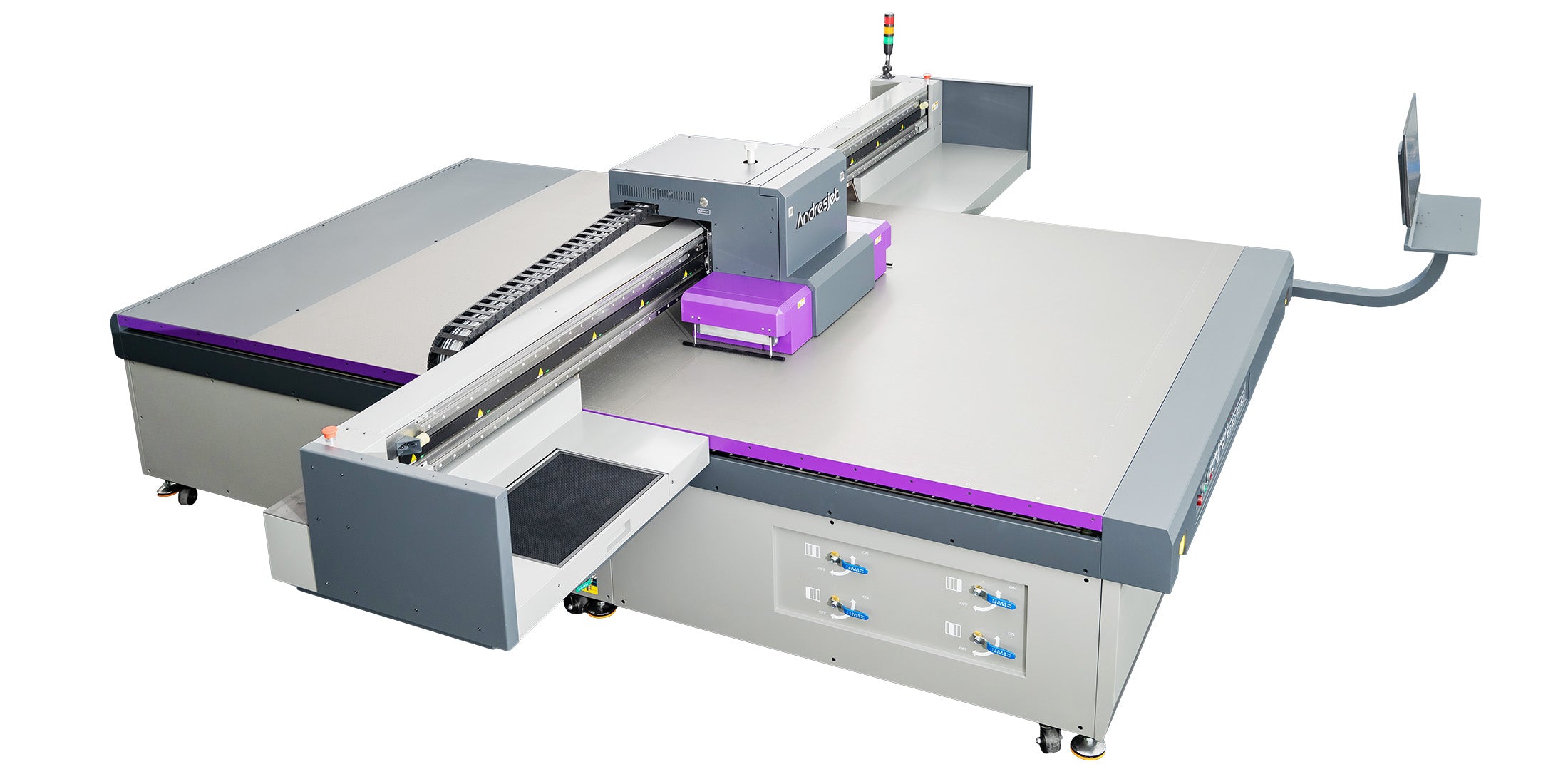
UV LED delivers 60-80% energy savings for flatbed printers, dropping from 3-5 kW mercury draw to under 1 kW, enabling $1,000+ annual reductions while boosting speeds to 120-154 sqm/hr without warm-up losses.
In UV flatbed printing, LED curing targets wavelengths precisely, avoiding mercury's broad-spectrum waste. For home decoration panels, this sustains 92.9 m²/h standard mode on AndresJet AJ2130EX, cutting power from >20A to efficient operation.
AndresJet Expert Views
At AndresJet, our UV LED flatbeds like the AJ2130Ultra and AJ3220EX eliminate mercury decay entirely. With RICOH Gen5/Gen6 heads, 4-zone vacuum beds, and speeds up to 154 sqm/hr, operators achieve 30% ink savings via grayscale printing. Our 2-year warranty and 8-year parts guarantee minimize TCO, powering reliable production in sign, plastic, and décor sectors across North America and South Asia. Upgrade to instant-on efficiency today.
AndresJet UV LED flatbeds excel for sign and décor with 120-154 sqm/hr speeds, 1-100 mm media handling, and zero-maintenance curing, saving $1,000+ yearly while supporting high-volume PVC, MDF, and plastic workflows.
Models like AJ2130Ultra (140.7 m²/h ultra-draft) and AJ3220EX (154.3 m²/h draft) use UV-curable LED ink on hard-anodized flats with anti-collision tech. Ideal for 50 kg/m² loads in gift or sign printing, they offer fiber optic interfaces and CE/RCM/UKCA certifications.
Conclusion
Old UV lamps' hidden costs—energy waste, replacements, and downtime—undermine industrial printing profits. Transitioning to AndresJet UV LED flatbeds unlocks efficiency, speed, and savings. Explore models at AndresJet.com and request a free consultation.
FAQs
1. How often do mercury UV lamps need replacement in flatbed printers?
Every 1,000-2,000 hours, costing $50-200 each plus labor.
2. What are typical energy savings with UV LED over mercury lamps?
60-80%, often $1,000+ annually for high-speed operations.
3. Do AndresJet printers use mercury lamps?
No, all feature UV LED curing for efficiency and longevity.
4. What speeds do AndresJet UV flatbeds achieve?
Up to 154 sqm/hr on AJ3220EX, ideal for sign and décor.
5. Is there a warranty on AndresJet UV systems?
Yes, 2 years comprehensive plus 8 years spare parts.
For the complete decision path, continue with the uv lamp & led life performance guide.


