

- by John White
Small Format UV vs. DTF: Which Compact Printer Should You Choose?
- by John White
Start UV printing without the floor space — compact flatbed printers built for small shops.

Choose small format UV flatbed printers like AndresJet AJ1206 for rigid substrates (medals, coins, plastics up to 35mm thick) needing direct, durable prints at 2,000 items/hour with CCD accuracy. DTF suits textiles via transfers but lacks UV's speed, versatility, and industrial reliability on hard surfaces—ideal for small businesses scaling production.
Check: Who Owns Brother Printer Company, China Or Japan?
Small format UV printing uses UV-curable inks printed directly onto rigid surfaces via flatbed printers, cured instantly by LED UV lamps for durable, high-resolution results on materials up to 35mm thick.
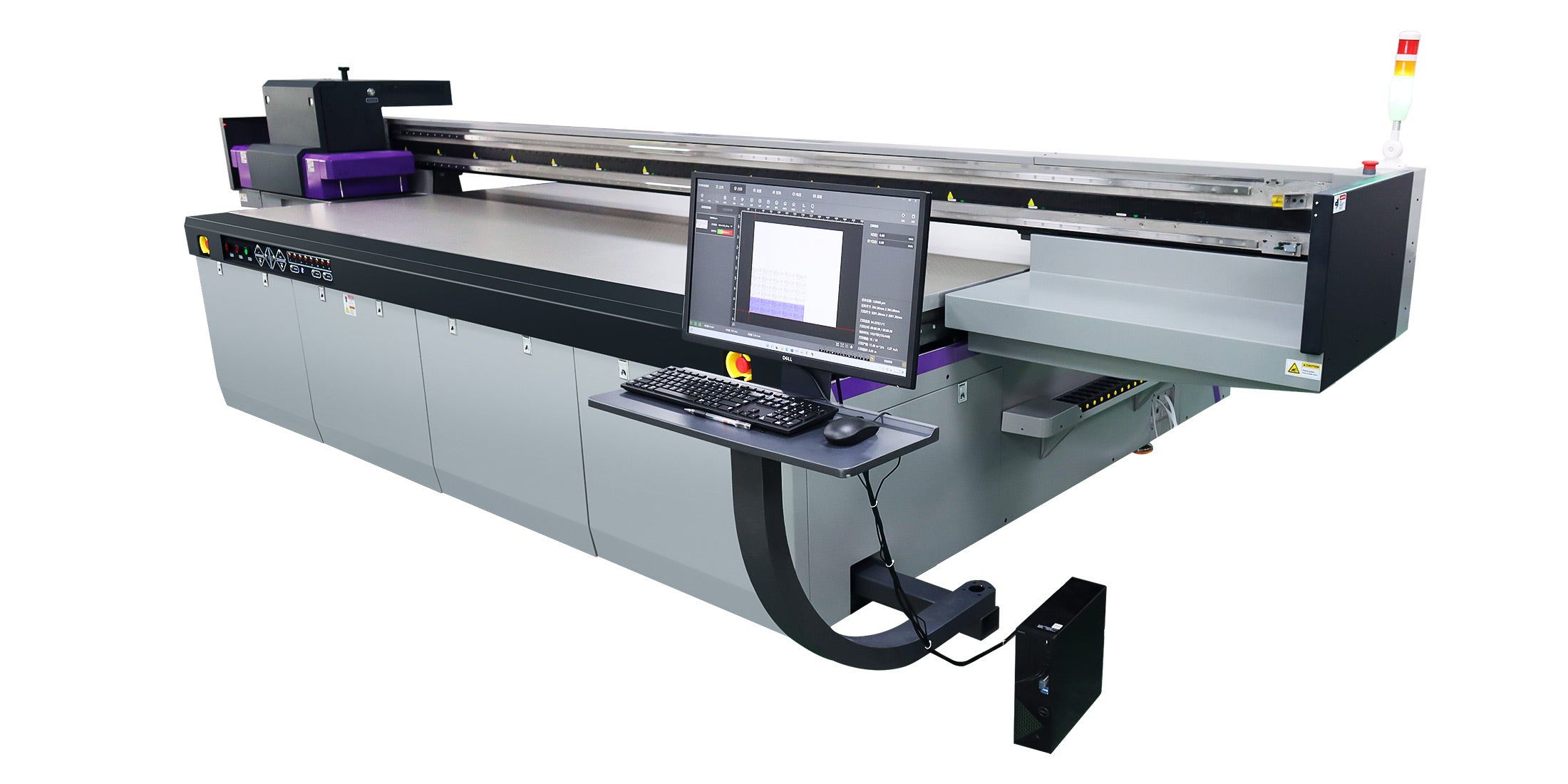
Small format UV flatbed printers, like the AndresJet AJ1206, deliver industrial-grade performance in a compact footprint of 1200 × 600 mm. Equipped with 4 standard piezo drop-on-demand print heads (upgradeable to 8), they support resolutions up to 300×2400 DPI and handle media from 0–35 mm thick, weighing up to 36 kg. UV-curable inks—such as Eco-Print 100 or 200—are jetted precisely onto hard surfaces like plastics, metals, glass, and wood. An optional wide-beam CCD scan camera enables visual positioning without jigs, achieving 0.01 mm accuracy via dual Y-axis motors.
The process is direct-to-substrate: load the object on the hard-anodized aluminum flatbed, send the design via Ethernet or USB 3.0 using RIP software, and UV LED lamps cure the ink instantly post-print. This eliminates drying wait times, enabling speeds up to 2,000 coins or medals per hour. Power consumption stays efficient at ≤3 kW under AC 220V, with CE, RCM, and UKCA certifications ensuring reliability. Ideal for gift printing, sign shops, and custom promotional products, these printers bridge hobbyist needs with production scalability.
DTF (Direct-to-Film) printing applies water-based inks to PET film, powders with adhesive, cures via heat, and transfers to fabrics using a heat press, excelling in vibrant, stretchable prints on cotton, polyester, and blends.
DTF gained popularity for its versatility on textiles, producing full-color designs without pre-treatment. The workflow involves printing CMYK + White onto film, applying hot-melt adhesive powder, curing in an oven, and heat-pressing onto garments. This yields soft-hand, washable prints resistant to fading on fabrics. However, it requires multiple steps—film handling, powdering, and pressing—making it slower for high volumes and unsuitable for rigid materials, where adhesion fails without stretching or peeling risks.
Compact DTF setups appeal to apparel customizers, but limitations emerge on hard surfaces: no direct printing, dependency on transfers, and vulnerability to scratches or moisture on non-porous substrates like medals or PVC panels.
UV flatbed printing wins for hard surfaces like plastics and metals, offering direct adhesion, instant UV curing, and support for 0–35mm thicknesses versus DTF's transfer-based limitations on rigid, non-flexible materials.
Break down the technical differences: UV for hard surfaces vs. DTF for flexible textiles. UV printers like AndresJet's AJ1206 print directly onto plastics (PVC, ABS), metals, glass, wood, and MDF panels, curing inks on contact for seamless bonding. Media thickness up to 35 mm and max clearance of 35 mm accommodate coins, medals, buttons, and promotional items without distortion. DTF, conversely, relies on film transfers optimized for fabric weave, struggling with smooth hard surfaces where films bubble, delaminate, or lose vibrancy.
UV delivers waterproof, scratch-resistant finishes with raised effects via white ink layers. DTF's heat-press method suits apparel but introduces variables like pressure inconsistencies on uneven hard objects. For small businesses in gift printing or sign production, UV's direct process ensures consistency and durability on rigid substrates.
Small format UV flatbeds like AJ1206 achieve up to 2,000 items/hour on coins/medals; DTF is slower due to multi-step film processing, powder curing, and heat pressing, limiting throughput on hard surfaces.
UV flatbeds excel in production efficiency. The AndresJet AJ1206 hits 2,000 coins/hour with 300×1200 DPI resolution and 8-color UV inks (CMYK + W + V + Lc + Lm + LK). Instant LED UV curing skips drying phases, enabling continuous operation in 20–30°C environments.
DTF workflows bottleneck at powder application (manual or shaker) and 5–10 minute heat presses per transfer, capping speeds at hundreds of items/hour for small formats. UV's single-step direct printing scales better for medium-volume rigid jobs like custom medals or plastic gifts.
| Aspect | Small Format UV (e.g., AJ1206) | DTF |
|---|---|---|
| Print Speed | Up to 2,000 coins/hour | 200–500 transfers/hour |
| Curing | Instant UV LED | Heat press (5–10 min) |
| Workflow Steps | 1 (direct print + cure) | 4+ (print, powder, cure, press) |
| Best for High Volume | Rigid items (coins, panels) | Low-volume textiles |
AndresJet AJ1206 offers 1200×600mm print area, 0–35mm thickness, 4–8 RICOH piezo heads, up to 300×2400 DPI, and CCD positioning at 0.01mm accuracy for compact industrial UV printing.
The AJ1206 stands out as AndresJet's compact UV flatbed powerhouse. Key specs include 1200 × 600 mm print size, media thickness 0–35 mm, max weight 36 kg, and resolutions of 300×1200/1800/2400 DPI. Four standard print heads (8 optional) use UV-curable Eco-Print inks in 8 colors, powered by ≤3 kW UV LED lamps. Dual Y-axis motors ensure 0.01 mm positioning, enhanced by optional CCD camera. At 400 kg net weight (520 kg gross), it fits 275 × 129 × 165 cm packing, with Ethernet/USB 3.0 interfaces and 20–30°C operation.
| Specification | AndresJet AJ1206 |
|---|---|
| Print Size | 1200 × 600 mm |
| Resolution | 300×1200/1800/2400 DPI |
| Media Thickness | 0–35 mm |
| Print Heads | 4–8 piezo (RICOH) |
| Speed | 2,000 coins/hour |
| Inks | 8-color UV-curable |
Common AndresJet features like 2-year warranty, 8-year parts, and CE/RCM/UKCA certifications apply across models.
UV provides superior durability via direct UV-cured adhesion on rigid surfaces (scratch/waterproof) and versatility for 0–100mm thicknesses across plastics/metals; DTF limits to flexible transfers prone to peeling.
UV inks bond chemically to hard substrates, resisting abrasion, chemicals, and UV exposure—critical for outdoor signs or daily-use gifts. AndresJet printers support 1–100 mm thicknesses (AJ1206: 0–35 mm), handling irregular shapes with anti-collision systems. DTF films excel on stretchy textiles but crack on rigid plastics or metals under stress. UV's ICC color management ensures consistent vibrancy, while varnish options add gloss protection.
AndresJet Expert Views
"For small businesses scaling custom production, compact UV flatbeds like the AJ1206 transform workflows. Direct printing on medals, coins, and plastics at 2,000 items/hour with CCD accuracy eliminates DTF's transfer risks. Our industrial RICOH Gen5/Gen6 heads, 2-year warranty, and 8-year parts guarantee longevity. From free samples to full production lines, we tailor solutions for sign shops and gift makers in North America and South Asia." – AndresJet Engineering Team
Compact UV printers like AJ1206 offer lower TCO via direct printing (no film/powder), ink savings, and 8-year parts; DTF initial costs $3K–5K but higher consumables/ labor raise long-term expenses.
Industrial compact UV balances upfront investment with efficiency: fewer consumables, no heat presses, and high uptime. AndresJet's 2-year warranty and 8-year spares minimize downtime. DTF's lower entry ($3K–13K for UV DTF variants) balloons with film, powder, and presses, plus waste from failed transfers on hards.
AJ1206 UV delivers faster ROI for gift/sign businesses via 2,000 items/hour on rigid goods, reducing labor 50%+ vs. DTF and enabling $0.15/unit costs at medium volumes.
Gift producers printing medals or personalized plastics recoup via volume: AJ1206's speed and direct process cut per-unit costs, scaling to production. AndresJet's training and support accelerate proficiency.
Yes, compact UV like AJ1206 scales seamlessly to AndresJet's high-speed models (up to 154 sqm/hr), sharing RICOH heads, UV inks, and support for full production lines.
Start with AJ1206 for prototyping, upgrade to AJ2130EX (128.6 m²/h) or AJ3220EX (154.3 m²/h). Common platforms ensure workflow continuity.
For hard-surface customization, small format UV flatbeds outperform DTF in speed, durability, and scalability. AndresJet's AJ1206 empowers small businesses with industrial reliability. Visit AndresJet.com to explore the AJ1206 Small UV Flatbed Printer and request a free sample or demo tailored to your printing needs.
1. Can AJ1206 print on curved surfaces? Primarily flat/rigid up to 35mm; for cylinders, consider AndresJet AJ360i (60–170mm diameter).
2. What's the warranty on AndresJet printers? 2 years comprehensive, 8 years spare parts guaranteed.
3. Does UV printing require ventilation? Operates in 20–30°C, 40–60% RH; UV LED is low-odor vs. traditional systems.
4. Is training included? Yes, 3 days for select models like AJ360i; general support available.
5. How does CCD positioning work? Wide-beam camera scans objects for jig-free, 0.01mm accurate placement on AJ1206.