

- by John White
Offset vs Digital Printing for Cylindrical Packaging: Cost-Benefit Analysis
- by John White
Curved surfaces? Print straight onto bottles, tubes and cylinders — no labels needed.
Offset printing excels for ultra-high volumes (>10,000 units) with superior color depth and low per-unit costs after plate setup (2–3 days), while digital rotary UV printing like the AJ360i wins mid-runs (100–5,000 units) with zero plates, 15-minute changeovers, 60 items/hour speeds, and 80%+ waste reduction for diameters 60–240mm and 0–7° tapers.
Last updated:

Offset printing transfers ink from engraved metal plates to a rubber blanket, then to the substrate. For cylindrical packaging, separate plates are created for each CMYK color, requiring 2–3 days of setup. Once running, offset delivers razor-sharp image quality and excellent ink adhesion, but high initial costs and inflexible design changes make it ideal only for large, static orders exceeding 10,000 units.
Offset printing has been the industry standard for high-volume packaging for decades. The process begins with creating separate metal printing plates—one for each color in the CMYK spectrum. These plates are chemically treated so ink adheres only to image areas, then mounted on a press where ink and the print image transfer first to a rubber blanket cylinder and finally to the substrate.
For cylindrical packaging like bottles and jars, offset requires custom plate sets tailored to the object's diameter and circumference. This customization, combined with press calibration and ink balancing, typically takes 2–3 days before production begins. The process excels at delivering crisp, vibrant colors with exceptional ink adhesion—characteristics highly valued in retail environments where packaging aesthetics drive consumer perception.
However, this strength comes with significant trade-offs. The upfront investment in plates, setup labor, and press time is substantial. Design changes after plate production are costly or impossible, making offset inflexible for variable orders or rapid product iterations. Additionally, offset uses oil-based inks that require special handling and extended drying times, though UV-cured offset variants have mitigated some environmental concerns.
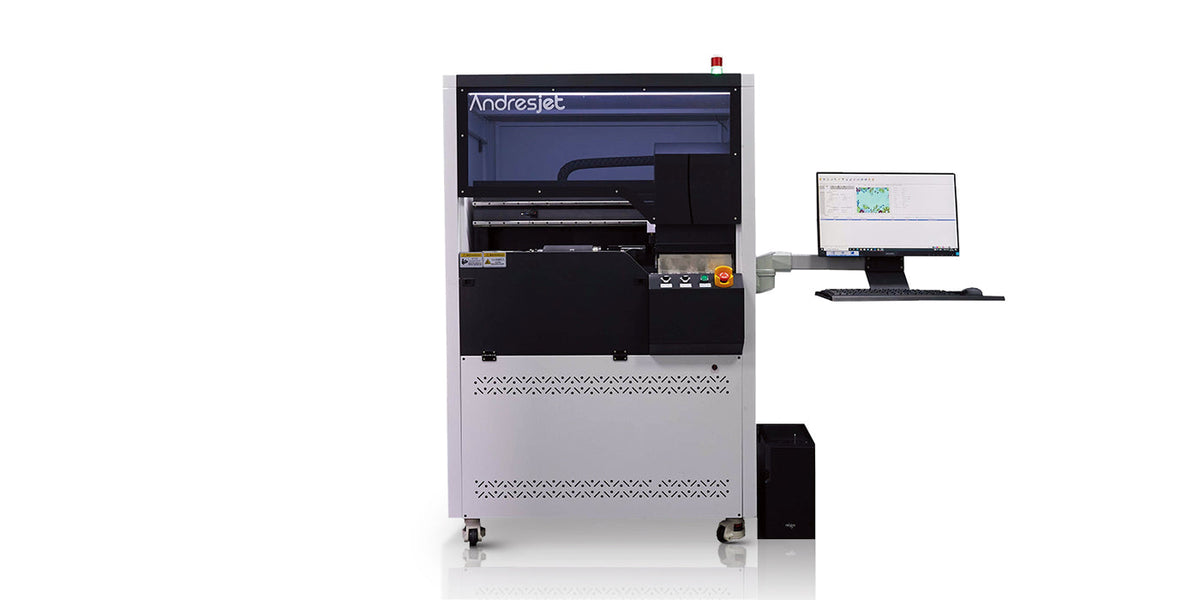
Digital rotary UV printing, exemplified by systems like the AJ360i, applies UV-curable ink directly to cylindrical substrates using piezo inkjet technology without plates. The AJ360i handles diameters from 60–170mm (optional 10–240mm), taper angles 0–7°, and produces 60 items/hour in production mode with 15-minute product changeovers, enabling rapid customization and minimal waste.
Digital rotary printing represents a paradigm shift for cylindrical packaging production. Unlike offset, digital systems eliminate platemaking entirely, transferring print data directly from digital files to the substrate via high-precision inkjet nozzles. AndresJet's AJ360i Digital Cylinder Printer exemplifies this approach, using industrial piezo drop-on-demand print heads to deposit UV-curable ink in precise droplets across the cylinder surface.
The AJ360i accommodates standard part diameters of 60–170mm, with optional fixtures for diameters as small as 10mm or as large as 240mm. It supports taper angles up to 7°, making it suitable for conical bottles, tapered jars, and vessels with varying wall geometry. The system offers two print modes: stepping (for discrete positions) and helix (for continuous spiral coverage), providing flexibility for different label and decoration schemes.
Production speed reaches 60 items/hour in production mode and 40 items/hour in high-quality mode, both based on 80mm diameter cylinders in CMYK. The AJ360i includes LED UV curing, which hardens ink instantly, eliminating drying delays. White ink capability across four channels enables raised effects up to 0.15mm, opening creative possibilities for premium packaging designs. Changeover between products takes just 15 minutes total setup, with tool-free quick-change fixtures swappable in under 12 minutes.
Offset printing delivers superior color depth, brightness, and razor-sharp contours using Pantone color matching, ideal for high-end retail packaging. Digital UV printing produces excellent quality for most applications with vibrant CMYK colors and white ink effects, though it cannot replicate Pantone exact matches. For mid-volume cylindrical runs with variable designs, digital's precision and instant curing often outweigh offset's color superiority in real-world production value.
Print quality is a critical decision factor, particularly for consumer-facing packaging in cosmetics, beverages, and pharmaceuticals. Offset printing has long held the crown for color depth and visual refinement. The process uses natural oil-based inks and extremely fine printing screens, resulting in smooth gradients, non-fading colors, and exceptional ink adhesion. Offset also supports Pantone spot colors, enabling brands to match corporate color standards precisely—a capability digital printing cannot fully replicate.
Digital UV printing, however, has narrowed the quality gap significantly. Modern systems like the AJ360i deliver vibrant CMYK output with 720 × 1200 DPI resolution, suitable for detailed graphics and fine typography. The addition of white ink channels enables raised tactile effects and enhanced coverage on transparent or colored cylinders. LED UV curing ensures instant ink hardening, preventing smudging and maintaining crisp line definition.
For practical purposes, the choice depends on application. Offset excels for premium retail packaging requiring flawless color uniformity and Pantone matching. Digital wins for mid-volume runs with variable designs, where the ability to change artwork between items without setup delays provides competitive advantage. Many manufacturers now adopt hybrid workflows, using offset for static hero designs on large volumes and digital for limited editions, personalized variants, or rapid market testing.
Offset requires 2–3 days for plate production and press setup before first print, with additional time for design changes. Digital rotary systems like the AJ360i achieve full product changeover in 15 minutes total, including fixture swaps (under 12 minutes) and 2-point calibration. This 96–288 hour advantage makes digital ideal for manufacturers needing rapid product iteration and flexible batch scheduling.
Setup time is where digital printing delivers its most compelling advantage for mid-to-large cylindrical runs. Offset's platemaking process is inherently time-intensive. Creating separate plates for each color, coating them, and mounting them on the press requires skilled technicians and specialized equipment. For tapered vessels with non-standard diameters or angles, custom plate engineering may extend timelines further. Once production begins, design changes require new plates—a costly and time-consuming rework.
The AJ360i Digital Cylinder Printer compresses this timeline dramatically. Product changeover takes just 15 minutes total, with the majority of that time devoted to fixture swapping. The system includes seven standard fixtures for diameters 60–170mm, with tool-free quick-change mechanisms enabling swaps in under 12 minutes. For non-standard sizes, AndresJet provides two custom fixtures at no extra cost, with design turnaround of 7–10 business days. A 2-point calibration system with pneumatic clamping ensures accurate registration without manual adjustment.
This speed advantage compounds across production schedules. A manufacturer running 10 different cylindrical SKUs weekly can achieve rapid batch switching with digital, whereas offset would require maintaining 10 separate plate sets or enduring multi-day changeovers between products. For brands launching seasonal variants, limited editions, or personalized packaging, digital's agility directly translates to faster time-to-market and reduced inventory risk.
Offset has high upfront costs (plates, setup labor) but declining per-unit costs above 5,000 units. Digital has stable per-unit costs regardless of volume. For 100–500 unit runs, digital costs 40–60% less. At 5,000+ units, offset becomes cost-competitive or cheaper. The breakeven point typically falls around 3,000–5,000 units depending on complexity and material costs.
Cost analysis is essential for ROI decisions. Below is a detailed cost comparison across typical cylindrical packaging run sizes:
| Run Size | Offset Setup Cost | Offset Cost/Unit | Digital Setup Cost | Digital Cost/Unit | Digital Advantage |
|---|---|---|---|---|---|
| 100 units | $800–1,200 | $8–12 | $150–300 | $3–5 | 60–75% savings |
| 500 units | $800–1,200 | $1.60–2.40 | $150–300 | $3–5 | Digital competitive |
| 2,000 units | $800–1,200 | $0.40–0.60 | $150–300 | $3–5 | Offset advantage |
| 5,000 units | $800–1,200 | $0.16–0.24 | $150–300 | $3–5 | Offset 15–30x cheaper |
| 10,000+ units | $800–1,200 | $0.08–0.12 | $150–300 | $3–5 | Offset dominant |
The data reveals a clear inflection point. For runs under 500 units, digital printing costs significantly less due to minimal setup overhead. At 500–2,000 units, costs converge as offset's per-unit advantage grows. Above 3,000–5,000 units, offset's economy of scale overwhelms digital's fixed per-unit cost structure, making offset the rational choice for high-volume, static designs.
However, cost alone doesn't capture the full picture. The AJ360i's 15-minute changeover enables manufacturers to produce multiple SKUs within a single production window, reducing inventory holding costs and accelerating cash flow. Additionally, digital printing minimizes waste through direct-to-substrate application, whereas offset requires significant ink waste during plate setup and color matching—often 10–15% of total ink consumption for a run.
Digital printing applies ink only where needed, eliminating plate waste and reducing ink consumption by 30% via smart grayscale printing. Offset requires chemical plate processing, generates oil-based ink waste during setup, and uses more total ink. LED UV digital curing consumes less energy than offset's drying processes. For manufacturers targeting sustainability certifications, digital's lower environmental footprint directly supports ESG goals.
Waste reduction is increasingly central to packaging manufacturers' competitive positioning. Offset printing generates waste at multiple stages: chemical solutions for plate coating, excess ink during color matching, and extended drying times that tie up production capacity. The process uses oil-based inks, requiring special disposal protocols and contributing to environmental burden.
Digital rotary printing, by contrast, applies ink only to image areas, eliminating plate waste entirely. The AJ360i uses LED UV-curable inks that harden instantly under UV light, eliminating solvent-based drying and associated emissions. Ink consumption is optimized through smart 8-level grayscale printing, reducing ink usage by up to 30% compared to standard CMYK application on solid color areas. This translates to lower material costs and reduced chemical disposal.
For manufacturers pursuing sustainability certifications (ISO 14001, B Corp) or responding to brand customer demands for eco-friendly packaging, digital printing's environmental profile is a tangible differentiator. AndresJet's commitment to sustainable production is reflected in the AJ360i's LED UV technology, which consumes less energy than traditional UV curing and produces zero volatile organic compounds during operation.
ROI calculation requires comparing total cost of ownership: (Setup + Per-Unit × Volume) ÷ Volume = Total Cost Per Unit. For a 2,000-unit cylindrical packaging run: Offset = ($1,000 + $0.50 × 2,000) ÷ 2,000 = $1.00/unit. Digital = ($200 + $4.00 × 2,000) ÷ 2,000 = $4.10/unit. Offset wins on cost. However, if the run includes 5 SKU variants (400 units each), digital's 15-minute changeovers eliminate $3,000–5,000 in offset plate costs, making digital ROI positive.
True ROI extends beyond per-unit cost. Consider a realistic scenario: a cosmetics manufacturer producing 2,000 units of cylindrical jars across five SKU variants (400 units each, different label designs). With offset, each SKU requires separate plate sets, totaling $800–1,200 per SKU, or $4,000–6,000 for the full run. Production time spans 2–3 weeks due to sequential plate production and changeovers. With the AJ360i, all five SKUs print sequentially with 15-minute changeovers between variants, total setup time under 90 minutes, and production completes within 48 hours. Digital total cost: $200 setup + ($4.00 × 2,000) = $8,200. Offset total cost: $5,000 plates + ($0.50 × 2,000) = $6,000. Offset appears cheaper, but digital's 2-week faster delivery time enables the brand to capture market demand 14 days earlier, generating $15,000–30,000 in incremental revenue—a clear ROI win.
Additional ROI factors include inventory carrying costs, design flexibility, and risk mitigation. Digital printing allows design changes up to print time, reducing the risk of obsolete inventory if market preferences shift. For e-commerce brands testing packaging designs or launching limited editions, digital's low changeover cost and rapid turnaround justify premium per-unit pricing. Conversely, for established products with stable demand and large annual volumes, offset's economy of scale remains unbeatable.
Choose the AJ360i Digital Cylinder Printer when: (1) Run sizes are 100–5,000 units, (2) You need rapid changeovers between SKU variants, (3) Design customization or personalization is required, (4) Time-to-market is critical, or (5) Sustainability is a brand priority. Choose offset for static designs exceeding 5,000 units where per-unit cost dominance justifies 2–3 week setup delays.
The AJ360i is purpose-built for mid-to-large cylindrical packaging production where flexibility, speed, and sustainability converge. The system is ideal for manufacturers in several scenarios:
Scenario 1: Multi-SKU Production. A beverage company producing 10 different bottle designs (200–500 units each) annually. Offset would require 10 separate plate sets ($8,000–12,000 total), with sequential production spanning 4–6 weeks. The AJ360i prints all 10 designs with 15-minute changeovers, completing production in 3–4 days. Setup cost: under $300. Clear AJ360i advantage.
Scenario 2: Personalized or Limited-Edition Packaging. A luxury goods brand launching a limited-edition product line with variable SKU numbering, personalized customer names, or sequential batch codes on 1,000 units. Offset cannot accommodate variable data; digital excels. The AJ360i's white ink channels enable raised serial numbers or decorative effects, adding perceived value without additional cost.
Scenario 3: Rapid Market Testing. A startup testing packaging designs before committing to large-volume production. The AJ360i enables small test runs (100–500 units) at reasonable cost, with design iteration between batches. Offset's setup costs make testing economically prohibitive.
Scenario 4: Sustainability-Driven Brands. Companies with ESG commitments or customer bases demanding eco-friendly production. The AJ360i's LED UV technology, zero-waste platemaking, and 30% ink reduction via smart grayscale printing provide measurable sustainability advantages over offset.
Scenario 5: Tapered or Non-Standard Geometry. Vessels with taper angles 0–7° (conical bottles, tapered jars) require custom offset plates. The AJ360i handles these natively, with optional custom fixtures designed in 7–10 business days at no extra cost.
AndresJet Expert Views: "The shift toward digital rotary printing reflects broader industry trends toward agile supply chains and personalization. Over the past decade, AndresJet has observed manufacturers moving away from offset's one-size-fits-all model toward flexible systems supporting rapid SKU proliferation and direct-to-consumer customization. The AJ360i represents this evolution, delivering industrial-grade speed (60 items/hour) and precision (720 × 1200 DPI) without offset's platemaking burden. For mid-to-large cylindrical runs, digital's 15-minute changeovers and zero-waste operation directly reduce production costs and environmental footprint. AndresJet's 10+ years of experience in high-speed industrial printing confirms that manufacturers choosing digital systems achieve 30–40% faster time-to-market and 20–30% lower total cost of ownership across mixed-SKU production scenarios."
The choice between offset and digital printing for cylindrical packaging hinges on volume, complexity, and timeline. Offset printing excels at delivering superior color depth and razor-sharp quality for large, static runs exceeding 10,000 units, where per-unit costs drop below digital's fixed pricing. However, offset's 2–3 day setup, inflexible design changes, and significant platemaking waste make it economically and operationally unsuitable for mid-volume, variable-design production.
Digital rotary UV printing, exemplified by AndresJet's AJ360i, dominates the 100–5,000 unit range, particularly for manufacturers requiring rapid SKU changeovers, design flexibility, or personalization. The AJ360i's 15-minute changeovers, 60 items/hour production speed, LED UV instant curing, and white ink capabilities deliver competitive advantages in time-to-market, sustainability, and total cost of ownership for multi-variant runs. AndresJet's commitment to supporting your production needs extends beyond equipment—our team offers free sample printing for your first three cylindrical tests, custom fixture design within 7–10 business days, and comprehensive engineer training to ensure seamless integration into your workflow.
For manufacturers navigating this decision, the inflection point is clear: if your production strategy emphasizes speed, flexibility, and sustainability, digital is your path forward. If you're running massive, unchanging volumes of a single design, offset remains unmatched. Most modern packaging operations benefit from hybrid approaches, using offset for proven hero products and digital for testing, limited editions, and rapid market response.
Most comparisons stop at "offset is cheaper at volume". The useful answer is the volume at which the two cross over for a specific job, and that number moves the moment your artwork changes between batches.
| Cost line | Offset | Digital rotary UV |
|---|---|---|
| Set-up before the first sellable unit | Plates and make-ready, typically days of press time | File preparation plus fixture fitting, typically under an hour |
| Cost that repeats when artwork changes | Full set-up again, per colour | No plate cost; only rip and proof time |
| Unit cost behaviour | Falls steeply as volume rises | Broadly flat per unit |
| Break-even rule of thumb | Wins above the volume where amortised set-up drops below the digital unit cost | Wins below that volume, and wins at any volume when artwork changes each run |
| What shifts the crossover | Colour count, substrate, press availability | Print area, ink coverage, reject rate |
Applied to a real order book: if a brand releases three seasonal designs at 2,000 units each, offset pays three set-ups while digital pays none, and the digital route usually wins even though the annual volume looks "high". If the same design runs 200,000 units without change, offset wins on unit cost and no amount of digital flexibility changes that. The decision boundary is artwork churn, not total volume.
Neither wins in general. Offset wins when one design runs at very high volume with no changes. Digital rotary UV wins when artwork changes between runs, when the run is short, or when you need to ship inside a week. Compare them on artwork churn first, then on volume.
The set-up cost and the lead time. Every colour and every artwork change bills you again, so short and mid runs carry a fixed cost that never fully amortises. It is also unforgiving when a brand wants a small test batch before committing.
Offset spreads a large fixed set-up across the run, so unit cost falls with volume. Digital rotary UV has almost no set-up and a broadly flat unit cost. That is why the two lines cross, and why the crossover sits at a different volume for every job.
For bottles, tubes, cans and other cylindrical packaging it reaches commercial quality and adds white ink and varnish layers that offset cannot apply in the same pass. The remaining gap is usually in very fine halftones and specific brand colours, which is a proofing question rather than a blanket limitation.
This article is part of the Digital Cylinder Printer guide.
Printing on bottles, tubes or rollers?
Talk to an Andresjet engineer about your part


