

- by John White
How Does Dual Negative Pressure Eliminate Clogged Nozzles in UV Printers?
- by John White
Print bigger, print faster — wide-format UV flatbed printers for signs, decor and industrial work.

Dual negative pressure in AndresJet AJ3220G/R UV flatbed printers applies separate negative pressure to color and white inks, preventing sedimentation and clogs by maintaining constant ink flow to RICOH Gen6 nozzles—even during idle times—reducing purge waste up to 30% for reliable high-speed printing up to 35 sqm/hr on media 1–90 mm thick.
Check: Who Owns Brother Printer Company, China Or Japan?
Nozzle clogs in UV flatbed printers primarily result from ink sedimentation, especially in white and varnish inks, due to inconsistent pressure during idle periods, leading to pigment settling and blockages in RICOH Gen5/Gen6 print heads.
In industrial UV flatbed printing, nozzle clogs disrupt high-volume production, causing uneven prints, wasted ink, and costly downtime. The main culprit is ink sedimentation, where heavier pigments in UV-curable inks settle at the bottom of ink lines when printers sit idle. This is particularly problematic for white and varnish inks, which have higher viscosity and denser particles compared to standard CMYK colors.
Environmental factors like temperature fluctuations (optimal 20–30°C) and humidity (40–80% RH) exacerbate settling, while inadequate ink circulation allows particles to accumulate near piezo drop-on-demand nozzles. In high-speed operations exceeding 100 sqm/hr, frequent starts and stops amplify the issue, demanding robust systems to maintain ink stability. AndresJet addresses this through advanced ink management in models like the AJ3220G/R, ensuring consistent flow across media thicknesses from 1–90 mm.
Dual negative pressure uses two independent sub-pressure zones—one for color inks and one for white/varnish—to create constant suction at the nozzles, preventing air ingress and sedimentation by keeping ink in constant motion regardless of printer activity.
Dual negative pressure is an advanced ink delivery technology in UV flatbed printers that applies precise, continuous negative pressure through separate channels. Unlike single-pressure systems, it isolates color inks (CMYK, LC, LM) from challenging white and varnish formulations, each with tailored vacuum levels to match ink density and viscosity.
This setup maintains ink at the nozzle face under constant pull, eliminating stagnant zones where sedimentation occurs. During idle times, the system circulates ink automatically, mimicking active printing flow. In AndresJet printers equipped with RICOH Gen6 heads, this integrates seamlessly with fiber optic data interfaces and AC servo motors for precise control. Constant pressure prevents ink sedimentation by ensuring pigments remain suspended, reducing the need for aggressive purging and extending nozzle life in demanding applications like sign printing and home decoration panels.
For high-speed models, this technology supports production rates up to 35 sqm/hr without compromising quality, as seen in the AJ3220G/R's extended 8-color configuration.
Dual negative pressure is crucial for white and varnish inks because their high pigment load causes rapid sedimentation during downtime; separate pressure zones keep these inks fluid, preventing clogs in RICOH Gen6 nozzles and enabling thick raised effects without interruptions.
White and varnish inks pose unique challenges in UV flatbed printing due to their thick consistency and heavy pigments, which settle quickly without proper circulation. In standard systems, idle periods lead to hardened blockages, requiring extensive cleaning that wastes up to 30% more ink.
Dual negative pressure dedicates a stronger vacuum channel to these inks, maintaining negative pressure equivalent to active jetting. This constant pull suspends particles, preventing buildup at the piezo nozzles. AndresJet's implementation in the AJ3220G/R supports varnish for glossy finishes and white for opaque layers on PVC/ABS/MDF, crucial for home decoration and gift printing. By isolating channels, color accuracy remains intact while white ink delivers consistent opacity, even after hours of inactivity.
| Ink Type | Sedimentation Risk | Dual Negative Pressure Benefit |
|---|---|---|
| CMYK Colors | Low | Stable flow, minimal purging |
| White Ink | High | Separate vacuum prevents settling |
| Varnish | High | Constant circulation for glossy effects |
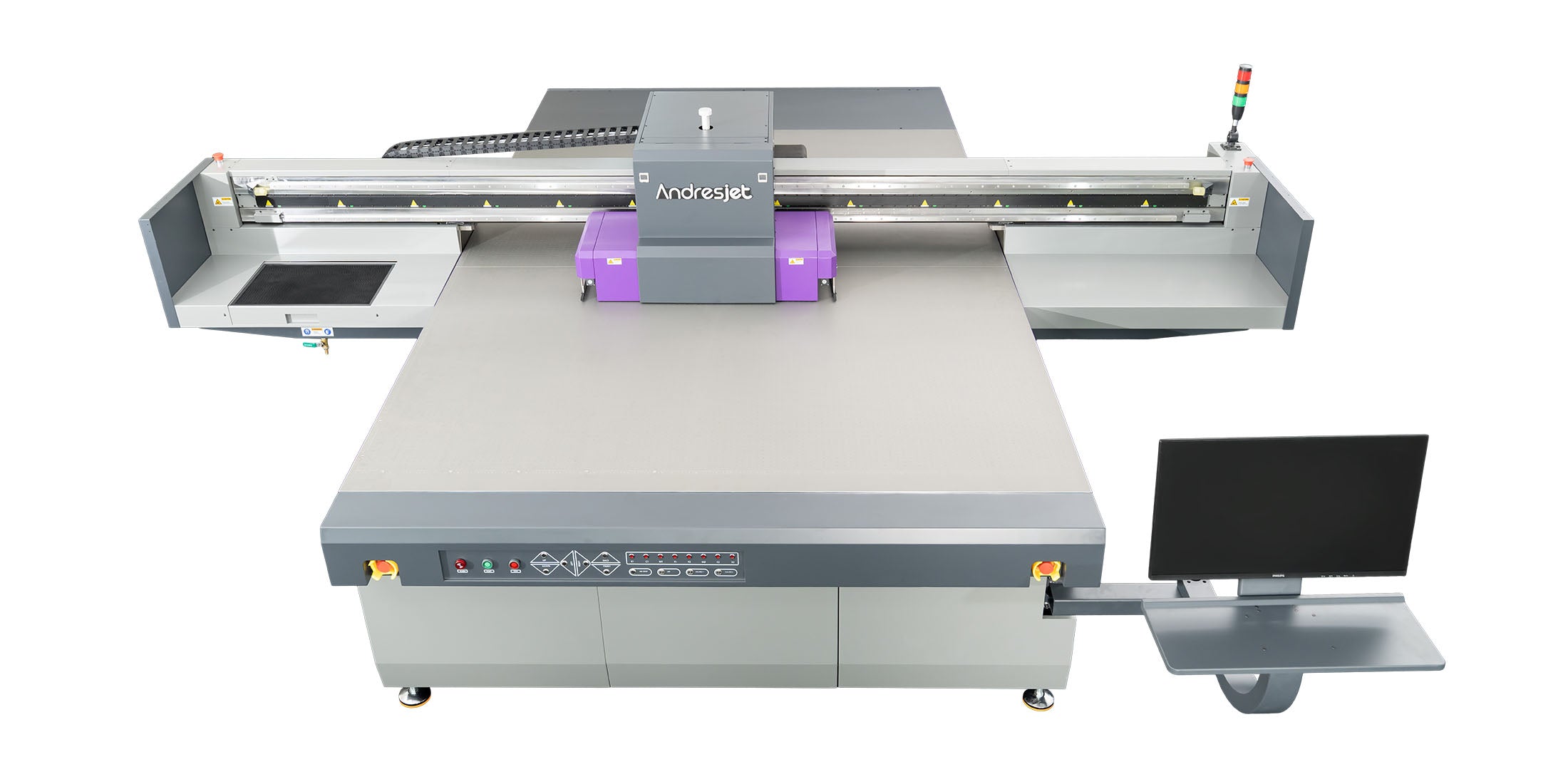
AndresJet AJ3220G/R large-format UV flatbed printer features dual negative pressure for both color and white inks, with similar advanced systems in AJ2130G/R and other high-end models supporting clog-free operation on media up to 100 mm thick.
AndresJet, a leader in industrial digital printing with over a decade of experience, integrates dual negative pressure in select UV flatbed models to deliver reliable performance. The flagship AJ3220G/R stands out with its dedicated system for CMYK + White + Varnish, handling print sizes up to 3200 × 2000 mm at speeds to 35 sqm/hr.
Other models like AJ2130G/R offer comparable ink management alongside RICOH Gen6 heads and 4-zone vacuum flatbeds. These printers share common features such as media thickness up to 100 mm, CE/RCM/UKCA certifications, and 2-year warranties with 8-year spare parts guarantee. This technology powers applications in plastic products, sign printing, and high-speed production over 100 sqm/hr.
| Model | Print Size | Print Speed (Max) | Dual Negative Pressure |
|---|---|---|---|
| AJ3220G/R | 3200 × 2000 mm | 35 sqm/hr | Yes (Color + White) |
| AJ2130G/R | 2100 × 3000 mm | 31 sqm/hr | Advanced Ink System |
| AJ2130EX | 2100 × 3000 mm | 92.9 m²/h | Redesigned Capping System |
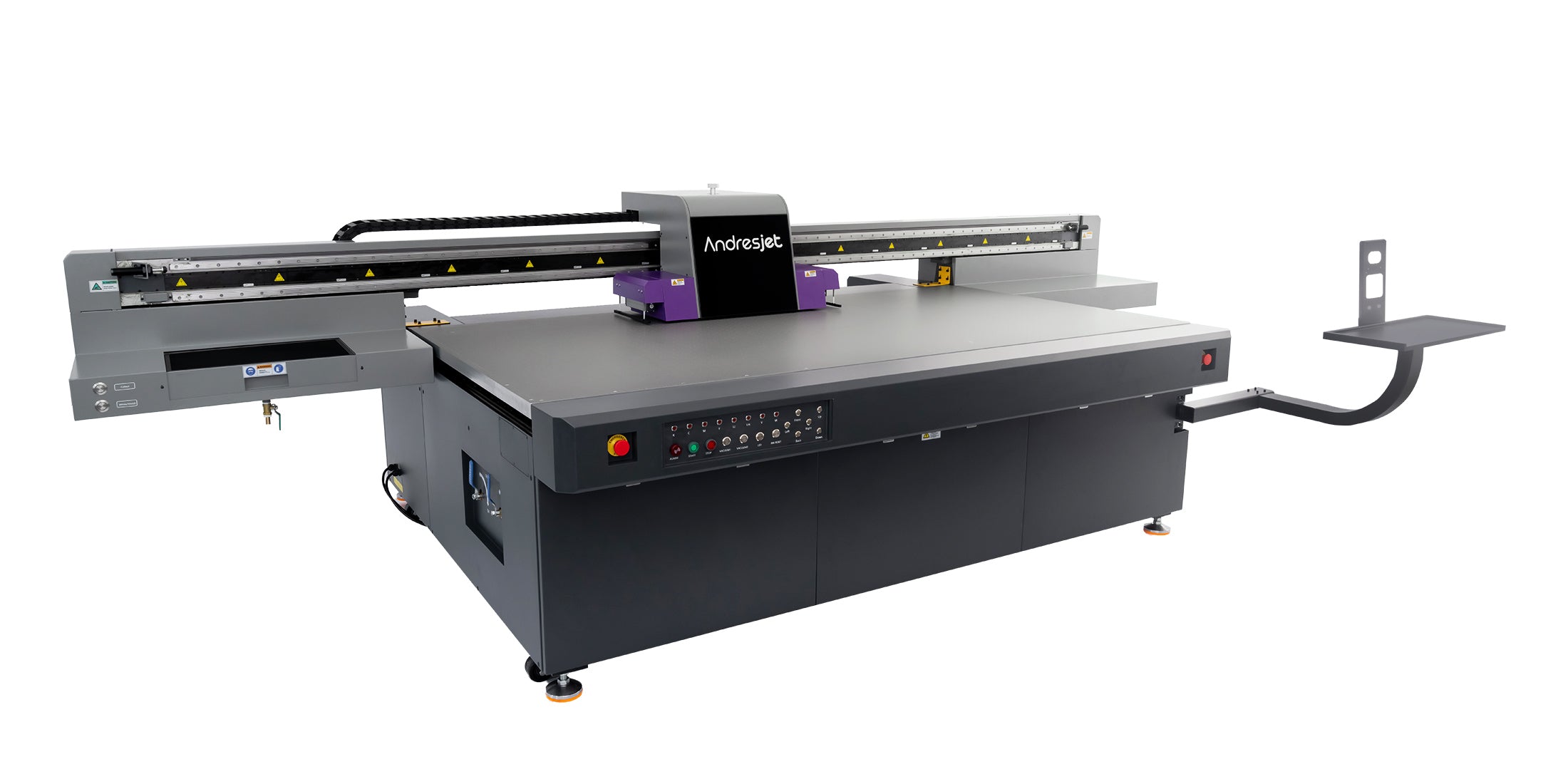
The AJ3220G/R prevents clogs during high-speed printing via dual negative pressure that maintains constant ink flow to 4–8 RICOH Gen5/Gen6 heads, integrated with auto height detection and 4-zone vacuum for seamless operation up to 35 sqm/hr on 1–90 mm media.
The AJ3220G/R excels in high-volume environments with its dual negative pressure ink system, ensuring nozzles remain primed even at peak speeds of 35.88 m²/h in 4-color production. RICOH Gen5/Gen6 piezo heads fire reliably, supported by linear motors and IGUS e-chain® for precision.
During extended runs on rigid media like signage panels, constant pressure eliminates air bubbles and sedimentation, reducing purge cycles. Features like external ionizer bars and anti-static systems further minimize particle ingress, while the hard-anodized aluminum flatbed with 4-zone vacuum holds substrates securely up to 80 kg.
Check: Why Are Dual Negative Pressure Systems Essential for Industrial Printing?
To maximize dual negative pressure benefits, perform daily ink circulation checks, weekly nozzle tests via RIIN Print software, and monthly filter inspections, minimizing manual intervention and leveraging auto-capping for 30% less downtime in AndresJet UV flatbeds.
Routine maintenance amplifies the clog-prevention power of dual negative pressure. Start with pre-shift nozzle checks using test prints at 726×1200 dpi resolutions. Monitor ink levels and run circulation cycles during breaks to sustain negative pressure.
For AJ3220G/R users, utilize the manual origin point system and ergonomic setup for quick access. Clean slide-out waste collectors weekly, and verify environmental conditions (20–30°C, 40–80% RH). AndresJet's 3-day training ensures operators optimize these steps, integrating with RIP software like PhotoPrint for automated alerts. Avoid over-purging by relying on the system's constant flow, which handles idle sedimentation proactively.
AndresJet Expert Views
"In our 10+ years serving sign makers and décor producers, dual negative pressure has transformed maintenance. The AJ3220G/R's separate channels for white inks cut purge waste dramatically, enabling true 24/7 production. Paired with our 8-year parts guarantee, it delivers unmatched ROI—clients report 30% ink savings and zero clogs in high-speed runs." – AndresJet Engineering Lead
Yes, dual negative pressure reduces ink waste and downtime by up to 30% by minimizing purge volumes through constant circulation, as validated in AndresJet high-speed printers like AJ3220G/R, boosting productivity in signage and plastic printing.
Traditional UV printers waste ink on frequent purges to clear clogs, but dual negative pressure slashes this by keeping ink dynamic. In AndresJet models, smart 8-level grayscale further optimizes usage, yielding 30% savings. Downtime drops as auto systems handle idle maintenance, supporting daily capacities like 600 panels in ultra-high-speed variants.
Real-world applications in North America and South Asia show ROI within months, with full production lines designed for sustained output on media up to 100 mm thick.
Choose AndresJet for clog-free solutions due to industrial RICOH Gen5/Gen6 heads, dual negative pressure, 2-year warranties, and tailored support in high-speed printing over 100 sqm/hr, with free samples and engineer training for signage and décor.
AndresJet stands out with cutting-edge UV flatbeds built for endurance, from AJ1206 for small items to AJ3220EX for 154 sqm/hr giants. Global expansion, personalized service, and features like 360° anti-collision ensure reliability. As a top provider of ultra-high-speed solutions, AndresJet forges lasting client relationships through spare parts, line design, and exceptional experiences.
Dual negative pressure revolutionizes UV flatbed printing by eliminating clogs through constant pressure that prevents ink sedimentation, empowering high-speed, low-maintenance production. AndresJet's AJ3220G/R and similar models deliver this technology with proven specs for industrial demands, ensuring efficiency and quality.
What is dual negative pressure in UV printers? It applies separate negative suction to color and white inks, maintaining flow to prevent clogs.
Which AndresJet model has dual negative pressure? The AJ3220G/R features it for color and white inks.
How does constant pressure stop sedimentation? It keeps pigments suspended by mimicking active ink circulation during idle times.
Can it handle high-speed printing? Yes, up to 35 sqm/hr on the AJ3220G/R without clogs.
What warranty does AndresJet offer? 2 years comprehensive, with 8 years spare parts guaranteed.


