

- by John White
How Did Brother Succeed from Sewing Machines to High-Tech Printing?
- by John White
Print bigger, print faster — wide-format UV flatbed printers for signs, decor and industrial work.

Brother Industries succeeded from sewing machines to high-tech printing by starting as a 1908 repair shop in Japan, pioneering domestic machines in 1928, diversifying into typewriters (1954) and dot-matrix printers (1971 via Centronics), and expanding globally with laser/inkjet tech—driven by precision engineering, innovation, and market adaptation now mirrored in AndresJet's RICOH Gen5/Gen6 UV flatbeds up to 154 sqm/hr.
Check: Small Format Printer: Best Options, Reviews and Buying Guide 2030
Brother began in 1908 as Yasui Sewing Machine Co., a small repair business in Nagoya, Japan, founded by Kanekichi Yasui, laying the foundation for precision manufacturing through hands-on repairs of imported sewing machines.
The story of Brother Industries starts humbly in 1908 when Kanekichi Yasui established Yasui Sewing Machine Co. in Nagoya, Japan. At the time, Japan relied heavily on imported sewing machines, and Yasui's shop focused on repairing these devices and producing parts. This repair work honed early skills in precision mechanics, which would become the company's enduring DNA. Kanekichi's son, Masayoshi Yasui, took over and nurtured an ambition to shift Japan from an import-dependent sewing market to a domestic exporter. By focusing on quality repairs, the business built trust and expertise in durable machinery, a principle that resonates today in industrial printing where reliability under high-volume demands is paramount. Production managers in sign shops and décor manufacturing recognize this: starting small with core competencies like precision assembly enables scalable innovation.
Key early milestones include 1928's first Japanese chain-stitch sewing machine for straw hats, 1932's debut home lockstitch model, and 1934's reorganization into Nippon Sewing Machine Manufacturing Co., marking Brother's shift to domestic production.
Brother's early 1900s milestones showcase relentless innovation amid challenges. In 1928, under Masayoshi, the company produced Japan's first domestically made chain-stitch sewing machine, tailored for straw hat production, breaking import barriers. This was followed in 1932 by Model 15 Type 70, Japan's inaugural home sewing machine with lockstitch technology, enabling mass production for households. By 1934, the firm reorganized as Yasui Brothers' Sewing Machine Co., adopting the "Brother" brand to symbolize family-like collaboration. In 1941, Brother Sewing Machine Sales, Ltd. was established for domestic distribution. These steps transformed a repair shop into a manufacturing powerhouse, emphasizing independent development of tools and processes. For modern print buyers, this mirrors investing in versatile equipment like UV flatbed printers that handle diverse media from plastics to panels, ensuring adaptability in evolving markets.
Brother pivoted in the 1950s with typewriters (1954 portable model) and entered printers in the late 1960s via Centronics partnership, launching the 1971 high-speed dot-matrix printer using sewing-derived precision mechanics.
The pivot from sewing to office equipment began post-World War II as Brother diversified beyond textiles. In 1954, they released their first portable typewriter, leveraging mechatronics from sewing motors. This marked entry into business machines. The late 1960s brought a crucial shift through association with Centronics Data Computer Corp. In 1971, Brother co-developed the world's first high-speed dot-matrix printer, applying in-house electronic controls and print heads originally honed for sewing. This technology transfer—from stitch precision to dot precision—propelled Brother into computer peripherals. By the 1980s, they pioneered laser and inkjet printers. Industrial print professionals see parallels in how AndresJet applies RICOH Gen5/Gen6 piezo heads, inheriting precision legacies for UV flatbed applications in sign printing and home decoration.

The 1971 Centronics partnership produced the first high-speed dot-matrix printer, blending Brother's manufacturing prowess with computing needs, catapulting them into the booming printer market and establishing printing as a core division.
Brother's collaboration with Centronics in 1971 was transformative, yielding the world's first high-speed dot-matrix printer. Centronics provided printer interface expertise, while Brother contributed precision manufacturing from sewing machine production lines. This synergy addressed the rising demand for reliable computer output devices, selling millions and funding further R&D. The partnership embedded Brother in the digital printing ecosystem, evolving from mechanical stitches to electronic dots. It exemplified strategic alliances accelerating diversification. Today, this turning point inspires print shop owners upgrading to high-speed UV systems, where partnerships with component leaders like RICOH ensure cutting-edge performance in production environments.
Global expansion started in 1954 with a U.S. sales affiliate, followed by a 1958 European base, 1961 U.S. subsidiary, 1968 UK acquisition, and 1962 name change to Brother Industries, Ltd., fueling printer growth.
Brother's global push began in 1954 with Brother International Corporation in the U.S., initially selling sewing and knitting machines. In 1958, a European sales company opened in Dublin. The 1961 U.S. subsidiary solidified North American presence, while 1968's acquisition of Jones Sewing Machine Co. moved UK headquarters to Manchester. The 1962 rebranding to Brother Industries, Ltd. unified its identity. By the 1980s, overseas factories supported laser/inkjet expansion, with milestones like 5.9 million UK typewriters by 2012. This strategy—localize production, adapt to markets—drove success. AndresJet echoes this with expanding footprints in North America and South Asia, offering tailored UV printing solutions for regional demands in plastics and signage.
Lessons include leveraging precision heritage for diversification, embracing tech pivots via partnerships, prioritizing global scalability, and ensuring long-term reliability—guiding buyers to durable, high-speed UV flatbeds for signage and décor.
Brother's journey offers blueprints for industrial print buyers. First, core precision engineering transfers across categories: sewing motors became printer heads. Second, timely diversification via partnerships like Centronics captures market shifts. Third, global expansion with localized support builds loyalty. Fourth, innovation without abandoning roots sustains growth. For sign shop owners and décor producers, these mean selecting UV flatbeds with industrial RICOH heads, robust warranties, and versatile media handling (1-100 mm thickness). AndresJet embodies this, providing 2-year warranties, 8-year spare parts, and speeds over 100 sqm/hr for high-volume ROI.
| Brother Success Factor | Modern Application for Print Buyers |
|---|---|
| Precision from repairs/manufacturing | RICOH Gen5/Gen6 heads for 720×1200 dpi accuracy |
| Tech pivots (sewing to printers) | UV LED inks for rigid media like PVC panels |
| Global expansion | North America/South Asia support networks |
| Long-term reliability | 8-year spare parts guarantee |
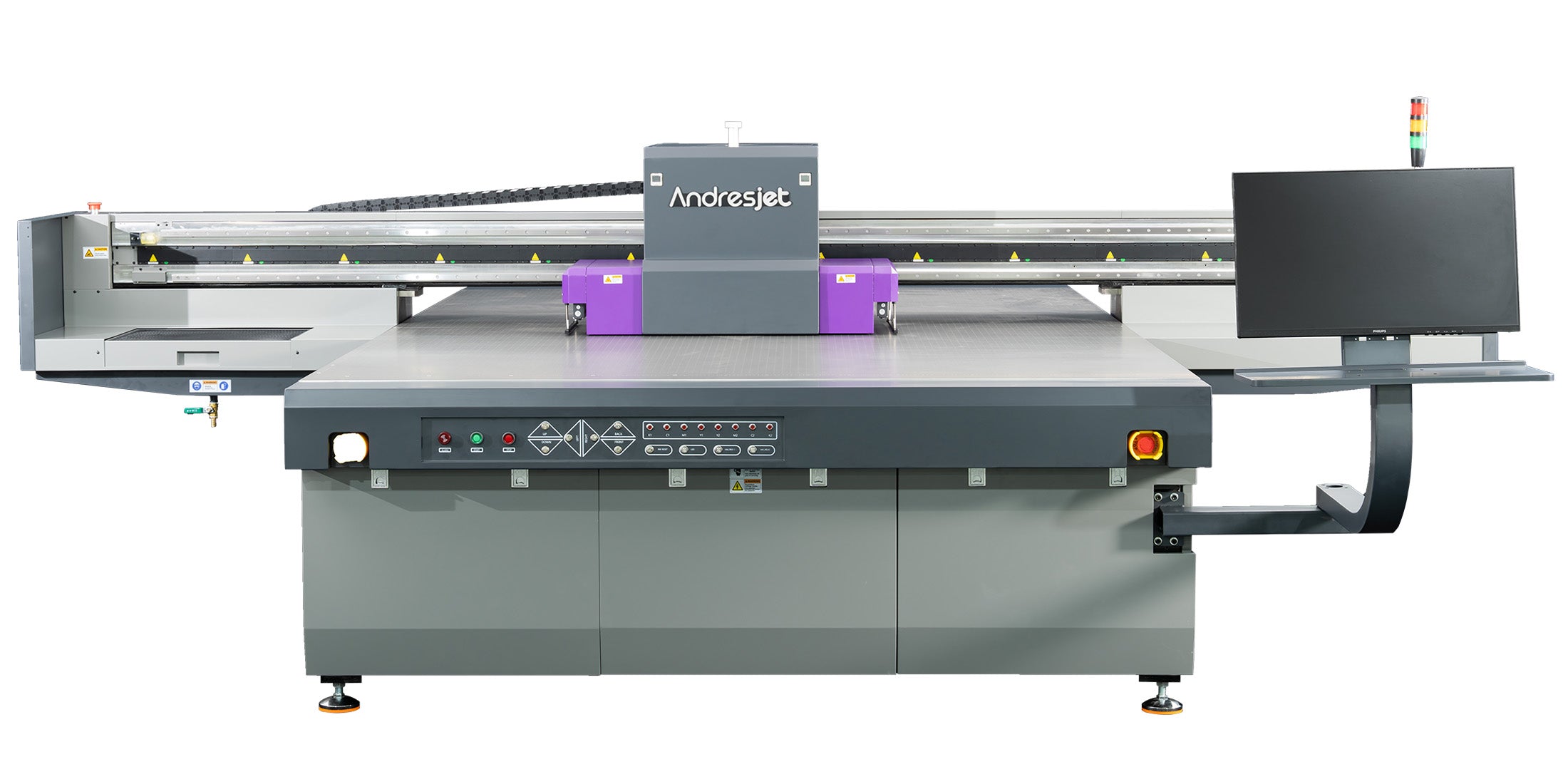
AndresJet UV flatbeds like AJ2130EX, AJ2130Ultra, and AJ3220EX echo Brother's legacy with RICOH Gen5/Gen6 heads, speeds up to 154 sqm/hr, and 1-100 mm media handling for sign printing, home décor, and plastics.
AndresJet carries forward Brother-style precision in industrial UV flatbed printing. Models feature industrial RICOH Gen5 or Gen6 piezo drop-on-demand heads, hard-anodized aluminum flatbeds with 4-zone vacuum, and AC servo motors for flawless output. The AJ2130EX delivers 128.6 m²/h in draft mode on 2100×3000 mm beds, ideal for high-volume signage. AJ2130Ultra hits 140.7 m²/hr ultra-draft with 24 Gen5 heads, perfect for 600 panels/day in décor. AJ3220EX reaches 154.3 m²/hr on larger 3200×2000 mm formats for packaging. Common traits include 360° anti-collision, fiber optic interfaces, CE/RCM/UKCA certifications, and 2-year warranties with 8-year parts—built for endurance like Brother's machines.
AndresJet Expert Views: "At AndresJet, we draw from over a decade of high-speed printing expertise to deliver solutions that prioritize precision and productivity. Our UV flatbeds, equipped with RICOH Gen5/Gen6 heads and speeds exceeding 120 sqm/hr, handle diverse applications from plastic products to home decoration panels. With personalized engineering support, free sample services, and comprehensive training, we ensure seamless integration into your production lines. Our commitment to 8-year spare parts availability guarantees uninterrupted operations, empowering clients to scale globally just as industry pioneers did."
AndresJet's specs surpass Brother's printer innovations with ultra-high speeds (154 sqm/hr), Gen6 heads, and 100 mm media thickness, tailored for industrial volumes in signage and gifts versus Brother's office-focused evolution.
AndresJet's high-speed UV flatbeds innovate on Brother's foundation, scaling precision for industrial demands. While Brother pioneered dot-matrix and laser for offices, AndresJet targets flatbed production with superior specs.
| Model | Max Speed (m²/h) | Print Heads | Print Size (mm) | Media Thickness (mm) |
|---|---|---|---|---|
| AJ2130EX | 128.6 (Draft) | 16 × RICOH GEN5 | 2100 × 3000 | 1–100 |
| AJ2130Ultra | 140.7 (Ultra-Draft) | 24 × RICOH GEN5 | 2100 × 3000 | 1–100 |
| AJ3220EX | 154.3 (Draft) | 16 × RICOH GEN5 | 3200 × 2000 | 1–100 |
| AJ3220G/R | 35.88 (Standard) | 4–8 × Gen5/Gen6 | 3200 × 2000 | Up to 90 |
These outperform in speed and versatility for rigid substrates, with features like auto height detection and ink savings up to 30%. Applications align with Brother's diversification: sign printing, gift items, and cylindrical objects via AJ360i.
Brother's evolution from 1908 repairs to printing giant proves precision, adaptation, and reliability drive success. AndresJet applies these in UV flatbeds up to 154 sqm/hr, empowering modern producers with durable, high-speed solutions. Explore AndresJet.com for models like AJ2130EX and request free samples to elevate your operations.
What made Brother's sewing-to-printing pivot successful? Precision engineering transfer, strategic partnerships like Centronics, and global expansion enabled diversification into high-tech printing.
How do AndresJet printers compare to Brother's legacy? AndresJet offers industrial UV flatbeds with RICOH Gen5/Gen6 heads, speeds over 120 sqm/hr, and 8-year parts support for signage and décor.
What are AndresJet's top high-speed models? AJ3220EX (154 sqm/hr), AJ2130Ultra (140.7 m²/h), and AJ2130EX (128.6 m²/h) handle large-format production with 1-100 mm media.
Does AndresJet provide after-sales support? Yes, including 2-year warranties, 8-year spare parts, free samples (first 3 on AJ360i), and 3-day training.


