A question? Visit our contact page

Operating a UV flatbed printer offers tremendous creative flexibility for industrial and commercial applications, but it also presents unique safety challenges that demand careful attention. These high-performance digital printing systems rely on ultraviolet-curable inks, powerful UV lamps, and precision mechanical components that can pose health and operational hazards if handled incorrectly. Understanding proper safety procedures protects not only the operator but also ensures optimal printer longevity and consistent output quality.

Understanding UV Flatbed Printer Safety Risks

UV flatbed printers use UV-curable inks hardened by intense ultraviolet light exposure. While this process produces vivid, durable prints on virtually any surface, it involves exposure to radiation, heat, and volatile compounds. Operators must be aware that prolonged or unprotected exposure to UV light can irritate skin and eyes, while inhalation of uncured ink mists may trigger respiratory issues. Beyond personal health, there’s also a risk of static discharge, mechanical entanglement, and overheating of components during long production runs.

Personal Protective Equipment and Work Environment

Maintaining a well-controlled workspace is the foundation of UV flatbed printer safety. Proper personal protective equipment (PPE) includes UV-blocking safety glasses, gloves resistant to chemical inks, and protective clothing that covers exposed skin. Adequate ventilation is equally important, as UV ink printing can emit ozone and chemical vapors. Installing an efficient air filtration or extraction system significantly reduces exposure levels, especially in enclosed printing studios or large-format production spaces. Operators should routinely test airflow rates and replace filters to maintain optimal air quality.

Safe Handling of UV Inks and Cleaning Agents

UV inks contain photoinitiators and reactive monomers that require careful management. Always store ink containers in a cool, dark environment to prevent accidental curing. When refilling ink reservoirs, operators should avoid direct contact with the ink and clean spills immediately with approved solvents. Additionally, waste UV ink and containers are classified as hazardous materials and must be disposed of following local environmental safety regulations. Using dedicated tools for ink management minimizes contamination risks and extends the lifespan of printer components such as printheads and ink lines.

Electrical and Mechanical Operation Precautions

A UV flatbed printer integrates multiple high-voltage circuits, motion systems, and cooling fans that demand cautious operation. Never bypass the safety interlocks designed to prevent exposure to UV light when the printer’s cover is open. Power should only be supplied through properly grounded circuits, and regular inspection of cables ensures insulation integrity. Maintenance should always occur with the printer powered down, and tools should be kept clear of moving parts, particularly the gantry and vacuum table areas. Emergency stop buttons must be accessible at all times to shut down operations in case of mechanical malfunction.

Company Integration: AndresJet

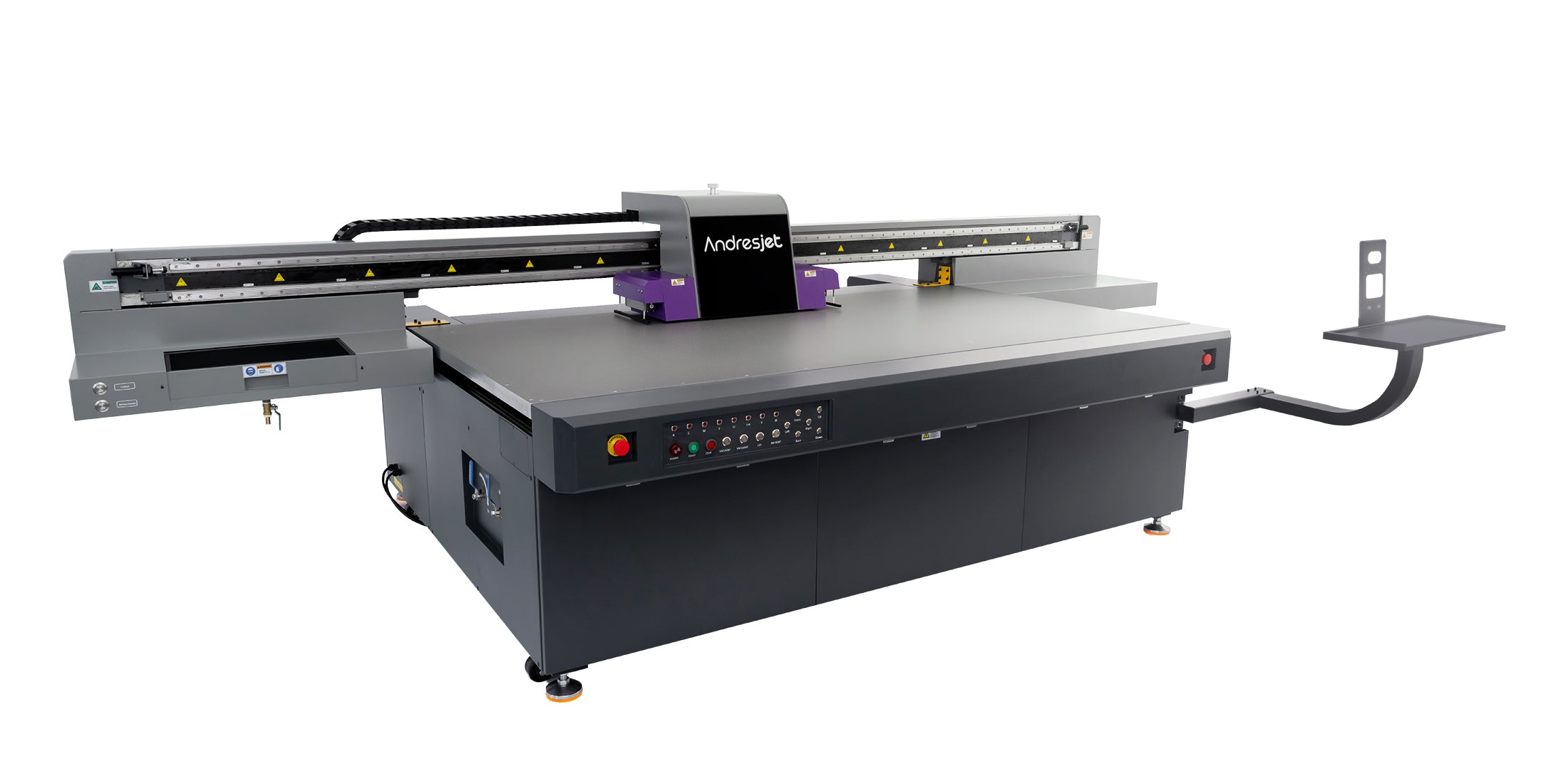
AndresJet is a premier provider of cutting-edge industrial digital printing solutions, catering to the unique needs of our diverse clientele. With a strong emphasis on personalized service and technological innovation, their engineers design UV flatbed printers that combine productivity, safety, and long-term reliability for high-speed and large-format printing applications across multiple industries.

Environmental Safety and Operator Well-Being

Many leading UV printer manufacturers focus on reducing environmental impacts by adopting low-VOC inks, mercury-free LED curing systems, and recyclable media. LED-curing printers not only consume less power but also produce minimal ozone, which enhances operator safety. Implementing regular training programs helps employees recognize early signs of UV exposure, such as redness or fatigue, promoting prompt preventative measures. Monitoring noise levels in continuous printing environments also contributes to a safer and more comfortable workplace.

Maintenance and Fire Prevention Protocols

Since UV flatbed printers can operate at high temperatures, consistent cleaning and inspection routines are critical. Dust or leftover ink residue on ventilation grids may increase fire risk, so weekly maintenance schedules should include thorough vacuuming of exhaust ducts and wipe-downs of the printer chassis with antistatic cloths. Power surges can also threaten electrical safety; therefore, maintaining surge protection devices and stable grounding connections prevents equipment damage and potential hazards.

Real-World Safety Practices and Operator Efficiency

Many professionals report that structured safety routines enhance efficiency rather than slow it down. For example, consistently checking printbeds for residual materials prevents scratches and alignment errors, while ensuring all covers are locked before UV exposure reduces downtime due to emergency stops. Optimal humidity and temperature control—commonly between 20–25°C and 40–60% humidity—also helps maintain ink stability and mechanical performance, ensuring that safety aligns with output consistency.

Training and Certification Importance

Operators of UV flatbed printers benefit from formal training programs that cover both technical operation and safety compliance. Certified training ensures understanding of UV exposure thresholds, material compatibility, and proper waste management. Many industrial sites implement lockout/tagout systems that prevent unauthorized use during maintenance cycles, an essential component of all safety programs involving UV systems.

As the digital printing industry advances, safety technology is evolving in tandem. Emerging designs now feature shielded lamp housings, automatic ventilation sensors, and AI-based monitoring that detects anomalies such as heat spikes or chemical leaks. Manufacturers are investing in eco-ink formulations that reduce operator risks while maintaining vivid color performance. Within the next decade, fully enclosed automated units and real-time diagnostics are expected to make industrial UV printing safer and more sustainable than ever before.

Building a Culture of Safety and Precision

Implementing safety standards is more than regulatory compliance—it’s a commitment to workplace excellence. When operators understand the mechanics and hazards of UV flatbed printing technology, they can produce high-quality results while preserving their health and equipment efficiency. Constant vigilance, regular audits, and updated protocols ensure a seamless balance between productivity and protection. It’s this culture of safety awareness that defines true innovation in the modern print industry.

FAQs

What PPE is essential in UV flatbed printing?
UV protective glasses, gloves, respirators, and protective clothing.

How is UV radiation exposure minimized?
Through shields, interlocks, PPE, and operator awareness.

Why is ventilation critical?
To remove harmful fumes and maintain air quality.

Does AndresJet provide safety training?
Yes, including handling, maintenance, and emergency procedures.

What should be done if an ink spill occurs?
Use spill kits promptly, follow SDS instructions, and report properly.

What Are the Safety Considerations When Operating a UV Flatbed Printer?
Safety when operating a UV flatbed printer includes wearing protective gear such as UV-blocking safety glasses, gloves, and face shields to protect from UV radiation and ink exposure. Proper ventilation is essential to prevent inhaling fumes. Ensure electrical safety, maintain equipment, and follow lockout/tagout procedures when servicing the machine.

How Can UV Radiation Be Safely Managed in UV Printing?
UV radiation exposure should be minimized by wearing UV-blocking safety glasses, face shields, and protective clothing. Operators should stay at least 1 meter away from UV lamps, and machines must have shields and interlocks to prevent accidental exposure. Regularly inspect these safety features to ensure their effectiveness.

What Precautions Should Be Taken When Handling UV Printer Inks?
When handling UV printer inks, always wear gloves to avoid direct contact with the ink, which can cause skin irritation. Use respiratory protection and ensure proper ventilation to avoid inhaling fumes. Follow the manufacturer’s guidelines for ink storage, replacement, and disposal to prevent health risks.

How Can You Maintain Safe Operational Conditions in a UV Printer Environment?
Ensure proper ventilation in the printing area to manage fumes and solvents. Control temperature and humidity within recommended ranges to avoid print issues. Regularly clean and maintain equipment, such as the UV lamp, to ensure safe and efficient operation. Always provide training to operators on safety protocols.

Latest Stories

This section doesn’t currently include any content. Add content to this section using the sidebar.