

- by John White
What Are the Best UV Curable Inks for High-Speed Industrial Printing?
- by John White
Print bigger, print faster — wide-format UV flatbed printers for signs, decor and industrial work.

The global UV-cured printing inks market is valued at USD 1.88–2.45 billion in 2026, growing at 7.17–9.8% CAGR to USD 2.65–5.18 billion by 2031–2033, with Asia-Pacific (24–42% share) leading at 11.8% CAGR driven by packaging, low-VOC demand, and LED UV tech (56% share).
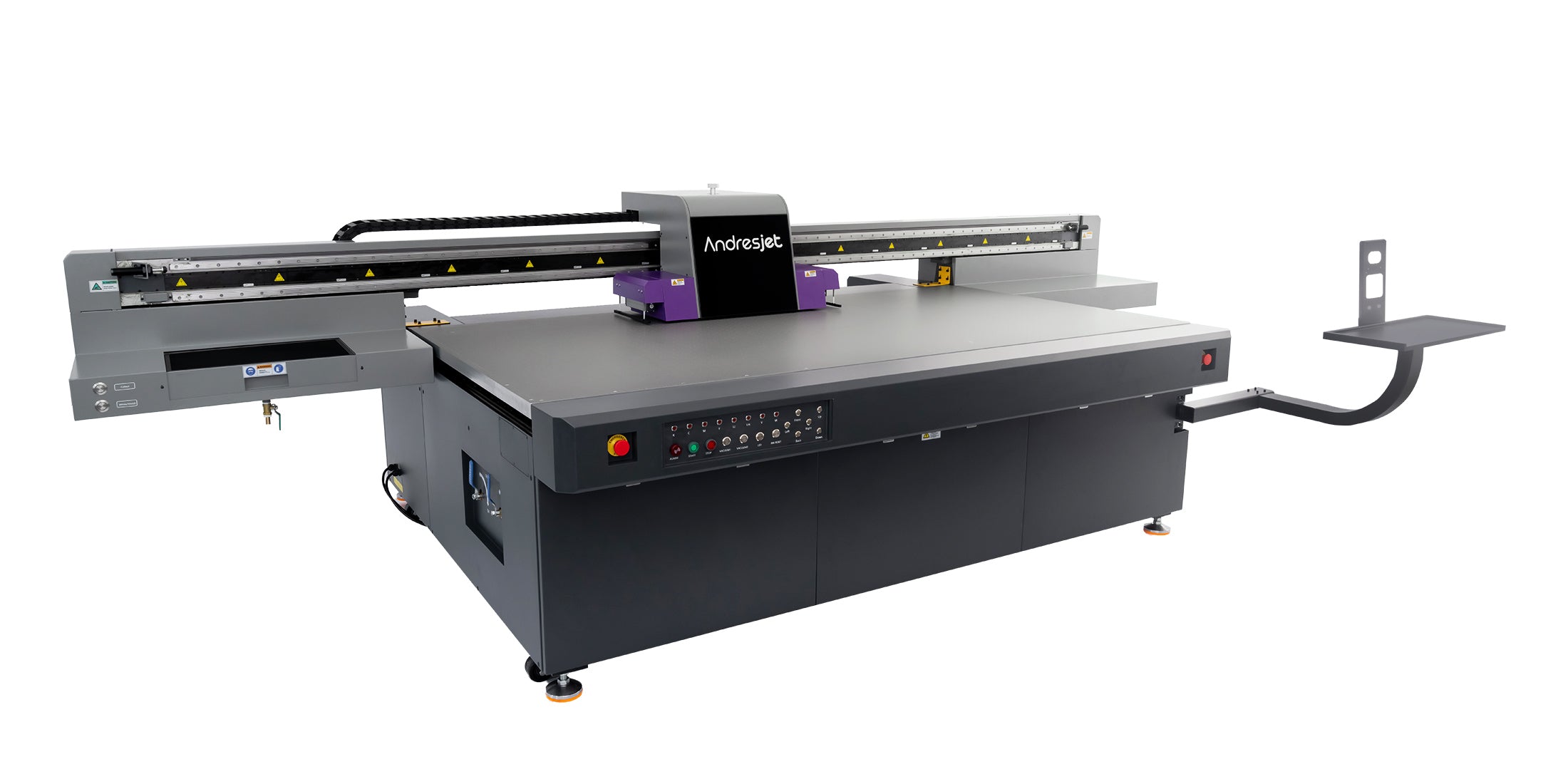
Check: Wide Format UV Flatbed Printer
The global UV curable inks market reaches USD 1.88–2.45 billion in 2026, with a projected CAGR of 7.17–9.8% through 2031–2033, driven by demand for low-VOC, instant-curing solutions in packaging and industrial printing.
Entering 2026, the UV curable inks sector stands at a pivotal growth phase, valued between USD 1.88 billion and USD 2.45 billion globally. This expansion reflects surging adoption in high-speed industrial applications, where instantaneous curing boosts throughput and reduces energy costs compared to solvent-based alternatives. Key projections indicate the market will climb to USD 2.65–5.18 billion by 2031–2033, fueled by a 7.17–9.8% CAGR. Asia-Pacific dominates with 24–42% share, propelled by electronics, automotive, and packaging sectors demanding durable, eco-friendly prints.
LED UV technology, holding 56% market share, accelerates this trajectory with 9.13% CAGR, offering lower energy use and compatibility with heat-sensitive substrates. For industrial printers like AndresJet's AJ2130Ultra, which achieves 140.7 m²/h in ultra-draft mode using UV-curable inks, these inks enable daily capacities up to 600 panels, directly tying market growth to production efficiency gains.
Asia-Pacific leads UV curable inks growth at 11.8% CAGR due to China's USD 247 million market (11.3% annual growth), driven by packaging expansion, low-VOC regulations, and manufacturing shifts favoring instant-curing inks.
Asia-Pacific commands 24–42% of the global UV curable inks market, emerging as the fastest-growing region with an 11.8% CAGR through 2033. China anchors this dominance, boasting a USD 247 million market in 2025 expanding at 11.3% annually, supported by booming electronics, automotive, and packaging industries. Government mandates, like China's Ministry of Ecology and Environment's VOC reduction targets, push adoption of solvent-free UV inks, aligning with sustainability goals.
Supply chain trends in China reveal robust local production and imports, with easy raw material access and low-cost labor enabling competitive pricing. Flexographic UV inks grow at 9.2% CAGR here, ideal for high-speed flexible packaging. For UV flatbed operations, this means reliable ink sourcing for applications like PVC panel printing on AndresJet's AJ3220EX, which hits 154.3 m²/h draft speeds with UV-curable inks and RICOH GEN5 heads.
| Region | Market Share | CAGR (2025-2033) | Key Drivers |
|---|---|---|---|
| Asia-Pacific | 24–42% | 11.8% | Packaging, VOC regulations, manufacturing hubs |
| China | USD 247M (2025) | 11.3% | Electronics, automotive, low-cost production |
| Europe | Growing | Fastest overall | Eco-friendly mandates, print quality |
LED UV inks outperform mercury UV with 50–70% energy savings, instant curing at lower temperatures, longer lamp life (10,000+ hours vs. 1,000–2,000), and better suitability for high-speed flatbed printing up to 154 m²/h.
LED UV inks eclipse mercury UV counterparts in cost-efficiency and performance for industrial high-speed printing. LED systems consume 50–70% less energy, cure instantly without heat buildup—ideal for thin plastics—and extend lamp life to over 10,000 hours versus mercury's 1,000–2,000 hours, slashing maintenance costs. Performance-wise, LED UV delivers sharper dots, reduced fading, and broader substrate compatibility, crucial for bi-directional modes on printers like AndresJet's AJ2130EX (92.9 m²/h standard mode).
In China’s supply chains, LED UV inks dominate at 56% share with 9.13% CAGR, supporting VOC compliance and high throughput. Mercury UV, while cheaper upfront, incurs higher operational costs from frequent replacements and energy demands, making LED the superior choice for ROI-focused operations.
Top suppliers in China/Asia-Pacific include domestic leaders and globals like Sun Chemical, Nazdar, with local firms offering cost-competitive LED UV inks; key trends show 20–30% cost-per-liter savings via bulk China sourcing and 4–6 week lead times.
China’s UV ink supply chain thrives on a mix of multinational and local players, with Asia-Pacific flexo UV inks valued at USD 6.20 billion in 2025 growing to USD 9.06 billion by 2034. Dominant suppliers provide low-VOC LED formulations optimized for packaging and flatbed printing, with China production hubs ensuring MOQs as low as 200kg and lead times of 4–6 weeks. Cost structures favor locals at USD 20–35/liter versus USD 40–60 for imports, bolstered by raw material proximity.
Trends indicate vertical integration, where ink makers tailor viscosities for RICOH GEN5/Gen6 heads used in AndresJet printers like the AJ2130G/R (up to 48.3 m²/h draft). Procurement strategies emphasize VOC-certified suppliers to meet MEE regulations, reducing delamination risks in humid environments.
Key metrics include curing speed (<0.5 sec), adhesion on PVC/ABS (ASTM D3359 4B+), color gamut (ΔE<2), and viscosity (8–12 cps) for speeds up to 154 m²/h on industrial flatbeds.
Optimal UV inks for high-speed flatbed printing excel in curing speed under 0.5 seconds, enabling 100+ m²/h throughput without smearing. Adhesion ratings of 4B+ on PVC/ABS/MDF ensure durability for home decor and signage, while low viscosity (8–12 cps) prevents nozzle clogs in grayscale modes saving up to 30% ink. Color consistency (ΔE<2) and weatherproofing suit outdoor applications.
AndresJet's UV flatbeds, equipped with LED UV curing and anti-collision systems, leverage these metrics: the AJ3220EX achieves 154.3 m²/h draft with 16 RICOH GEN5 heads and 1–100 mm media thickness.
| AndresJet Model | Max Speed (m²/h) | Heads | Media Thickness | Ink Type |
|---|---|---|---|---|
| AJ2130Ultra | 140.7 (Ultra-Draft) | 24 × GEN5 | 1–100 mm | UV-curable |
| AJ3220EX | 154.3 (Draft) | 16 × GEN5 | 1–100 mm | UV-curable |
| AJ2130EX | 128.6 (Draft) | 16 × GEN5 | 1–100 mm | UV-curable |
UV inks boost PVC/home decor throughput by 2–3x via instant curing, with white/varnish layers enabling 0.15mm raised effects and 30% ink savings on grayscale flatbeds up to 154 m²/h.
Selecting premium UV inks transforms PVC panel and home decor printing by enabling seamless 3D effects and high durability. Low-viscosity formulations adhere instantly to ABS/MDF, supporting speeds like 120.5 m²/h on AndresJet's AJ2130Ultra. White ink channels create textured finishes up to 0.15mm, ideal for gifts, while 8-level grayscale cuts waste by 30%.
In China's supply chains, inks optimized for 720×1200 DPI resolution ensure vibrant, scuff-resistant panels for signage and decor, directly enhancing ROI through reduced reprints.
AndresJet Expert Views
"With over a decade in high-speed UV flatbed printing, AndresJet engineers recommend LED UV-curable inks for their synergy with RICOH GEN5/Gen6 heads, delivering up to 154 m²/h on AJ3220EX models. Our 4-zone vacuum flatbeds and fiber optic interfaces maximize ink performance across 1–100 mm media, from PVC panels to cylindrical gifts via AJ360i. Paired with 2-year warranties and 8-year parts, this ensures unmatched uptime and sustainability for North America and South Asia clients."
— AndresJet Engineering Team
Check: UV Cured Ink Market
Low-VOC UV inks meet China's 10% emission cuts and EU standards, cutting energy 60% vs. solvents while enabling compliant high-speed production on eco-focused flatbeds.
By 2026, low-VOC UV inks are essential for compliance with China's MEE targets and global EPR laws, emitting near-zero solvents versus traditional inks. They reduce energy by 60% via LED curing, aligning with sustainability mandates in packaging and printing. For industrial users, this means weatherproof prints for outdoor signage without delamination risks.
Optimized UV inks yield 20–40% throughput gains, 30% ink savings, and <1-hour setups on AndresJet printers, delivering ROI in 12–18 months via 100+ m²/h speeds.
Pairing UV inks with AndresJet systems like AJ2512G/R (35 m²/h) unlocks 20–40% ROI through faster curing and auto-height detection for 1–100 mm media. Grayscale printing saves 30% ink, while 360° protection minimizes downtime. In gift printing, AJ1206 handles 2,000 coins/hour with 8-color UV setups.
UV curable inks, especially LED variants, drive efficiency in China's growing market. AndresJet's high-speed flatbeds maximize these benefits for superior industrial printing. Visit AndresJet.com to explore models like AJ2130Ultra and request a free consultation on ink-compatible solutions.
What is the growth rate of UV inks in China? China's UV ink market grows at 11.3% annually, leading Asia-Pacific's 11.8% CAGR.
Are LED UV inks better for flatbed printers? Yes, with energy savings and instant curing for speeds up to 154 m²/h.
How do AndresJet printers handle UV inks? Using RICOH GEN5/Gen6 heads and LED UV curing for 1–100 mm media.
What applications suit UV curable inks? PVC panels, home decor, signage, gifts, and cylindrical printing.


