

- by John White
What Are Ecological Sustainable Inks for UV Flatbed Printers?
- by John White
Print bigger, print faster — wide-format UV flatbed printers for signs, decor and industrial work.

Ecological sustainable inks for UV flatbed printers are low-VOC, bio-based UV-curable formulations like AndresJet's Eco-Print 100/200/300 series, enabling LED curing with 40% energy savings, 30% ink reduction via grayscale, and compliance with GREENGUARD/REACH/EPA standards. Models like the AJ1206, AJ2130G/R, and AJ3220G/R deliver up to 120+ sqm/hr speeds on rigid media without sacrificing quality.
Check: digital cylinder printer
Ecological sustainable inks are low-VOC, bio-based UV-curable formulations designed to minimize environmental impact while maintaining industrial-grade performance. These inks represent a fundamental shift in how manufacturers approach production without compromising output quality or speed.
Sustainable inks differ from traditional solvent-based alternatives in their chemical composition and curing mechanism. They contain significantly reduced volatile organic compounds (VOCs), which means fewer harmful emissions during production, application, and curing. Bio-based formulations incorporate renewable resources, reducing reliance on petroleum-derived chemicals. For industrial printers operating in North America and South Asia, where regulatory frameworks like REACH (Registration, Evaluation, Authorization and Restriction of Chemicals) and EPA standards continue to tighten, eco-friendly inks represent both compliance and competitive advantage.
The shift toward sustainable inks addresses three critical business concerns: regulatory compliance, operational safety, and market positioning. Facilities using low-VOC inks report improved air quality, reduced worker exposure to hazardous chemicals, and lower disposal costs. Beyond compliance, brands adopting green printing solutions appeal to environmentally conscious consumers and corporate buyers increasingly demanding sustainable supply chains. This market demand drives approximately 12% annual growth in eco-printing segments globally.
Check: Ecological & Sustainable Inks
Eco-friendly UV inks reduce environmental impact through low-VOC formulations (minimal air emissions), bio-based ingredients (renewable sourcing), reduced ink consumption via precision application, and recyclable or biodegradable components.
The environmental benefits of sustainable inks operate across multiple lifecycle stages. During production, low-VOC formulations emit fewer harmful gases, protecting both workers and surrounding communities. Manufacturing facilities using these inks typically report 30–50% reductions in workplace air contamination compared to traditional solvent inks. The use of bio-based ingredients—such as plant-derived resins and natural pigments—reduces the carbon footprint associated with petroleum extraction and refining.
At the application stage, UV flatbed printers using eco-inks deliver precision droplet placement, which directly translates to reduced ink waste. AndresJet's advanced grayscale technology, for example, enables up to 30% ink savings by optimizing color density across eight levels rather than applying uniform saturation. This precision not only conserves material but also reduces the volume of ink requiring disposal or treatment.
Post-production, many modern eco-inks are formulated for recyclability. Some formulations can be recovered and reprocessed up to 90% efficiency, supporting circular economy principles. Additionally, sustainable inks produce cleaner cured films with minimal off-gassing, reducing VOC emissions in end-use environments—particularly important for interior décor, signage, and food-contact applications.
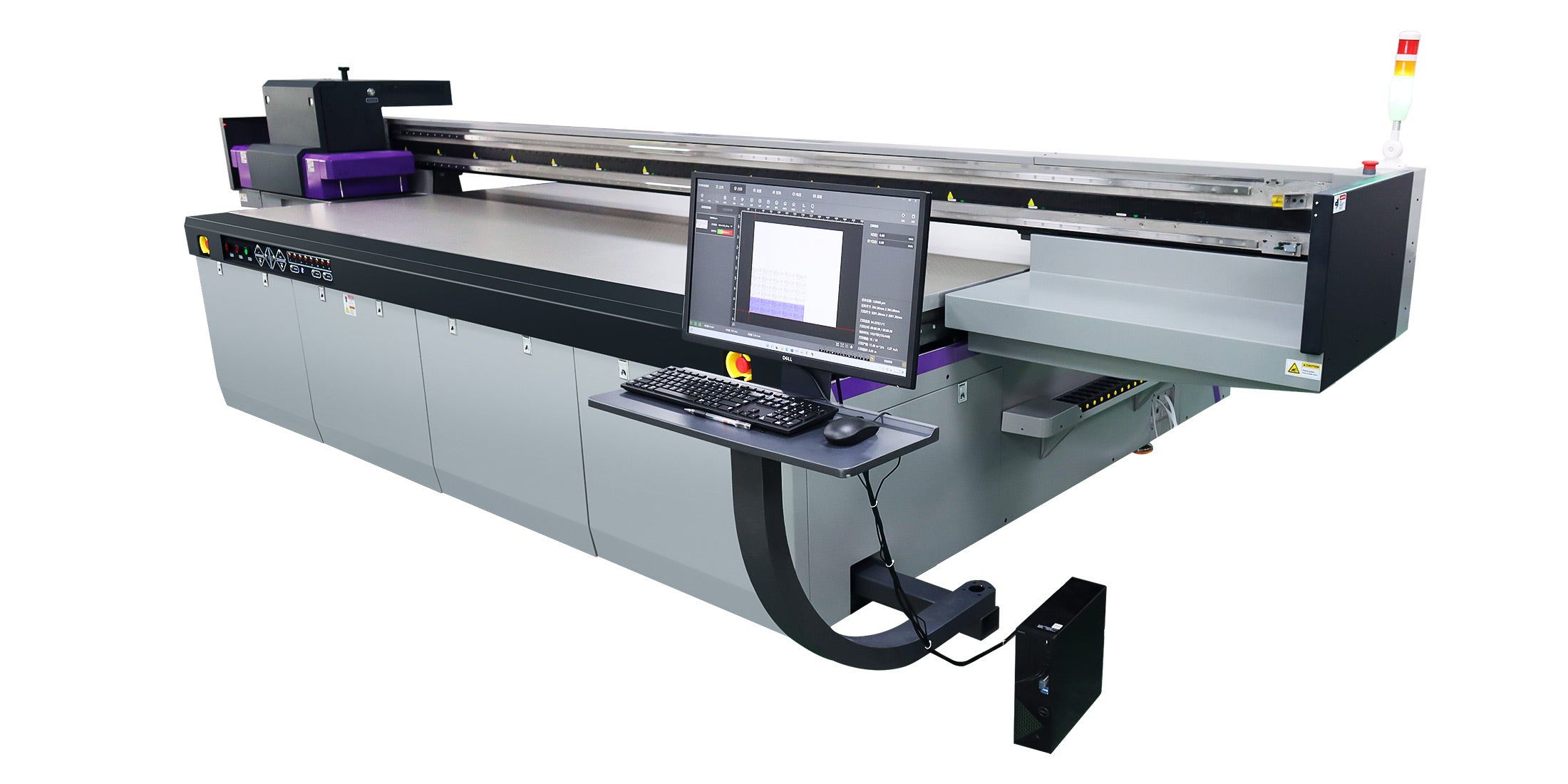
LED UV curing is ideal for sustainable printing because it consumes 40% less energy than traditional mercury-vapor UV lamps, generates minimal heat waste, cures instantly without warm-up time, and extends equipment lifespan while reducing operational costs.
LED UV technology represents a critical enabler of sustainable industrial printing. Traditional UV curing systems rely on mercury-vapor lamps that require warm-up periods, consume significant electrical power, and generate substantial waste heat. LED UV systems, by contrast, deliver instant on-demand curing with pinpoint wavelength precision, eliminating warm-up cycles and reducing energy consumption by approximately 40%.
The energy efficiency gains translate directly to operational cost reductions and lower carbon footprints. A manufacturing facility running 16 hours daily with LED UV-equipped flatbed printers can reduce annual energy costs by thousands of dollars while simultaneously lowering greenhouse gas emissions. The reduced heat output also minimizes cooling system demands in production environments, further compounding energy savings.
Beyond energy efficiency, LED UV systems offer superior compatibility with eco-inks. Many sustainable ink formulations are optimized for LED wavelengths (typically 365–395 nm), achieving faster cure speeds and superior adhesion compared to mercury-vapor systems. AndresJet's UV flatbed printers utilize LED UV curing technology across all models, ensuring that users combining these systems with Eco-Print inks achieve maximum sustainability benefits without production speed compromises.
AndresJet's AJ1206 Small UV Flatbed Printer, AJ2130G/R UV Flatbed Printer, and AJ3220G/R Large Format UV Flatbed Printer explicitly support Eco-Print 100, 200, and 300 series sustainable inks with LED UV curing and speeds up to 120+ sqm/hr.
AndresJet has engineered three flagship models specifically optimized for ecological ink integration, each tailored to different production scales and application requirements:
AJ1206 Small UV Flatbed Printer represents the entry point for sustainable printing. Designed for high-precision, medium-volume work, this model features a 1200 × 600 mm print area and supports eight ink colors including Eco-Print 100 and Eco-Print 200 formulations. With resolution options up to 300×2400 DPI and print speeds reaching 2,000 coins per hour for small items, the AJ1206 excels in gift printing, medal production, and personalized décor. Its compact footprint and UV LED curing system make it ideal for facilities transitioning to sustainable operations without major infrastructure changes.
AJ2130G/R UV Flatbed Printer bridges mid-range production needs with advanced sustainability features. Operating on a 2100 × 3000 mm flatbed, this model achieves up to 31 sqm/hr in standard production mode and supports extended eight-color configurations including Eco-Print inks alongside white and varnish channels. The AJ2130G/R utilizes RICOH GEN6 print heads with dual negative pressure systems optimized for eco-ink viscosity, ensuring consistent color accuracy and reduced material waste across high-volume runs. Its 4-zone vacuum system maintains precise media control on rigid substrates from 1–100 mm thickness, making it suitable for sign printing, plastic product decoration, and architectural panels.
AJ3220G/R Large Format UV Flatbed Printer delivers enterprise-scale sustainability. With a generous 3200 × 2000 mm print area and speeds up to 35 sqm/hr in standard production mode (297 sqft/hr), this model accommodates large-format signage, display graphics, and industrial décor applications. The AJ3220G/R supports Eco-Print 100, 200, and 300 series inks across eight-color configurations and achieves print speeds that rival traditional offset printing while maintaining digital flexibility. Its linear motor drive system and IGUS e-chain components ensure reliability across extended production schedules.
| Model | Print Area (mm) | Max Speed (sqm/hr) | Eco-Print Series | Best For |
|---|---|---|---|---|
| AJ1206 | 1200 × 600 | ~12 | 100, 200 | Gifts, medals, small décor |
| AJ2130G/R | 2100 × 3000 | 31 | 100, 200, 300 | Signs, plastic products, panels |
| AJ3220G/R | 3200 × 2000 | 35 | 100, 200, 300 | Large-format signage, displays |
Low-VOC inks comply with REACH and EPA standards by formulating with pre-approved chemical lists, maintaining VOC content below regulatory thresholds (typically <5% by weight), and obtaining third-party certifications such as GREENGUARD Gold, demonstrating safe workplace and end-product conditions.
Regulatory compliance represents a non-negotiable requirement for industrial printing operations in regulated markets. The European Union's REACH regulation restricts or bans over 900 hazardous chemicals, while the U.S. EPA enforces volatile organic compound limits under the Clean Air Act and National Emission Standards for Hazardous Air Pollutants (NESHAP). Sustainable ink formulations address these requirements through deliberate chemical selection and transparent documentation.
Eco-Print inks meet these standards by substituting restricted chemicals with approved alternatives. Rather than using heavy-metal-based pigments or carcinogenic solvents, sustainable formulations employ organic pigments, mineral additives, and bio-derived resins that maintain performance while avoiding regulatory red flags. Manufacturers provide comprehensive Safety Data Sheets (SDS) detailing chemical composition, VOC percentages, and hazard classifications, enabling facilities to maintain compliant documentation for regulatory audits.
Third-party certifications amplify compliance confidence. GREENGUARD Gold certification, for instance, verifies that products meet strict chemical emissions standards and are safe for sensitive environments including schools and healthcare facilities. Many eco-ink suppliers pursue these certifications, providing independent validation that formulations genuinely reduce workplace exposure and environmental release. For North American and South Asian operations, this certification pathway accelerates procurement approvals and demonstrates commitment to stakeholder safety.
Green UV inks deliver 30% ink savings through precision grayscale technology, 40% energy reduction via LED curing, lower disposal and handling costs, and production speeds matching or exceeding traditional solvent inks—enabling profitable sustainability without speed sacrifices.
A common misconception holds that sustainable printing requires sacrificing speed or output quality. Modern eco-inks, particularly those optimized for LED UV systems, directly refute this assumption. AndresJet's Eco-Print series maintains viscosity profiles and cure characteristics matching industrial standards, enabling the same high-speed production as conventional inks.
The AJ2130G/R and AJ3220G/R models exemplify this performance parity. Both achieve speeds exceeding 30 sqm/hr in standard production modes while supporting extended color palettes including white and varnish channels. The precision of RICOH print head technology—whether GEN5 or GEN6 variants—ensures that eco-inks deposit at optimal droplet sizes, maximizing color saturation while minimizing material consumption. This precision directly translates to the advertised 30% ink savings through intelligent eight-level grayscale printing, where color density adjusts dynamically rather than applying uniform saturation.
Cost benefits extend beyond material consumption. LED UV curing eliminates warm-up cycles, reducing per-job energy expenditure. Eco-inks typically require less frequent nozzle maintenance due to lower residue buildup compared to traditional formulations, decreasing downtime and extending print head lifespan. Waste disposal costs decline substantially—eco-inks generate minimal hazardous waste, reducing compliance documentation and disposal fees. For facilities printing 500+ sqm monthly, these cumulative savings often exceed the initial ink cost premium within 6–12 months of operation.
AndresJet combines over a decade of industrial printing expertise with purpose-built systems supporting Eco-Print inks, delivering speeds up to 120+ sqm/hr, comprehensive 2-year warranties, 8-year parts availability, and responsive after-sales support ensuring long-term sustainability ROI.
AndresJet's commitment to sustainable printing extends beyond equipment specification sheets. The company's decade-long presence in North America and South Asia has established deep understanding of regional regulatory requirements, production workflows, and customer support expectations. This experience directly informs printer design decisions that optimize eco-ink compatibility.
All AndresJet UV flatbed models incorporate industrial-grade RICOH print head technology, hard-anodized aluminum flatbeds with multi-zone vacuum systems, and fiber-optic data transmission ensuring reliable high-speed operation. These components are selected specifically for durability and compatibility with low-VOC formulations, which demand precision curing and consistent media handling.
Beyond hardware, AndresJet's after-sales support framework directly addresses sustainability goals. The company guarantees spare parts availability for eight years, enabling facilities to maintain equipment investments and avoid premature replacement cycles. This longevity approach aligns with circular economy principles, reducing e-waste and total cost of ownership. Technical support teams provide training on eco-ink integration, maintenance protocols optimizing sustainable performance, and troubleshooting assistance ensuring production continuity.
AndresJet Expert Views: "Our engineering team has invested significant effort in optimizing Eco-Print ink compatibility across the AJ1206, AJ2130G/R, and AJ3220G/R platforms. We recognize that sustainable printing isn't simply about ink chemistry—it requires holistic system design. Our dual negative pressure systems, LED UV curing architecture, and precision vacuum control work in concert with eco-formulations to deliver the speed, quality, and reliability industrial buyers demand. We're proud that facilities choosing AndresJet for green printing don't sacrifice performance. Our customers consistently report that Eco-Print inks perform identically to traditional formulations while reducing their environmental footprint and operational costs. We stand behind this commitment with comprehensive warranties and eight-year parts support, ensuring that sustainability investments deliver measurable ROI."
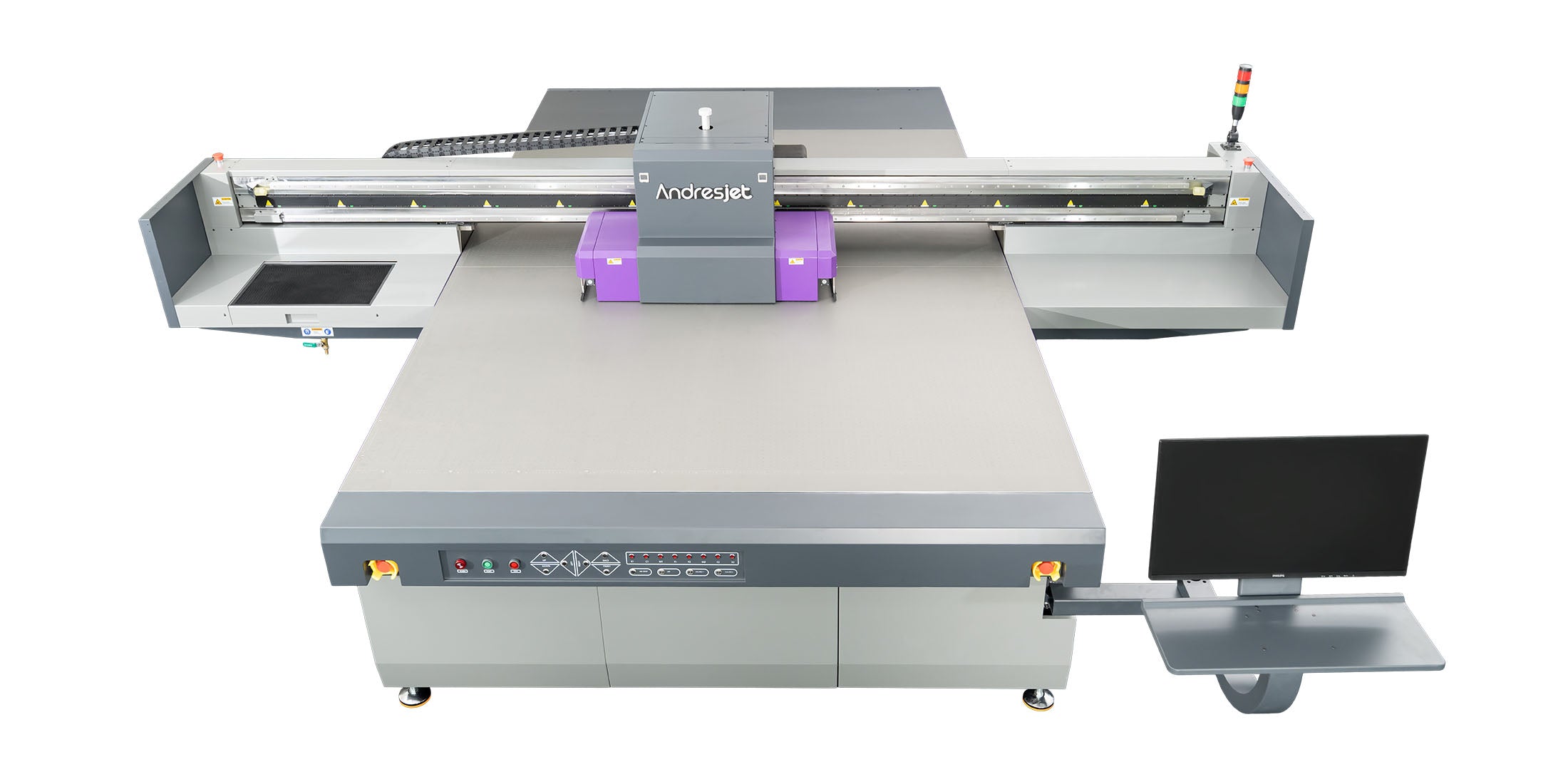
Calculate ROI by comparing annual ink costs (quantity × unit price), energy consumption (LED vs. mercury-vapor), disposal fees, and maintenance intervals against baseline traditional operations, typically showing payback within 6–18 months for medium-volume facilities.
ROI calculations for sustainable ink transitions require systematic analysis across multiple cost categories. Begin with direct material costs: document current monthly ink consumption in liters and multiply by unit cost. Compare this against eco-ink pricing—while per-liter costs may appear higher initially, the 30% consumption reduction through grayscale optimization typically offsets premiums. A facility consuming 50 liters monthly of traditional ink at $40/liter ($2,000/month) might reduce to 35 liters of Eco-Print at $50/liter ($1,750/month), generating monthly savings of $250.
Energy consumption represents the second major variable. LED UV systems consume approximately 40% less electrical power than mercury-vapor alternatives. Calculate your facility's current monthly energy cost attributable to UV curing, then apply the 40% reduction factor. For a facility with $500 monthly UV-related energy costs, this generates $200 monthly savings—$2,400 annually.
Disposal and compliance costs form the third category. Traditional solvent inks require hazardous waste disposal, typically costing $0.50–$2.00 per liter. Eco-inks generate minimal hazardous waste, reducing or eliminating these fees. Additionally, regulatory compliance documentation, training, and potential fines associated with VOC violations disappear with compliant eco-inks. Conservative estimates suggest $300–$500 monthly savings in this category.
Maintenance intervals improve with eco-inks. Reduced nozzle clogging and residue buildup extend print head service intervals from 12 to 18 months, deferring $3,000–$5,000 maintenance costs by 50%. Combining material savings ($250/month × 12 = $3,000 annually), energy reduction ($200/month × 12 = $2,400 annually), and disposal/compliance savings ($400/month × 12 = $4,800 annually), medium-volume facilities typically achieve $10,000+ annual savings, with payback periods of 6–12 months depending on initial system investment.
Ecological sustainable inks represent a fundamental evolution in industrial printing, enabling manufacturers to meet regulatory requirements, reduce operational costs, and strengthen market positioning simultaneously. AndresJet's Eco-Print-compatible platforms—the AJ1206, AJ2130G/R, and AJ3220G/R—deliver speeds exceeding 30 sqm/hr while supporting low-VOC, bio-based formulations that comply with REACH, EPA, and GREENGUARD standards. LED UV curing technology amplifies sustainability benefits through 40% energy reduction and instant on-demand operation. For facilities transitioning to green printing, comprehensive ROI calculations typically demonstrate payback within 12 months, with ongoing savings from reduced material consumption, energy efficiency, and simplified waste management. AndresJet's commitment to after-sales support—including 8-year parts availability and technical training—ensures that sustainability investments deliver measurable long-term value.
No. While many modern UV flatbed printers can technically apply eco-inks, optimal performance requires systems specifically engineered for low-VOC formulations. AndresJet's AJ1206, AJ2130G/R, and AJ3220G/R models feature dual negative pressure systems, precision print head control, and LED UV curing optimized for Eco-Print inks. Using eco-inks with incompatible equipment may result in reduced speed, color accuracy issues, or accelerated wear. Always verify printer compatibility before transitioning to sustainable formulations.
LED UV systems cure instantly on demand, eliminating the 15–30 minute warm-up periods required by mercury-vapor lamps. This on-demand capability alone reduces per-job curing time by 10–15%. Additionally, LED wavelengths optimized for eco-inks often achieve faster polymerization than mercury-vapor systems, potentially reducing curing time per pass by 20–30% depending on ink formulation and substrate type. Combined with 40% energy consumption reduction, LED UV systems deliver both speed and efficiency advantages.
Priority certifications include GREENGUARD Gold (verifying low chemical emissions), REACH compliance documentation (confirming EU regulatory adherence), EPA compliance certification (U.S. air quality standards), and ISO 14001 (environmental management system certification). Additionally, request Safety Data Sheets (SDS) confirming VOC content below 5% by weight and absence of restricted chemicals. AndresJet's Eco-Print inks carry these certifications, providing transparent documentation for compliance audits.
Yes. Modern eco-inks formulated for UV curing achieve color saturation and vibrancy matching or exceeding traditional solvent inks. The key difference lies in application precision: AndresJet's RICOH print head technology and grayscale optimization ensure optimal droplet placement and color density control. Users report that Eco-Print inks produce vibrant, durable prints on plastic, wood, glass, and composite substrates without visible quality compromises. The 30% ink savings come from precision application, not reduced pigment concentration.
UV-cured eco-ink prints exhibit durability equivalent to or exceeding traditional formulations, with outdoor fade resistance typically rated at 3–5 years depending on substrate and environmental exposure. LED UV curing produces superior cross-linking compared to some mercury-vapor systems, potentially extending print longevity. For interior applications (signage, décor, plastic products), eco-ink prints maintain color and adhesion for 5–10+ years under normal conditions. Durability depends more on substrate selection and environmental factors than ink formulation type.


