

UV lamp maintenance for industrial UV flatbed printers involves daily visual checks and dust wipes, weekly intensity tests with a radiometer, monthly deep cleans using isopropyl alcohol on LED surfaces, and replacement every 20,000+ hours or when output drops 20%. This schedule, tailored for high-speed models like AndresJet AJ2130Ultra (140 m²/h), prevents curing failures, cuts downtime by 40%, and maximizes 8-year spare parts value.
Check: Wide Format UV Flatbed Printer
What Are UV-LED Lamps and Why Do They Matter in Industrial Flatbed Printers?
UV-LED lamps in industrial flatbed printers deliver instant, energy-efficient curing for UV-curable inks on rigid substrates like PVC panels and MDF boards, ensuring sharp prints without heat damage to media.
UV-LED lamps represent a major advancement over traditional mercury lamps, offering up to 70% energy savings and no hazardous materials, aligning with global sustainability regulations. In high-speed industrial flatbed printers, these lamps cure inks immediately after deposition, enabling production speeds exceeding 100 sqm/hr on substrates up to 100 mm thick. AndresJet UV flatbed printers, such as the AJ2130EX and AJ3220EX, integrate UV-LED curing with hard-anodized aluminum flatbeds and 4-zone vacuum systems for precise handling of sign printing and home decoration media. This technology supports resolutions up to 720×1200 dpi while maintaining consistent output, critical for applications in plastic product printing where curing uniformity prevents defects like tacky surfaces.
The importance lies in their longevity and reliability: UV-LEDs maintain peak wavelength alignment with photoinitiators in UV-curable inks like AndresJet's Eco-Print series, reducing rejection rates by 15-20% in high-volume operations. Features like rear UV light shields in the AJ2130EX protect operators and enhance safety during 24/7 runs.
How Often Should You Inspect UV Lamps in High-Speed UV Printers?
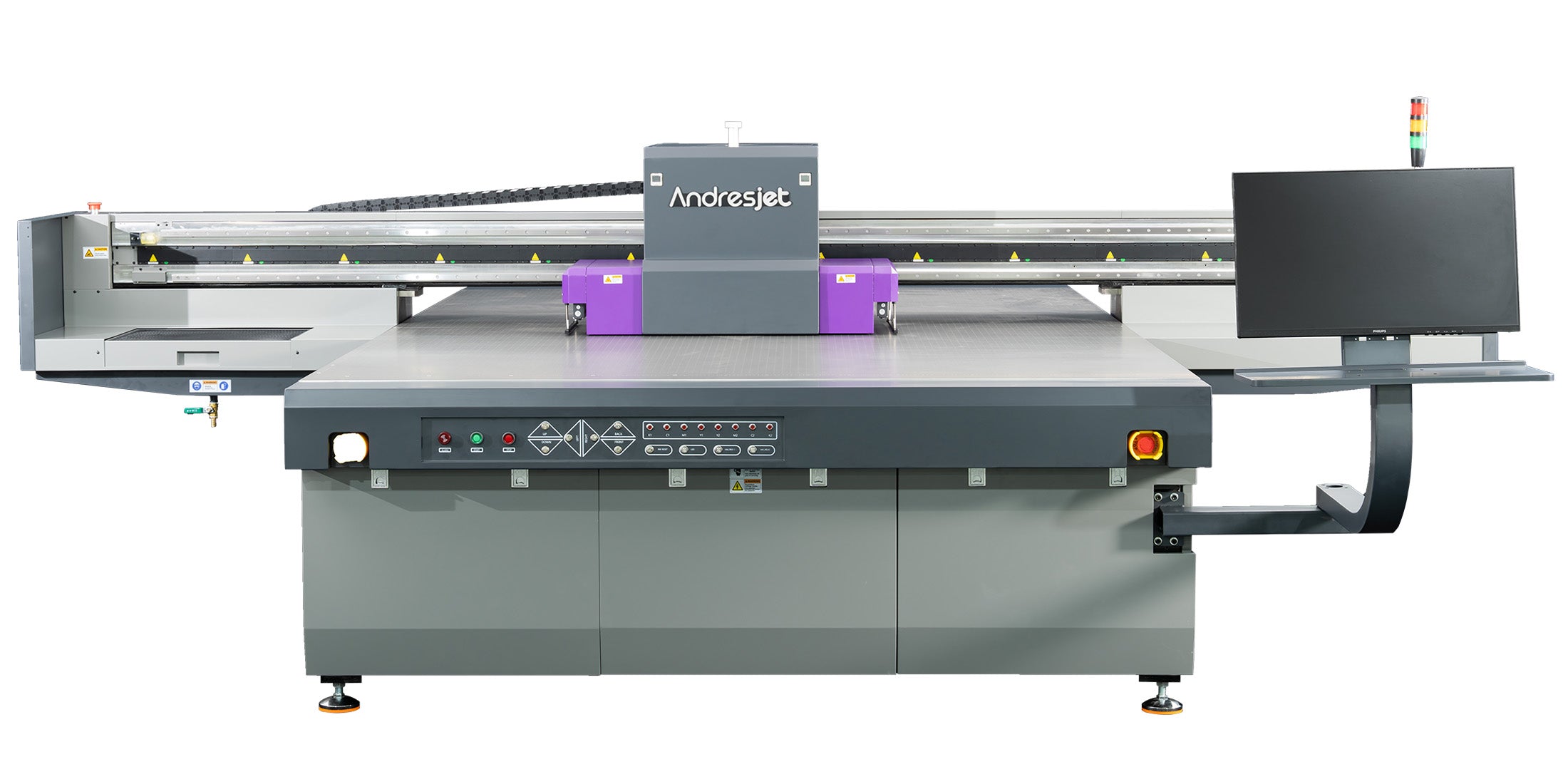
Inspect UV lamps daily for dust and cooling status, weekly with radiometer checks for intensity, monthly for deep cleaning, and quarterly for full system audits in high-speed printers operating over 100 sqm/hr.
High-speed UV flatbed printers demand rigorous inspection schedules to counter accelerated wear from continuous operation. Daily visual checks—verifying airflow, wiping optics with lint-free cloths, and scanning for debris—prevent intensity drift that could compromise curing on fast-moving media. Weekly tasks include radiometer mapping to detect "cold spots" across the lamp array, essential for models like the AndresJet AJ2130Ultra with speeds up to 140.7 m²/h in ultra-draft mode.
Monthly inspections involve checking electrical connections and coolant levels, while quarterly audits assess thermal management against environmental specs (20–30°C, 30–60% humidity). Integrate these into shift routines for printers like the AJ3220EX (154.3 m²/h draft), where neglected checks amplify downtime costs. Proactive frequency ensures the 360° anti-collision systems and fiber optic interfaces operate without curing interruptions.
| Inspection Frequency | Key Tasks | High-Speed Printer Benefit |
|---|---|---|
| Daily | Visual dust wipe, cooling check | Prevents immediate curing failures at 120+ sqm/hr |
| Weekly | Radiometer intensity test | Detects 10-20% output loss early |
| Monthly | Deep clean with IPA, connection inspect | Maintains uniformity for 720×1200 dpi prints |
| Quarterly | Full thermal/electrical audit | Supports 8-year spare parts reliability |
What Is the Typical UV-LED Lamp Lifespan in AndresJet Flatbed Printers?
Check: UV Lamp Maintenance
UV-LED lamps in AndresJet flatbed printers typically last 20,000+ hours with proper maintenance, far outpacing mercury lamps, though actual life varies by usage, cleaning, and thermal control in high-speed environments.
AndresJet UV flatbed printers feature UV-LED curing systems designed for extended life, benefiting from industrial RICOH Gen5/Gen6 print heads and robust cooling. In models like the AJ2130G/R and AJ2512G/R, lamps achieve 20,000+ hours under optimal conditions—daily cleaning and stable 20–30°C operation—supporting speeds up to 35 sqm/hr. Factors like dust accumulation or overheating can reduce this by 25-50%, but AndresJet's 8-year spare parts guarantee ensures availability.
Compared to mercury lamps' 1,000-2,000 hours, UV-LEDs offer superior ROI, especially in sign printing where consistent curing handles media weights up to 50 kg/m². Track hours via integrated monitoring to plan replacements, maximizing the 2-year comprehensive warranty.
AndresJet Expert Views: "Our UV-LED systems in printers like the AJ3220G/R and AJ2130Ultra are engineered for 20,000+ hour lifespans, backed by 8-year spare parts and features like auto media height detection up to 100 mm. Regular maintenance unlocks this potential, reducing downtime in high-speed production for sign and décor pros. Our engineers recommend radiometer logs to predict replacements precisely." – AndresJet Technical Team
How to Clean UV Lamps on Industrial UV Flatbed Printers Step-by-Step?
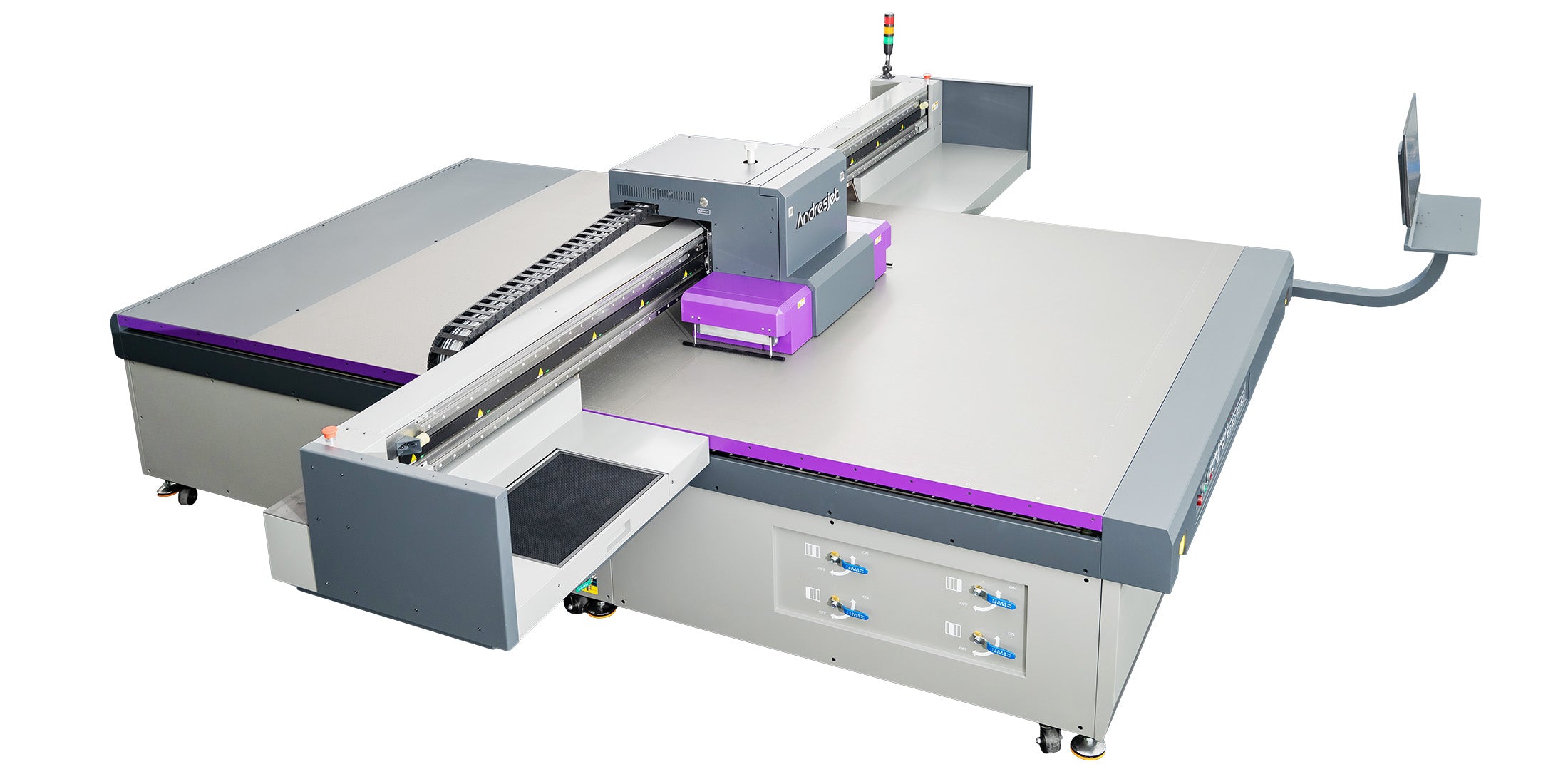
Clean UV lamps by powering off and cooling the system, wiping optics with lint-free cloths and isopropyl alcohol or ammonia-free glass cleaner, then inspecting reflectors—repeat weekly for high-speed flatbeds.
Proper cleaning maintains curing consistency in AndresJet printers like the AJ1206 and AJ3220EX. Step 1: Shut down power and allow 30+ minutes for cooling. Step 2: Access the UV-LED array via the rear shield. Step 3: Use lint-free cloths with isopropyl alcohol (IPA) or Windex to gently wipe LED surfaces, removing ink residue or dust—avoid abrasives. Step 4: Clean reflectors and air filters with compressed air or soft brushes. Step 5: Reassemble, test airflow, and log the process.
For the AJ2512G/R's 4-zone vacuum flatbed, integrate cleaning with waste ink collector maintenance. This prevents 90% of printhead-related failures from residue, ensuring 360×1200 dpi quality on 1–100 mm media.
When Should You Replace UV Lamps in UV Flatbed Printers?
Replace UV-LED lamps every 20,000+ hours, when radiometer shows 20% output drop, or if curing fails despite cleaning—schedule during planned downtime leveraging AndresJet's 8-year parts support.
Replacement timing hinges on data: monitor via radiometer for intensity below 80% or visible degradation like flickering. In AndresJet's AJ2130EX (92.9 m²/h standard), high usage accelerates wear, but maintenance extends life. Signs include tacky prints or uneven curing on plastic panels. AndresJet guarantees parts for models supporting up to 154 sqm/hr, with 2-year warranty coverage. Always cool lamps before handling wires, and calibrate post-install.
| AndresJet Model | Max Speed (sqm/hr) | UV-LED Lifespan Expectation | Media Thickness |
|---|---|---|---|
| AJ2130Ultra | 140.7 (ultra-draft) | 20,000+ hours | 1–100 mm |
| AJ3220EX | 154.3 (draft) | 20,000+ hours | 1–100 mm |
| AJ2512G/R | 35 | 20,000+ hours | 1–100 mm |
| AJ2130G/R | 48.3 (draft) | 20,000+ hours | 1–100 mm |
What Causes UV Lamp Curing Failures and How to Troubleshoot Them?
Curing failures stem from dust-blocked optics, overheating, or intensity drift; troubleshoot with radiometer tests, cooling checks, and cleaning—resolve 80% of issues before full replacement.
Common causes include contaminated lenses reducing output, clogged filters causing thermal runaway, or power fluctuations in fiber optic systems. In AndresJet AJ3220G/R printers, vacuum blowers aid but require filter checks. Troubleshoot: Measure intensity across the field; clean if uneven; verify 20–30°C temps. For persistent tackiness, inspect ink compatibility with LED wavelengths. Anti-static bars in AJ2130EX models prevent dust buildup.
How Does Proper UV Lamp Maintenance Reduce Downtime in 100+ sqm/hr Printers?
Proper maintenance cuts downtime 40% by preventing curing defects and extending lamp life, saving $15K+ annually in high-speed printers through scheduled checks and parts availability.
In 100+ sqm/hr operations like AndresJet AJ2130Ultra (120.5 m²/h production), neglected lamps cause 15-20% rejects, halting lines. Routine care preserves 30% ink savings via grayscale printing and supports daily capacities of 600 panels. AndresJet's 8-year parts and training minimize unplanned stops, boosting uptime for sign and plastic printing.
Why Choose AndresJet UV Printers for Low-Maintenance UV-LED Curing?
AndresJet UV printers offer low-maintenance UV-LED curing with 20,000+ hour lifespans, 2-year warranties, 8-year parts, and high-speed performance up to 154 sqm/hr, ideal for sign and décor pros.
AndresJet stands out with CE/RCM/UKCA certified flatbeds using RICOH Gen5/Gen6 heads, auto height detection, and IGUS e-chains for durability. Models like AJ3220EX handle 50 kg/m² media reliably, backed by free training and samples. Expanding in North America and South Asia, AndresJet delivers tailored solutions for home decoration and gift printing.
Conclusion
Mastering UV lamp maintenance ensures peak performance in industrial flatbed printers, maximizing ROI through consistent curing and minimal downtime. AndresJet's UV-LED equipped models provide the reliability print shops demand.
Frequently Asked Questions
How long does a UV light last in flatbed printers? Typically 20,000+ hours with maintenance in AndresJet models.
What is the UV lamp replacement interval? Every 20,000 hours or 20% output drop, per radiometer data.
UV lamp cleaning procedure? Cool, wipe with IPA on lint-free cloth weekly.
UV curing troubleshooting? Check intensity, clean optics, verify cooling first.
AndresJet spare parts for UV lamps? Guaranteed 8 years, supporting all flatbed models.
Share:
How to Adjust UV Flatbed Printer Settings for Optimal Speed & Quality?
How to Prevent Smearing on UV Flatbed Printers?