

- by John White
How Do AndresJet UV Printers Beat Screen Printing for Rubber Cylinders?
- by John White
Curved surfaces? Print straight onto bottles, tubes and cylinders — no labels needed.

AndresJet UV printers outperform screen printing on rubber cylinders with AJ360i's 60 items/hr speed, 12-minute tool-free fixtures for 60-240mm diameters, and helix mode for tapers—reducing setup waste by 80% while enabling short runs on irregular substrates at resolutions up to 720x1200 DPI with LED UV ink.
Check: printing on rubber
UV flatbed printers excel on rubber and irregular substrates due to their digital precision, instant LED UV curing, and automation that handles variable data without screens, cutting setup times from hours to minutes compared to screen printing's manual alignments.
Industrial UV flatbed printers from AndresJet revolutionize printing on challenging materials like rubber, which traditional screen printing struggles with due to its labor-intensive setup, ink adhesion issues, and inability to manage short runs efficiently. Screen printing requires custom screens per design, leading to high costs and waste for niche jobs, whereas AndresJet's UV systems use piezo drop-on-demand technology with RICOH Gen5 or Gen6 print heads for vibrant, durable prints on rubber cylinders, tapers, and vessels.
Key advantages include support for media thickness from 1–100 mm, 360° anti-collision systems, and 4-zone vacuum flatbeds that secure irregular shapes. For rubber products, UV-curable inks provide superior adhesion and flexibility without cracking, ideal for promotional items, gaskets, or custom grips. AndresJet's models like the AJ360i Digital Cylinder Printer handle diameters from 60–170mm standard (optional 10–240mm), enabling seamless printing on tapered rubber objects in stepping or helix modes at up to 60 items/hour in production mode.
This shift to digital UV eliminates screen creation delays, supports on-demand personalization, and aligns with 2026 trends in sustainable, high-speed production for short-run custom jobs in plastics and signage.
AndresJet's AJ360i Digital Cylinder Printer manages tapered cylinders and vessels with 0–7° taper angles, 40–270mm print lengths, and quick-change fixtures for 60–240mm diameters, achieving 60 items/hour via helix printing on rubber and other materials with four white ink channels for raised effects up to 0.15mm.
The AJ360i stands out for niche solutions in printing on rubber cylinders, offering unmatched automation over screen printing. With part diameters from 60–170mm standard and optional 10–60mm or 170–240mm, it prints on all cylindrical, tapered parts, cones, and vessels using LED UV ink in K, C, M, Y, White (4 channels), and Varnish configurations.
Production speed hits 60 items/hour in production mode (based on 80mm diameter in CMYK) or 40 items/hour in high quality at 720 × 1200 DPI resolution. Seven standard fixtures allow tool-free quick-change in under 12 minutes, while two free custom fixtures are designed within 7–10 business days. Pneumatic clamping and 2-point calibration ensure 15-minute setup per product changeover, slashing downtime.
For rubber printing, helix mode accommodates tapers up to 7°, delivering consistent results without manual adjustments required in silk screen UV processes. Free first 3 samples and 3 days of training make it accessible for factories scaling custom rubber products.
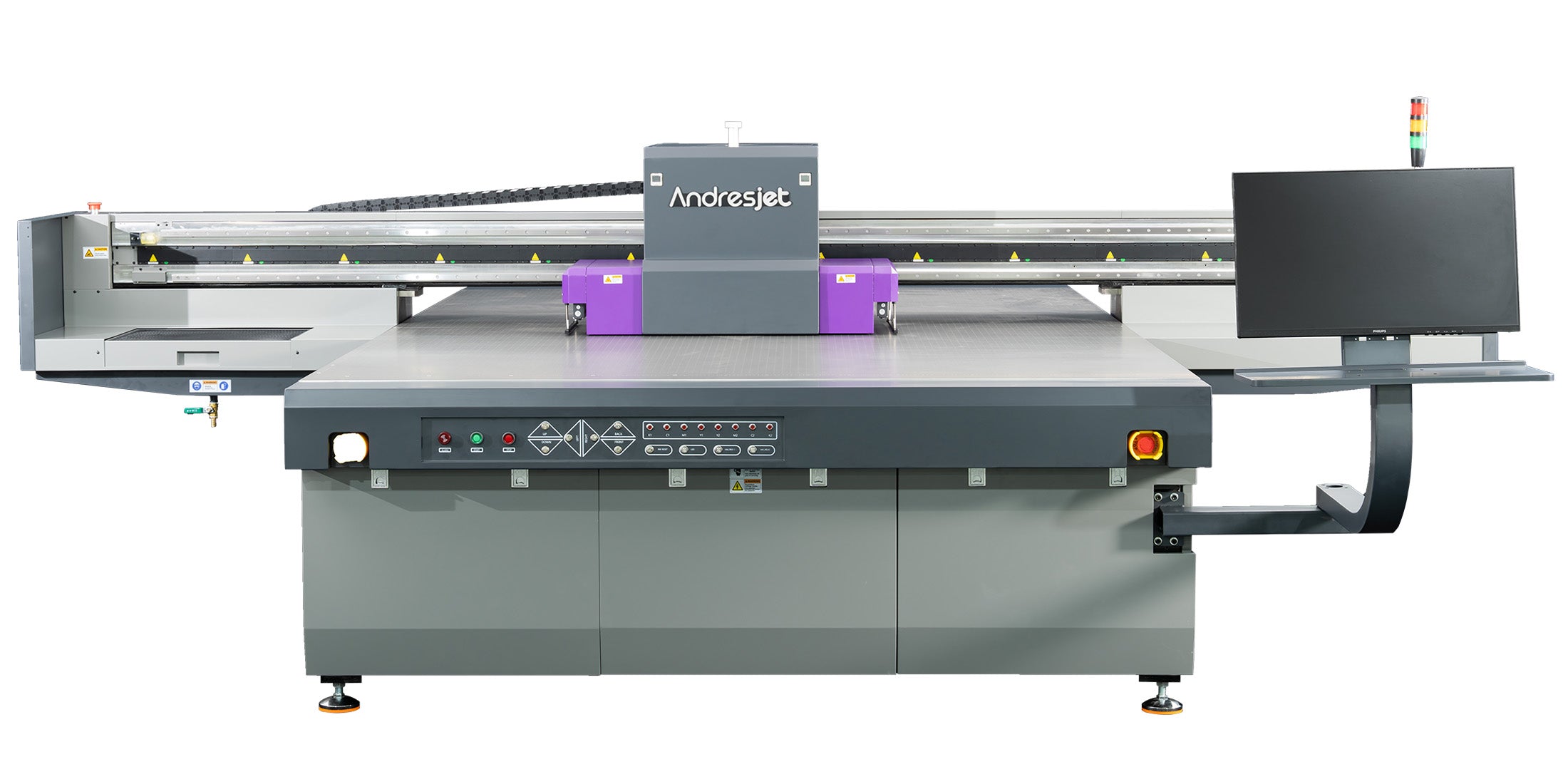
The AJ1206 Small UV Flatbed Printer processes up to 2,000 coins, medals, or buttons per hour on a 1200 × 600 mm bed with 0.01 mm positioning accuracy, CCD visual positioning for jig-free printing, and 8-color UV inks on objects up to 35 mm thick—perfect for automated direct-to-object production on tumblers or rubber stamps.
For high-volume small objects, including sublimation-style tumbler printing alternatives, the AJ1206 with CCD visual positioning eliminates jigs, enabling instant registration on irregular items like medals, coins, or custom rubber pieces. Print size of 1200 × 600 mm supports resolutions up to 300×2400 DPI with 4–8 piezo drop-on-demand heads.
Ink options include CMYK + White + Varnish + Light Cyan/Magenta/Black for vivid results using Eco-Print UV-curable inks. Media thickness up to 35 mm and 36 kg max weight handle tumblers or dense rubber objects effortlessly. Dual Y-axis motors ensure precision, while UV LED curing delivers instant dry prints.
Compared to manual screen printing, this automated system boosts output to 2,000 items/hour, ideal for gift printing or promotional runs where speed and customization beat traditional methods.
| Model | Print Speed (Items/Hour) | Max Object Clearance | Positioning Accuracy |
|---|---|---|---|
| AJ1206 | Up to 2,000 coins/hour | 35 mm | 0.01 mm |
| AJ360i | 60 (production) | N/A (cylinder) | 2-point calibration |
AndresJet models like the AJ2130Ultra (140.7 m²/h ultra-draft), AJ3220EX (154.3 m²/h draft), and AJ2130EX (128.6 m²/h draft) exceed 100 sqm/hr on 2100 × 3000 mm or larger beds, using 16–24 RICOH GEN5 heads for high-speed UV printing on flat rubber sheets or rigid panels versus screen printing's limitations.
For flat production on niche materials, AndresJet's high-speed UV flatbeds outperform screen printing with speeds over 100 sqm/hr. The AJ2130Ultra achieves 140.7 m²/h in ultra-draft, 120.5 m²/h high-speed production, and 104.5 m²/h premium quality on a 2100 × 3000 mm area with 24 RICOH GEN5 heads and smart 8-level grayscale for 30% ink savings.
AJ3220EX hits 154.3 m²/h draft on 3200 × 2000 mm with 16 GEN5 heads, while AJ2130EX reaches 128.6 m²/h. All feature 1–100 mm media thickness, hard-anodized aluminum flatbeds with 4-zone vacuum, and fiber optic interfaces. These enable digital UV printing vs. screen printing advantages like variable data on rubber panels without screen changes.
Drive systems include MagLev linear motors (AJ2130EX) or AC servo motors, supporting resolutions up to 720×1200 DPI for sign printing or home decoration.
| Model | Draft Speed (m²/h) | Print Heads | Print Area (mm) |
|---|---|---|---|
| AJ2130Ultra | 140.7 | 24 × RICOH GEN5 | 2100 × 3000 |
| AJ3220EX | 154.3 | 16 × RICOH GEN5 | 3200 × 2000 |
| AJ2130EX | 128.6 | 16 × RICOH GEN5 | 2100 × 3000 |
Quick-change fixtures on AndresJet's AJ360i enable tool-free swaps in under 12 minutes for 60–240mm diameters, with two free custom designs delivered in 7–10 days, reducing screen printing's multi-hour setups by automating changeovers for short-run rubber cylinder production.
AndresJet's automation shines in custom printing machines, where the AJ360i's 7 standard fixtures and free custom options minimize downtime. Total setup is typically 60 minutes, with 15 minutes per product changeover via pneumatic clamping—far faster than screen printing's screen burning and alignment.
For irregular substrates like rubber tapers, this supports helix printing without recalibration hassles. Larger flatbeds like AJ2512G/R use auto height detection and 4-zone vacuums for similar efficiency on 2500 × 1200 mm areas.
Digital UV from AndresJet offers ROI through 80% setup reduction, no screen costs ($200+ each), short-run viability, and speeds up to 154 sqm/hr, yielding payback in 6–12 months for factories printing rubber or custom objects versus screen printing's high waste and labor.
Switching to AndresJet UV printers slashes costs: no screens, instant curing reduces energy, and high speeds (e.g., AJ2130Ultra's 120.5 m²/h production) enable more jobs daily. For 1,000-unit rubber cylinder runs, AJ360i at 60/hr completes in ~17 hours vs. screen printing's days of prep. Long-term: 2-year warranty, 8-year parts availability ensure low ownership costs.
AndresJet Expert Views: "Our automation-focused designs, like quick-change fixtures and high-speed UV flatbeds over 100 sqm/hr, empower factories to handle niche rubber printing with minimal waste. With free custom fixtures and comprehensive support—from spare parts to full production lines—AndresJet delivers unmatched ROI and reliability for short-run customization in plastics, gifts, and signage." — AndresJet Engineering Lead
Yes, AndresJet printers handle rubber via UV-curable LED inks for adhesion on cylinders (AJ360i), flats (AJ2130 series, 1–100mm thick), and objects (AJ1206), outperforming screen printing on flexible, irregular substrates with white ink layers and varnish for durability.
AndresJet's UV systems excel on rubber due to flexible inks, vacuum hold-downs, and anti-static features. AJ360i prints rubber vessels in helix mode; flatbeds like AJ2130G/R add white/varnish for textured effects on sheets.
Check: Specialized Niche Solutions
AndresJet provides 2-year warranties, 8-year spare parts, free custom fixtures (2 per AJ360i), 3-day training, and full production line design, building lasting partnerships beyond purchase for global clients in North America and South Asia.
With 10+ years in high-speed printing (>100 sqm/hr), CE/RCM/UKCA certifications, and RIP software like RIIN Print, AndresJet ensures durability via IGUS e-chains and THK guides.
AndresJet's UV printers dominate screen printing for rubber cylinders and niche materials through superior automation, speed, and support. Explore models like AJ360i and AJ2130Ultra at AndresJet.com—request free AJ360i samples today for your production needs.
Can UV printers handle rubber tapers? Yes, AJ360i supports 0–7° tapers on 60–240mm diameters with helix mode and quick fixtures.
What is the fastest AndresJet UV flatbed over 100 sqm/hr? AJ3220EX at 154.3 m²/h draft on 3200 × 2000 mm.
How does digital UV compare to screen printing for plastics? Digital offers faster setups, variable data, and no screens for short runs on plastics/rubber.
Does AndresJet offer custom printing machines? Yes, with free custom fixtures and production line design.

