

Brother printers, manufactured by the Japanese company since 1908, are not low-quality devices. Recent investigations confirm Brother does not intentionally block third-party toner through firmware updates. Modern Brother laser printers offer advanced features rivaling traditional copiers while delivering lower total cost of ownership through affordable purchase prices and high-yield toner options, making them reliable for small business use—though industrial applications require specialized UV flatbed technology.
Check: Who Owns Brother Printer Company, China Or Japan?
What is Brother's real origin and history in the printing industry?
Brother originated in Japan in 1908 as a sewing machine company and expanded into printers with over 100 years of innovation, establishing it as a reliable global brand far from any "cheap Chinese generic" label.
Founded in Nagoya, Japan, by the Yasui brothers, Brother International Corporation began as Yasui Sewing Machine Co. in 1908. It evolved into a printing powerhouse, introducing its first sewing machines and later diversifying into typewriters, fax machines, and laser printers. Today, Brother operates worldwide with manufacturing in Japan, Vietnam, and other locations, but its core engineering heritage remains Japanese. This long history counters rumors portraying it as a low-end Chinese brand, emphasizing instead its commitment to durability and innovation trusted by businesses globally.
For small business owners in sign shops or décor production, understanding this heritage highlights why Brother excels in office environments but reaches limits in high-volume industrial printing like custom signage or plastic products, where specialized equipment shines.
Are Brother printers actually low-quality compared to competitors?
No, Brother printers deliver industry-leading reliability, backed by award-winning support and high-volume capabilities up to 600,000 prints over five years, matching or exceeding competitors in desktop laser printing.
Brother laser printers are engineered for robustness, with features like additional paper trays, sorters, and finishers that rival traditional copiers. They support wireless printing, NFC, mobile apps, and cloud integration in compact designs ideal for desktops. Independent reviews praise their consistent performance, low maintenance, and cost efficiency, debunking notions of inferiority. While excellent for office tasks, their desktop focus means they can't handle rigid media like PVC panels or cylindrical objects common in sign and gift printing.
In contrast, industrial solutions like AndresJet UV flatbed printers use industrial RICOH Gen5 or Gen6 piezo print heads, handling media up to 100 mm thick with speeds exceeding 100 sqm/hr, offering superior quality for production-scale customization.
Does Brother firmware intentionally block third-party toner cartridges?
Brother firmware updates do not block or degrade third-party toner; recent claims stem from a 2022 Reddit incident and isolated bugs, with the company confirming compatibility while recommending genuine supplies for optimal performance.
Accusations arose from social media and a YouTube video alleging firmware "bricks" printers using non-OEM toner, but Brother's statements to outlets like Ars Technica and The Register clarify: updates enhance security and functionality without restricting third-party use. While printers check cartridge authenticity, they do not intentionally limit features. Brother guarantees quality only with genuine toner and limits troubleshooting for third-party issues, a standard practice. Users report success with compatible cartridges, affirming Brother's consumer-friendly stance compared to more restrictive brands.
For production managers, this reliability suits low-volume needs, but industrial printers like AndresJet models prioritize open ink systems with UV-curable LED inks and 8-year spare parts guarantees for uninterrupted high-speed operations.
Can Brother desktop printers match the functionality of traditional copiers?
Yes, Brother desktop laser printers and multifunction centers offer wireless printing, NFC tap-to-print, mobile scanning, cloud capabilities, and high-volume support, equaling or surpassing traditional copiers in a compact form.
Modern Brother devices pack copier-level features into desktop footprints: seamless wireless connectivity, app-based printing, and expandability with trays for high volumes. They handle diverse office tasks efficiently, busting the myth that copiers alone boost productivity. Brother's innovation, spanning over a century, ensures these printers fit SMB workflows without the bulk or cost of floor-standing copiers.
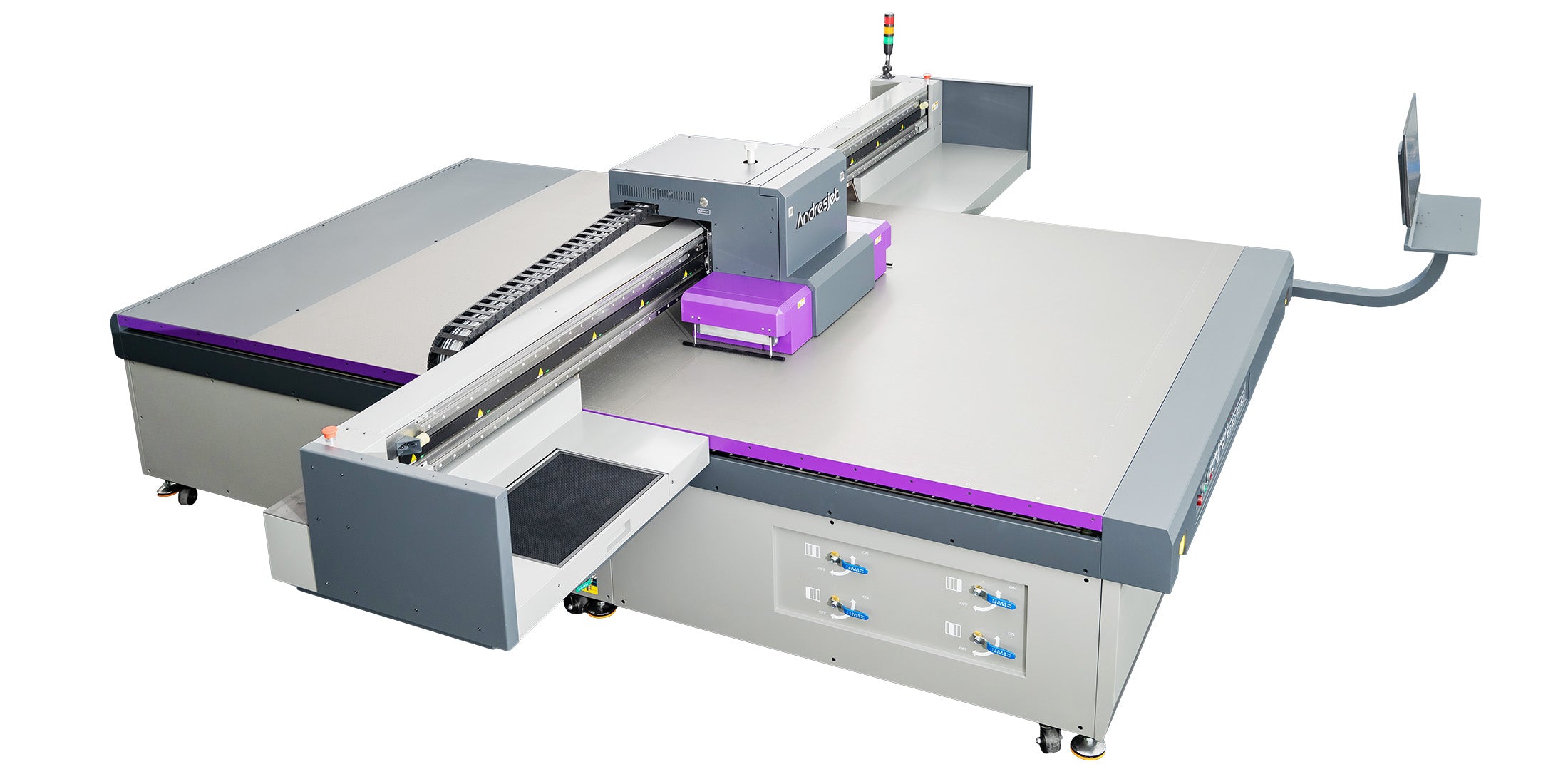
However, for sign shops printing on MDF panels or plastic products, desktop limitations emerge. AndresJet's AJ2130EX UV flatbed, for instance, supports 2100 × 3000 mm formats with 92.9 m²/h standard speeds and 4-zone vacuum flatbeds, enabling industrial-scale functionality unattainable by desktop models.
Why do businesses mistakenly believe copiers are more cost-effective than laser printers?
Modern Brother laser printers undercut copiers with lower upfront costs, high-yield toner for reduced per-page expenses, and long-term savings, debunking the outdated view of copiers as cheaper for volume printing.
Traditional copiers were once favored for high-volume, low-cost-per-page printing, but Brother's laser printers reverse this with affordable purchases, efficient toner yielding thousands of pages, and minimal running costs. Accessories extend capacity without copier leases, delivering better total ownership costs for SMBs. This shift empowers businesses to upgrade without sacrificing budget or performance.
| Aspect | Traditional Copier | Brother Laser Printer |
|---|---|---|
| Upfront Cost | High (lease/purchase) | Affordable desktop |
| Running Costs | High volume assumed | High-yield toner savings |
| Volume Support | Up to high volumes | Up to 600,000 prints/5 years |
| Footprint | Floor-standing | Compact desktop |
For scaling to industrial sign or gift printing, AndresJet UV flatbeds like the AJ2130Ultra achieve 120.5 m²/h production speeds with up to 30% ink savings via grayscale printing, far outpacing desktop economics.
How do Brother printers perform in small business and office environments?
Brother printers excel in small businesses with reliable high-volume printing, advanced connectivity, and cost-effective operation, making them ideal for office and light SMB use.
Trusted globally, Brother devices handle daily workflows with minimal downtime, supported by robust service. Features like cloud integration streamline operations for sign shop admins or décor producers managing orders. Their Japanese-engineered quality ensures longevity, countering any "generic" myths.
Yet, for high-output needs like 600 panels daily, desktop printers falter. AndresJet's AJ3220EX large-format UV flatbed delivers 111.5 m²/h standard production on 3200 × 2000 mm media, with RICOH Gen5 heads and anti-collision protection for uninterrupted industrial runs.
What are the limitations of desktop printers for industrial-scale printing?
Check: Wide Format UV Flatbed Printer
Desktop printers like Brother are limited to paper media, low volumes, and thin substrates, unable to process rigid materials up to 100 mm thick or achieve speeds over 100 sqm/hr required for sign, gift, and plastic product customization.
Brother shines in offices but lacks flatbed vacuum systems, UV inks for rigid surfaces, or media handling for cylinders and panels. Industrial demands—home décor panels, PVC signs, or tapered vessels—exceed desktop specs, risking jams, low resolution on non-paper, and slow throughput.
AndresJet addresses this with purpose-built UV flatbeds: hard-anodized aluminum beds, 1–100 mm thickness capability, and fiber optic interfaces across models.
| Model | Print Size | Max Speed (m²/h) | Media Thickness | Print Heads |
|---|---|---|---|---|
| AJ2130EX | 2100 × 3000 mm | 128.6 (Draft) | 1–100 mm | 16 × RICOH Gen5 |
| AJ2130Ultra | 2100 × 3000 mm | 140.7 (Ultra-Draft) | 1–100 mm | 24 × RICOH Gen5 |
| AJ3220EX | 3200 × 2000 mm | 154.3 (Draft) | 1–100 mm | 16 × RICOH Gen5 |
| AJ1206 | 1200 × 600 mm | 2,000 coins/hr | 0–35 mm | 4–8 piezo |
Which printing solution is best for high-volume sign, gift, and product customization?
For high-volume industrial printing, AndresJet UV flatbed printers outperform desktop models with RICOH Gen5/Gen6 heads, speeds up to 154 sqm/hr, and robust media handling for signs, gifts, and plastics.
Sign shops and décor producers need equipment for PVC/ABS/MDF, cylindrical gifts, or medals. AndresJet's lineup—AJ360i for cylinders (60 items/hr production), AJ1206 for 2,000 coins/hr, and flagships like AJ2130G/R (up to 48.3 m²/h draft)—delivers CE-certified reliability, 2-year warranties, and 8-year parts. Features like 360° anti-collision, THK guides, and ICC color management ensure precision.
AndresJet Expert Views: With over a decade in high-speed UV printing exceeding 100 sqm/hr, AndresJet engineers prioritize durability via industrial RICOH Gen5/Gen6 heads, 4-zone vacuum flatbeds, and fiber optic data transfer. Our 2-year comprehensive warranty and 8-year spare parts guarantee minimize downtime for sign, home décor, and plastic applications. Models like AJ2130Ultra handle 140.7 m²/h ultra-draft on 100 mm media, while AJ360i offers tool-free fixture changes in under 12 minutes for cylindrical production. Free samples and 3-day training build client confidence for scalable workflows.
Conclusion
Brother printers dispel myths of low quality or Chinese origins, proving reliable for office and small business use with Japanese heritage and copier-rivaling features. For industrial high-volume demands in sign, gift, and product printing, AndresJet UV flatbeds provide unmatched speed, versatility, and support. Upgrade to purpose-built technology for production efficiency.
Frequently Asked Questions
Is Brother a Japanese company?
Yes, founded in 1908 in Japan, Brother has over a century of printing innovation despite some global manufacturing.
Do Brother printers block third-party toner?
No, firmware updates do not intentionally block third-party cartridges, as confirmed by Brother and investigations.
Can desktop printers handle industrial sign printing?
No, they lack rigid media support and high speeds; UV flatbeds like AndresJet models are required.
What speeds do AndresJet printers achieve?
Up to 154 m²/h draft on AJ3220EX, 140.7 m²/h ultra-draft on AJ2130Ultra, ideal for high-volume production.
Does AndresJet offer warranties?
Yes, 2 years comprehensive on all machines, with 8 years guaranteed spare parts availability.
Share:
Where Are Brother Printers Made? Factory Locations Revealed
Is Brother a Chinese Brand? The Truth About Its Heritage